Businesses with changing handling tasks
You want to supply materials at existing workstations, hand over parts or pick up different objects, and first need to check whether the system is suited to those specific tasks.


To assess reach, working range and the effort involved in operating a robot, start with a supervised, clearly defined suitability test. If machinery, handover points or warehouse IT are involved, you’ll need an integrated pilot to assess the process at your own site. Consider buying or leasing only once you have documented results for task suitability, supervision and integration. Under Sections 3 and 4 of the German Ordinance on Industrial Safety and Health (BetrSichV), manufacturer information or CE marking does not replace a risk assessment or the necessary protective measures before use.
You want to supply materials at existing workstations, hand over parts or pick up different objects, and first need to check whether the system is suited to those specific tasks.
You’re planning a trial involving employees, machinery or warehouse IT, and need to clarify interfaces, responsibilities and protective measures for the area in question.
You need operational and supervision data from a limited trial before making a longer-term commitment to a system.
Best for: Assessing the picking task, working area and effort involved in operating the robot at a clearly defined workstation.
Trade-off: A short demonstration doesn’t prove the robot can operate reliably across a shift or maintain a stable machinery or warehouse process.
Best for: When the robot needs to work alongside machinery, handover points, employees or warehouse IT.
Trade-off: Interfaces, training and a safety plan require more preparation, but allow you to test the actual process more thoroughly.
Best for: When a documented trial shows that the required tasks can be repeated successfully under agreed conditions.
Trade-off: It’s only worth considering a longer-term commitment once integration, maintenance, updates and responsibilities have also been clarified.
| Consideration | What to check before buying | Who should pay particular attention? |
|---|---|---|
| Task suitability and repeatability | Agree in advance on the workpieces, grippers, handover points and criteria for successful repeat runs. | If I need to test different parts or handovers, I want to know whether those exact variations work in the process. Around 31 % of consumers put task suitability first. |
| Protective measures in the pilot area | Arrange a risk assessment, implementation and effectiveness checks for protective measures, and training before use. | If employees are using the robot in their work area, protective measures and what to do in the event of a fault must be clear. Around 25 % of consumers prioritise safe pilot operation. |
| Integration with the workstation and IT | Set out interfaces, data access, integrator responsibilities and responsibilities in the event of a failure in writing. | If the trial involves machinery, handovers or warehouse management, I want to test the whole process, not just a single pick. Around 25 % of consumers put process integration first. |
| Operational effort before making a longer-term commitment | Document operating time, stoppages, interventions, maintenance and updates during the agreed trial. | If I’m deciding whether to buy or lease, I need a clear picture of the supervision required and any faults in the intended working environment. Around 19 % of consumers prioritise ongoing operational effort. |
Technicians on site can help with set-up and operation, but that doesn’t mean the robot will be available without supervision in your own process.
Record supervision time, stoppages and successful repeat runs separately for the planned use.
Further integration and testing may be needed before you can assess the process with confidence.
Unitree Robotics lists different hand options and arm payloads for the variants. A test using a different gripper configuration may therefore fail to reflect the intended task.
Record the model variant and full configuration, including the gripper hand, in the quote and test report.
A different hand configuration may require additional adjustment work.
A task description or successful one-off trial doesn’t automatically prove that the system will work in a different environment with the same protective measures and processes.
Use manufacturer information as a starting point for testing, and document the results and protective measures for the specific pilot area.
If the safety plan and process integration aren’t suited to your site, further work may be needed.
ECOSPHERE Robotics describes a supervised trial of the Unitree G1 Education at a customer’s own workplace.
Hexagon Robotics and BMW report on tests of the AEON system in a production environment in Leipzig.
NEURA Robotics, SAP and BITZER describe a picking trial connected to warehouse processes.
Apptronik describes machine-handling tasks for Apollo; Mercedes-Benz reports on a test of the system in Germany.
Agile Robots presents Agile ONE for industrial handling and machine-related tasks.
The following Joybuy models are humanoid robots for initial development, navigation or motion-control trials. Their product names don’t prove that a model is suitable for a specific industrial process. Check the configuration and conditions of use before running a workplace test.
 No image available
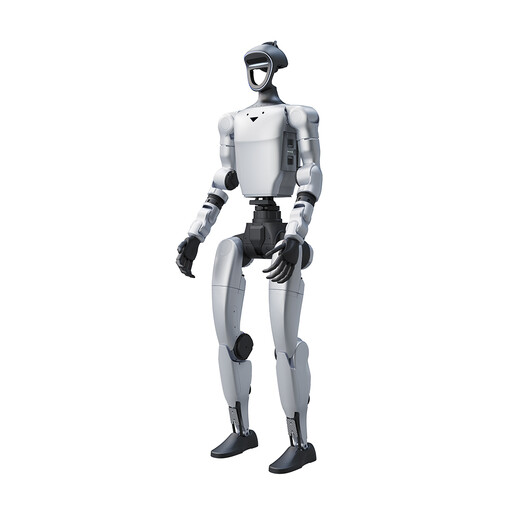
This variant may be worth considering for initial motion-control and development trials; you’ll need to test its suitability for the specific task yourself.
The product name specifies 29 degrees of freedom in total and 16 joint degrees of freedom.
 No image available
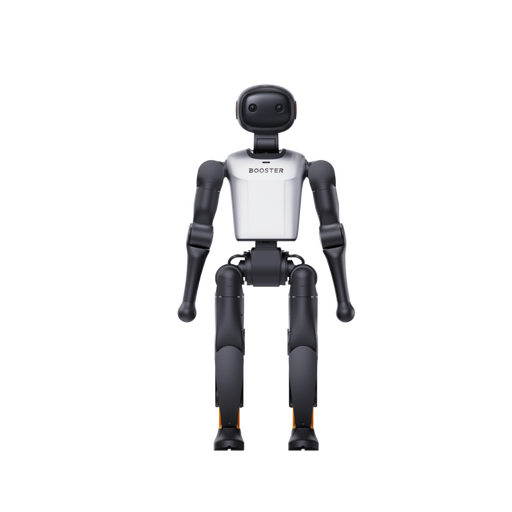
The product name describes the model as a development platform for embodied AI. Check in advance whether its available development features are right for your trial.
The product name specifies 48 TOPS and 22-DoF.
No image available
The product name describes an education and research platform that may be suitable for robotics development trials.
The product name specifies 117 TOPS and 22-DoF.
 No image available
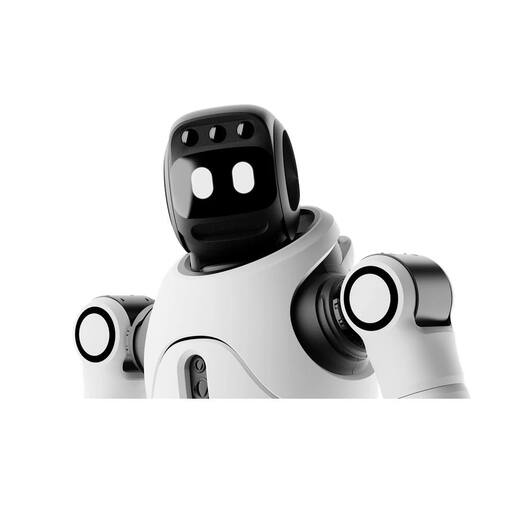
The product title mentions autonomous navigation and obstacle avoidance. Test these features in the specific environment under defined safety conditions.
The product description requires supervision during autonomous operation and a safety distance of at least 2 m.
 No image available
The product title mentions motion control and single-person operation. Check its suitability for the planned trial and the supervision required in advance.
The product description warns of crushing hazards from moving joints and advises particular care around children.
Start with a clearly defined material handover, machine-loading or picking task, and specify the parts and handover points. Fraunhofer IPA identifies these as areas with potential; this isn’t a prediction of success for your pilot.
No. A hire offer that includes technicians and instruction doesn’t replace the employer’s responsibilities for using work equipment at their own premises. Also agree who will supply technical documentation, integrate and maintain the robot, and implement the necessary protective measures on site.
No. Section 3 of the BetrSichV makes clear that CE marking doesn’t replace a risk assessment. You must also clarify the necessary protective measures and safe use under Section 4 of the BetrSichV.
For the pilot area, agree on set-up, operation, stopping, restarting and points of contact. Employees using the robot must receive task-specific training, including on hazards and what to do if the robot malfunctions.
Compare offers covering the same tasks and level of supervision, and record the arrangements for set-up, integration, operators, training, maintenance, updates and fault resolution. The short-term offer described by ECOSPHERE Robotics includes technician services; for an integrated pilot, you should also agree specific responsibilities.