For supervised practical sessions covering mechanics and ROS, a compact, well-documented platform could be a suitable option. For movement and perception experiments with larger humanoids, an EDU version with confirmed development access may be worth considering. The exact model variant and its interfaces are key, along with a risk assessment for the intended use. Check the safety and conformity documentation for the specific device before your institution approves it.
Who are these platforms suitable for?
Supervised robotics practicals
If you’re planning repeated exercises in control and mechanics, you’ll need a platform you can assess and an operating plan for learners. The German Social Accident Insurance covers risk assessments for schools and universities, while ROBOTIS publishes documentation on the mechanics and maintenance of its OP3 platform.
Movement and perception development teams
For your own experiments, check whether the exact device variant provides access to the control and sensor data you need. Unitree Robotics distinguishes between standard and EDU versions of the G1 for secondary development.
Buyers planning long-term laboratory use
For regular use, you’ll need to consider maintenance, access to spare parts and rules for modifying the device, as well as its suitability for your experiments. ROBOTIS provides OP3 maintenance information; Unitree Robotics lists restrictions on unauthorised modifications in its warranty terms.
What to consider when buying
Start with the aim of your experiment, then check the specific variant, how you plan to use it and what support is available for the intended period of use.
| Buying criterion |
What should you check? |
Who should pay particular attention? |
| Development access |
Check the model identifier, available interfaces and required development environment against the written documentation. |
If you want to develop your own movement programmes, you’ll need access on the exact variant being offered; around 29% of consumers put development access first. |
| Safe teaching use |
Factor the operating instructions, stop and remote-control functions, range of movement, supervision and charging location into your plans. |
For exercises with learners, you’ll need to adapt operation and supervision to the specific learning environment; around 29% of consumers prioritise supervised teaching use. |
| Experiment hardware |
Compare the sensors, joints, controllers and documentation you need with the configuration on offer. |
If your experiments focus on movement or perception, the equipment must suit the measurement task; around 24% of consumers put suitable experiment hardware first. |
| Transport and service |
Check transport arrangements, availability of wear parts, repair options, warranty terms and, where relevant, the service included in a leasing offer. |
For regular laboratory use, you’ll need a predictable route for maintenance and procurement; around 18% of consumers prioritise ongoing operation. |
Pitfalls that could affect your purchase
-
Assuming the standard model and EDU version are the same
For the Unitree G1, the manufacturer explicitly rules out secondary development on the standard model and points users to the EDU version instead. A planned programming or control experiment could therefore be impossible with the variant you order.
Before ordering, make sure the model identifier and required interfaces are listed in the quote, and ask for confirmation that development access is available for that exact variant.
If you need to switch variants later, you may find you can’t carry out your planned experiment with the model supplied.
-
Assuming open hardware means unrestricted repairs
Documented or accessible hardware doesn’t automatically mean that any modifications will be covered by the warranty. Unitree Robotics lists unauthorised modifications as a possible reason for excluding warranty cover.
Before use, check which modifications are allowed during practical sessions and who is responsible for repairs.
-
Comparing models on joint count alone
The number of joints alone won’t tell you whether the controllers, sensors and documentation are right for a particular experiment. Comparing models without reference to your experimental protocol could therefore miss what you actually need.
First, set out the measurement and control functions you need, then compare the equipment on the specific configurations.
Key brands at a glance
ROBOTIS
The OP3 platform is a compact humanoid reference for supervised work on software, controllers and mechanics.
- ROBOTIS publishes ROS documentation, mechanical specifications and maintenance information for OP3.
- The published ROS guide covers ROS Kinetic. Check that it’s suitable for your planned course environment; specific purchasing and service terms in Germany need to be confirmed separately.
Unitree
The G1 and R1 are relevant to development work in different configurations; what’s included depends on the exact model.
- Unitree Robotics publishes development documentation for the G1 and R1.
- According to the manufacturer, the standard G1 model doesn’t support secondary development; check the EDU version instead. The R1 also comes in different variants. Confirm the actual scope of delivery in writing.
Booster Robotics
The T1 platform is another option to consider for movement and control projects.
- Booster Robotics provides a C++ SDK and lists a Python package as available separately.
- An SDK doesn’t confirm access on the specific device configuration, a particular service route in Germany or safety documentation. Check these points before purchasing.
Humanoid robots on Joybuy
This selection includes humanoid platforms for movement and perception experiments, as well as development projects. Whether you can programme the robot yourself depends on the model variant.
 No image available
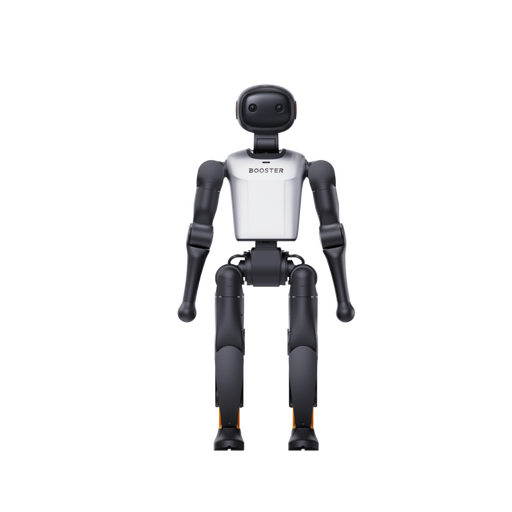
Booster Robotics K1 Geek, 48 TOPS, 22 degrees of freedom
An option for projects in humanoid movement and embodied AI; check whether the specific configuration provides the development access you need.
The product title lists 48 TOPS and 22 degrees of freedom.
Joybuy
No image available
Booster Robotics K1 Edu, 117 TOPS, 22 degrees of freedom
A potential platform for education, research and development projects; confirm in advance which APIs and development tools are included in the specific scope of delivery.
The product title lists 117 TOPS and 22 degrees of freedom.
Joybuy
 No image available
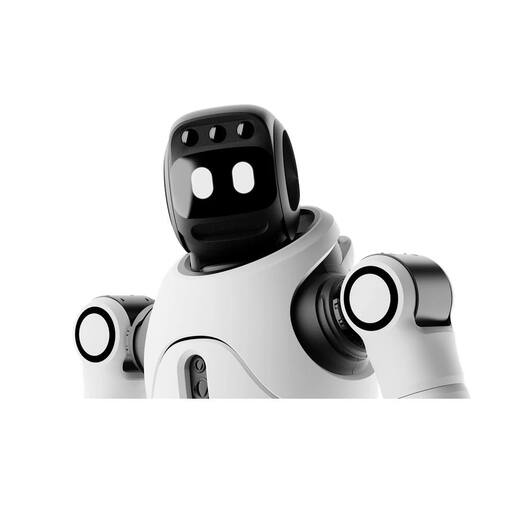
AGIBOT X2 Ultra
The navigation and obstacle detection described may be relevant to perception and movement demonstrations; suitability depends on the experiment and approval of the environment.
The product description lists 31 degrees of freedom, LiDAR and an RGB-D camera. It requires supervision and a minimum distance of 2 m during operation; check the operating instructions against your local risk assessment.
Joybuy
 No image available
AGIBOT X2
It may be worth considering for movement and interaction demonstrations, but the product description doesn’t state that it supports your own secondary development.
The description lists 27 degrees of freedom and an interactive RGB camera for this version.
Joybuy
 No image available
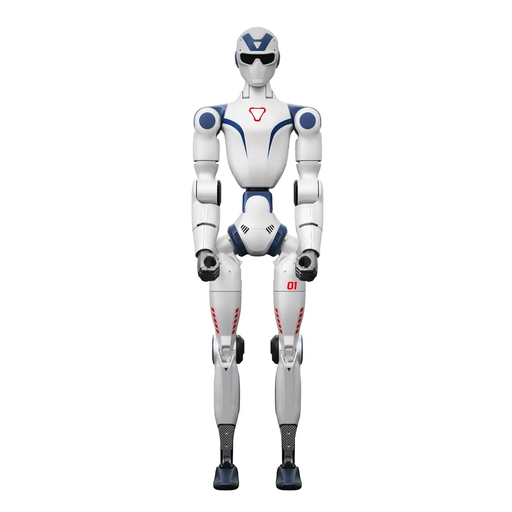
Unitree R1 Air, 20 degrees of freedom
Could be considered for movement or perception demonstrations; ask for confirmation that the specific variant provides the development access you need for your own programming exercises.
The product title lists 20 degrees of freedom and a monocular camera. The product description warns against operating it near stairs, drop-offs or uneven surfaces, and highlights the risk of crushing or trapping at moving joints.
Joybuy
Frequently asked questions
Is an advertised SDK enough to create your own movement programmes for practical sessions?
No. An SDK alone doesn’t confirm access on the specific variant. Unitree Robotics explicitly rules out secondary development on the standard G1 model and points users to the EDU version instead. Check the model identifier and the control level you need before ordering.
How should you plan the space, supervision and battery charging?
Your institution must assess the risks in the specific learning and study environment and decide on appropriate measures. Plan the movement area, operation and charging location using the device documentation and this assessment; you can’t determine a standard room size or supervision ratio from this information alone.
Is leasing cheaper than buying, and who handles repairs?
Whether buying or leasing is cheaper depends on the specific offer. Ask for written confirmation of the term, service included, responsibility for repairs, access to spare parts and rules for modifications. Unitree Robotics lists unauthorised modifications as grounds for exclusion in its general warranty terms.
Which conformity documents should you check for a robot in Germany?
For machinery within the scope of the Machinery Directive, manufacturers have obligations that include providing a declaration of conformity, CE marking and instructions. An exemption for certain research machines may be relevant, so the classification and documentation must match the specific device and its intended use. According to the EUR-Lex summary, the Directive remains applicable until 19 January 2027. This doesn’t confirm the conformity of any particular model.


