Logistics team handling variable loads
If you want to integrate material handling or order picking into existing warehouse processes, it’s important to test the actual IT and process connections before planning a wider rollout.


Start by defining a repeatable process, then test it using the actual workpieces, routes, people and IT interfaces. Buy a platform if your team needs to run repeated trials and develop its own solutions. For a supported pilot or controlled test, agree the model, services and responsibilities in detail. Reports from German users document individual trials, but they do not prove that a model is suitable for your workplace or more cost-effective than specialist automation.
If you want to integrate material handling or order picking into existing warehouse processes, it’s important to test the actual IT and process connections before planning a wider rollout.
For a pick-up or handover trial at a particular station, you need to consider the tool, workpiece and proximity to employees together.
If you need to resolve technical limitations before a workplace trial, you’ll need a suitable configuration or a controlled test area for initial trials.
Suitable if: Your team plans to run repeated trials and develop its own solutions. Check the model variant, development access and end effectors.
Trade-off: Owning the hardware doesn’t automatically make the supplier responsible for integration, maintenance or workplace assessments.
Suitable if: You want to trial a specific operational process with agreed test phases, responsibilities and support.
Trade-off: A documented user pilot doesn’t prove that the same model is generally available to hire or that a particular service contract is in place.
Suitable if: Questions remain about gripping, movement or safety arrangements.
Trade-off: A lab test is no substitute for assessing the final configuration or carrying out a workplace risk assessment.
Suitable if: You’re assessing a fixed transport route or a consistent operation and can compare it with a specialist test setup.
Trade-off: A comparison is only meaningful if both approaches have to perform the same task under the same safety conditions.
For a clearly defined production or logistics pilot, the key question is which criterion you need to resolve first for your process:
| Selection criterion | What to look for when buying | Who is it most relevant to? |
|---|---|---|
| Workplace safety | Consider the risk assessment, as well as risks involving the robot, end effector, load and work area. | If employees work close to the robot, I want to assess the risks involving the robot, tool and load at the intended workplace. Around 28 % of consumers in production teams prioritise safety at the specific workplace. |
| Suitability for the task | Check the workpiece, gripper, handover points, route and permitted load for the specific configuration. | For material handling, gripping or machine loading, I want to test the actual process using the intended objects. Around 22 % of consumers focus first on whether the platform is suitable for their specific task. |
| IT and process integration | Clarify the interfaces available with the model on offer, data flows and responsibilities if something goes wrong. | If order data and handovers need to work with existing systems, I want to test that exact process. Around 22 % of consumers put IT and workflow integration first. |
| Pilot scope and support | Specify the model, duration, integration services, support and spare parts in the offer. | If you’re weighing up buying against time-limited use, you’ll want to know what support is actually agreed for the model you want. For around 17 % of consumers, keeping the pilot commitment limited is the main priority. |
| Technical preliminary test | Define the test objects, edge cases, permitted software changes and differences from the eventual workplace. | If technical questions remain, I want to test the platform first with realistic objects in a controlled test area. Around 11 % of consumers prioritise this kind of preliminary test. |
Fraunhofer IPA studied potential uses in German production and logistics, based on 113 responses from interviews and an online survey. The results describe opinions and areas of potential use; they don’t predict whether a particular robot will succeed. For a fixed transport route or an unchanging operation, you should also compare a specialist solution for the same task under the same safety conditions.
Before a robot is used in the workplace, the employer must carry out a risk assessment, according to the Federal Institute for Occupational Safety and Health. The German Social Accident Insurance highlights the need to assess collision risks when people work nearby. This assessment should also cover the end effector and moving objects.
A user report documents a trial, but doesn’t automatically prove that the robot is suitable for your workplace. The Federal Institute for Occupational Safety and Health requires a risk assessment for every workplace; the German Social Accident Insurance highlights collision risks when people are nearby.
Assess the defined process with the workpiece, tool, load and people involved, and document the agreed measures.
The pilot may require additional assessments, integration work and protective measures.
Unitree distinguishes between the standard G1 and the EDU version in terms of access to secondary development. So choosing a model from the same family doesn’t automatically give you the same development options.
Ask for the full variant name and confirm the development access you need in the offer.
The wrong variant could prevent you from carrying out your planned programming or integration trial.
Terra Robotics publicly describes a RaaS offer for service and cleaning robots. The Walker-S2 pilot described by ROSSMANN, which included technical support, is a specific user case and doesn’t prove that a general hire contract is available for this model.
Ask for a written offer for the humanoid robot you want, setting out the duration, services and responsibilities.
Integration, support and spare parts may require separate agreements for the specific model.
The Walker S2 is relevant to the German logistics sector because ROSSMANN describes a multi-phase trial in Burgwedel and names Terra Robotics as its supply and implementation partner.
BMW describes a pilot of the AEON humanoid robot in production at its Leipzig site.
NEURA describes a proof of concept with 4NE1, SAP EWM and order-picking tasks.
PAL Robotics describes TALOS as a configurable ROS research platform for development and hardware-fit testing.
For development trials with the G1 and G1 EDU, the exact device variant matters.
The following Joybuy listings are for humanoid platforms intended for technical preliminary tests. Their suitability for a specific workplace must be assessed separately.
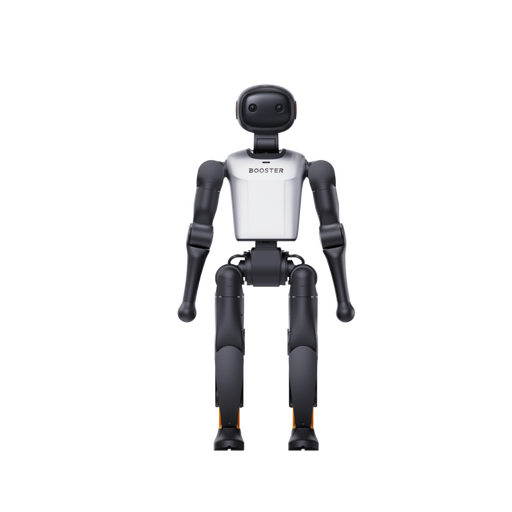 No image available
The product name identifies this model as a humanoid development platform for technical preliminary tests.
Specifications included in the product name: 22 DoF and 48 TOPS AI.
No image available
The product name describes an education and research platform for technical development trials.
Specifications included in the product name: 22 DoF and 117 TOPS AI.
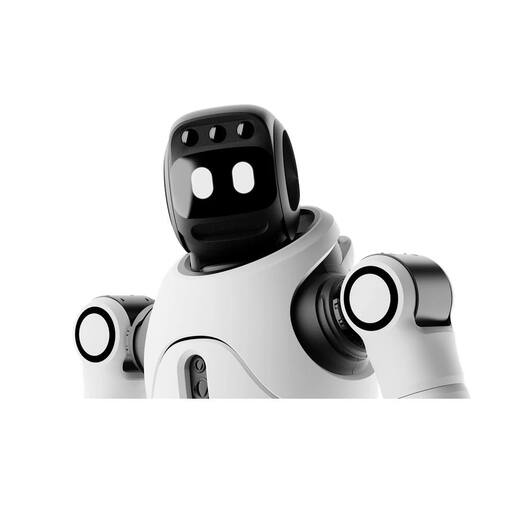 No image available
The product name describes this model as a humanoid platform for a technical pilot.
The product title mentions autonomous navigation, obstacle avoidance and support for secondary development. Check these features against the variant on offer and your process.
 No image available
The product name lists motion control and interaction as features for a technical preliminary test.
The description lists 27 degrees of freedom. Secondary development is stated as unsupported for this variant.
 No image available
The Unitree G1 could be considered for a limited hardware-fit test if custom SDK/API integration isn’t required.
The product title mentions gripping hands and states that SDK/API is currently unavailable.
No. CE marking doesn’t replace a risk assessment for the specific task: the Federal Institute for Occupational Safety and Health says one is required for every workplace. When people are nearby, the German Social Accident Insurance says the collision assessment should also cover the end effector and moving loads. For devices with wireless or network connectivity, the Federal Network Agency also lists CE marking, a responsible economic operator in the EU and German-language user information as points to check before buying.
According to the German Social Accident Insurance, manufacturers apply the Machinery Directive up to and including 19 January 2027; the EU Machinery Regulation applies from 20 January 2027. Check the documentation for the specific configuration and when it will be supplied.
For the intended workplace, document the task, workpiece, gripper, handover points, proximity to people and the agreed protective measures. The German Social Accident Insurance includes end effectors and moving objects in its risk assessment for collaborative robots. The Federal Institute for Occupational Safety and Health also identifies documenting the risk assessment and measures as part of occupational health and safety.
Not without checking the variant and development access. Unitree says the standard G1 doesn’t support secondary development and recommends the G1 EDU for customisation. Confirm the interfaces and development rights you need before choosing a device.