What should you consider when choosing?
First decide whether your team needs to develop directly on the platform or wants to run a supported trial. Then check the exact model against your planned test setup – not just the product range name.
| Requirement |
What to check before buying |
Who should pay particular attention |
| Your own development |
The exact model, along with documented APIs, SDKs and access rights for the control and sensor data you need. |
If I’m testing my own motion or perception software, I need to be able to use it on the specific platform. For around 50% of consumers, this development access is the main priority. |
| Lab setup and sensors |
The dimensions and weight of the model ordered, as well as its sensors and the space available for the planned movements. |
For tests in a confined lab, I need a platform that I can set up and operate as part of my test arrangement. Around 30% of consumers put this practical setup first. |
| Project duration and support |
The agreed hire period, the operator’s responsibilities and access to software, data and hardware during the hire. |
For a short feasibility trial, I don’t want to organise the operation entirely on my own, but I do need clarity about what I can control. Around 20% of consumers prioritise this supported access. |
Humanoid platforms for development projects
This Joybuy selection includes humanoid models that may be suitable for research or development trials. It does not replace checking the interfaces you need, the exact equipment and the documentation before using a model in the lab.
 No image available
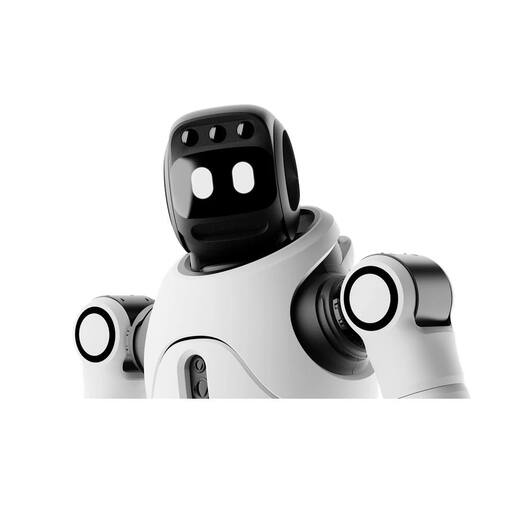
AGIBOT X2 Ultra humanoid robot
The X2 Ultra may be worth considering for trials involving your own software and navigation, provided the development access offered meets your project requirements.
The product description mentions autonomous navigation and scope for further development. Ask for confirmation of the interfaces, access rights and equipment included with the model you order.
View at Joybuy
 No image available
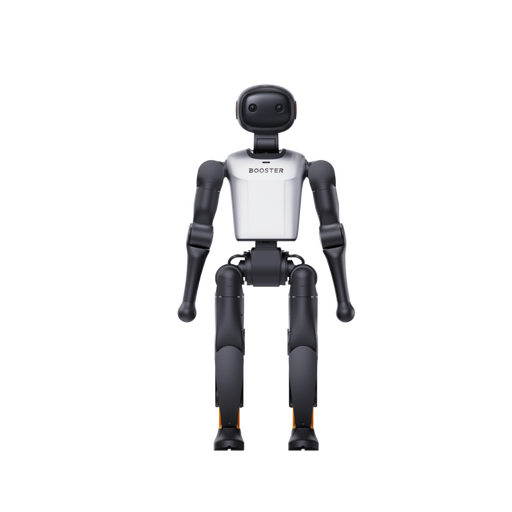
Booster Robotics K1 Edu humanoid robot
The K1-Edu model is an option for development trials, provided its interfaces are suited to the tasks you have planned.
The product name specifies 22 degrees of freedom and 117 TOPS. Check which control and sensor data your team can actually access on this model.
View at Joybuy
 No image available
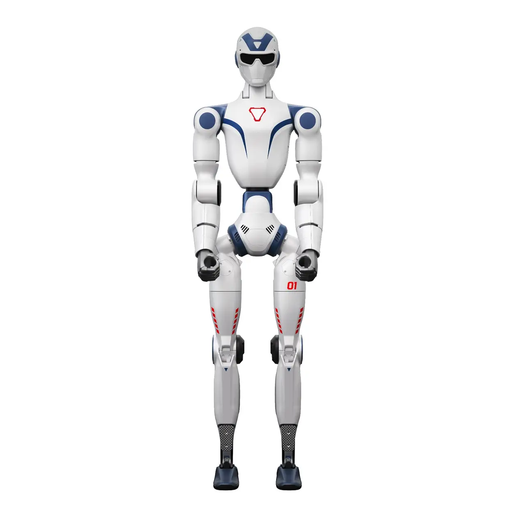
Unitree R1 Edu, blue and white
If you’re planning a research setup based on the R1, it’s worth checking this EDU model against your planned software trials.
Unitree Robotics documents SDK, DDS and ROS2 topics for the R1 EDU. Check which of these features, and which hardware, are included in the configuration offered here.
View at Joybuy
 No image available
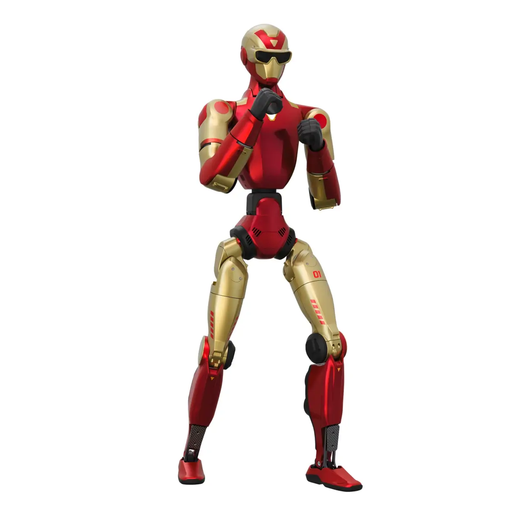
Unitree R1, red and gold
This R1 model may be of interest for movement and perception trials if its development access meets the needs of your test plan.
The product name specifies two cameras and 26 degrees of freedom. Check the interfaces on this model separately against your requirements; features documented for the R1-EDU are not automatically included in this offer.
View at Joybuy
No image available
Booster Robotics K1 Geek humanoid robot
The Geek model may suit experiments involving your own software, provided its development features support the data and tools you need.
The product name specifies 22 degrees of freedom and 48 TOPS. Ask for details of the APIs, SDKs and access available on this specific model.
View at Joybuy
Frequently asked questions
Can the Unitree G1 Base be treated as equivalent to the G1 EDU for autonomous ROS development?
No – that would not be a safe assumption for the models described by the RBTX marketplace. The supplier describes the G1 Base as operable by remote control only, and points to the EDU for ROS-based autonomy. Check the model and the development features included before ordering.
When is a supported hire suitable for a research trial?
A supported hire may suit a time-limited trial if you want expert help with setup and operation. The TONEART hire model described includes an operator and technical specialists. Also agree whether your team can use its own software and access the data or interfaces it needs.
What role does German-language documentation play in procurement?
Ask for instructions, safety information and applicable conformity documents for the specific robot model. Section 2 of the MaschinenDG specifies, among other things, German-language operating instructions, safety information and EU declarations of conformity for machinery and related products within its scope; under Section 12, this provision only applies from 20 January 2027. Check which requirements apply to your purchase based on the product and the timing.
What should you check before employees use a humanoid robot?
As the German Social Accident Insurance (DGUV) explains in its guidance on the Occupational Health and Safety Act, employers must assess risks to employees in the workplace and determine the necessary protective measures. For a lab trial, this should take account of the specific robot, attachments, movement sequences, surroundings and how it will be operated.


