What should you consider when choosing?
First, decide which experiments the platform needs to support. Then check that the development tools, space, supervision and agreed services can meet the demands of regular teaching or laboratory use.
| Consideration |
What to check before buying |
Who it matters to |
| Development access and simulation |
Check for documented interfaces for joints and sensors, as well as a simulation environment compatible with your software. |
I want to work with movement and sensor data in my own exercises, not just run ready-made demonstrations. For around 36% of buyers, development access is the main priority. |
| Safe laboratory operation |
Clarify the room layout, permitted operating modes, training and emergency stop arrangements for your specific workflow. For work equipment covered by the BetrSichV, plan the risk assessment before use. |
When students are working close to a moving robot, I need an experiment that can be properly supervised, with clearly defined safeguards. Around 29% of buyers put safe operation first. |
| Capabilities to meet your teaching objectives |
Decide whether bipedal movement is essential or whether mobile manipulation will do, then check the specification and version against the offer. |
A wheeled platform won’t work for my experiments on balance and whole-body movement. For around 21% of buyers, matching the robot’s physical capabilities to their needs is the main concern. |
| Support and maintenance |
Agree in writing on training, contact details, response times, software recovery and spare parts for the specific model. |
I need to look after the robot across several teaching sessions and know who to contact if something goes wrong. Around 14% of buyers prioritise dependable support. |
Humanoid platforms at Joybuy
These models are relevant as humanoid development or EDU platforms to consider for specific teaching and research tasks. Before buying, compare each version on offer with the interfaces, operating conditions and support services you need.
 No image available
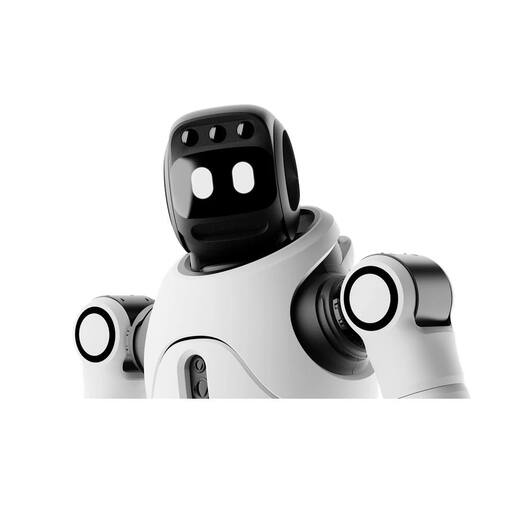
AGIBOT X2 Ultra
For projects involving humanoid movement and your own development work. Ask for confirmation of the exact X2 Ultra configuration, including development access. Plan for supervision and a safety approach suited to how the robot will be used.
View at Joybuy
 No image available
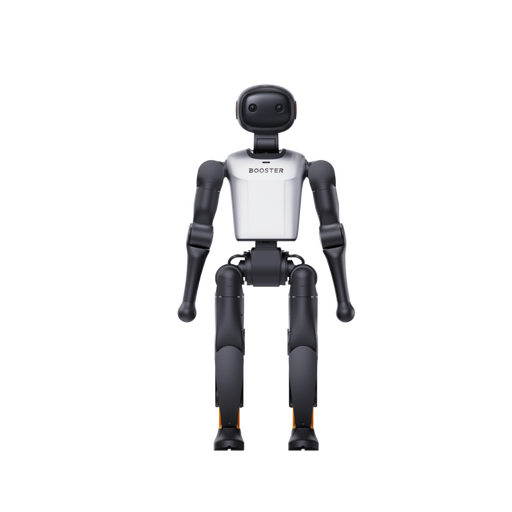
Booster Robotics K1 Edu
An EDU version for teaching and research projects involving your own programming. The product title lists 22 degrees of freedom and 117 TOPS. Check that the interface documentation, sensor configuration and operating requirements suit your exercises.
View at Joybuy
 No image available
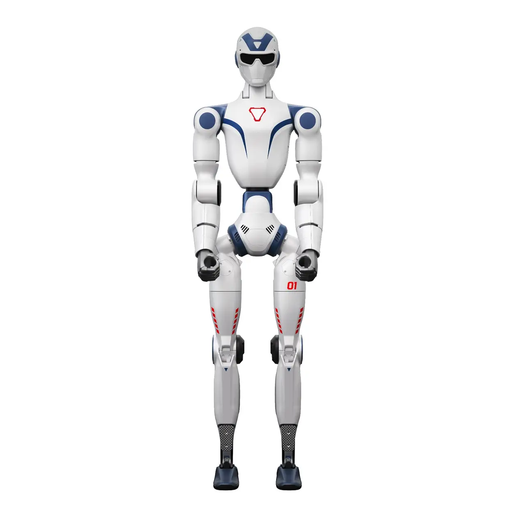
Unitree R1 Edu Blue and White
For teaching and research projects using a bipedal robot. Unitree Robotics documents development workflows for the R1 range; check that they apply to this version. The product description specifies a clear area of at least 6 m × 6 m for dynamic movement. Training and safeguards must suit the actual operating conditions.
View at Joybuy
No image available
Booster Robotics K1 Geek
For development projects using a humanoid robot, such as work on AI algorithms and perception. The product title lists 22 degrees of freedom and 48 TOPS. Before choosing, check the APIs, sensors, development environments and laboratory operating conditions you’ll need.
View at Joybuy
Frequently asked questions
Does a university need to carry out a risk assessment before using a humanoid robot?
Yes, if it uses the robot as work equipment covered by Germany’s BetrSichV. Under section 3, the employer must assess the risks before use and identify the necessary safeguards. The assessment should begin before selection and procurement; a product label is no substitute.
Is an inspection needed after setup or relocation?
It depends on whether the safety of the specific work equipment depends on how it is assembled. If it does, section 14 of the BetrSichV requires an inspection by a competent person before first use. After reassembly, an inspection is required before each recommissioning. Use the risk assessment and manufacturer’s documentation to establish what applies to your setup.
Can students work close to the moving robot without a barrier?
You can’t assume this is permitted based on the product description alone. The German Social Accident Insurance (DGUV) highlights the risk of collisions when robots and people work in close proximity. For each experiment, define the safety zone, operating mode, supervision, access arrangements and emergency stop procedure.
What experience does a team need to use a ROS 2-based platform?
According to PAL Robotics’ documentation, its developer tools require Python or C++ skills. The officially supported environments are Linux-based, particularly Ubuntu 22.04 and 24.04. For other platforms, check their own toolchain and test a planned exercise in the appropriate development environment first.
What should you clarify about technical support before ordering?
For the specific model, agree contact details, response times, remote access, on-site services, training, software recovery and the spare parts process. PAL Robotics documents ticket-based support and possible remote assistance; Terra Robotics lists technical support and training for the R1 EDU, as well as an optional maintenance contract. The services that apply will depend on your agreement.


