What schools should consider when choosing
For humanoid robotics in STEM lessons and supervised group activities, the right purchasing route depends above all on your learning objectives, supervision and data processing.
Buy
Best suited when: you run your own coding or interaction modules regularly and the school can arrange supervision.
What to weigh up: software access, training, updates and repairs must be confirmed for the specific model.
Hire or run a supervised trial
Best suited when: you want to test a single teaching module first or don’t yet have in-house technical support.
What to weigh up: agree the hire period, training, transport, maintenance and point of contact for your planned use. United Robotics Group lists buying, hiring and training as options in its offer for schools.
Keep using NAO/Pepper or switch
Best suited when: you already have robots or teaching materials and the current setup is still usable.
What to weigh up: check support, software versions and whether programmes can be transferred; automatic migration has not been confirmed.
| Consideration |
What to check before buying |
Who it matters most to |
| Programming and learning module |
Specific tasks, the model’s programming environment and software version, and suitable training materials. |
If we’re planning our own coding modules, access to programming needs to match the task and teachers’ level of knowledge. Around 26% of purchasing decision-makers put programmability and suitability for the learning module first. |
| Supervised inclusive interaction |
Try out speech and movement features in the planned group module; agree the activities, accessibility and supervision. |
For inclusive group activities, we want to try the interaction with the specific group of learners rather than assume it will lead to general learning gains. Around 21% of purchasing decision-makers prioritise supervised inclusive interaction. |
| Data protection in schools |
Clarify the data processed, data flows, storage locations and responsibilities for the specific configuration; check the relevant GDPR and BDSG requirements. |
As soon as cameras, microphones or other features process personal data, we need to clarify how the data will be handled and who is responsible. Around 21% of purchasing decision-makers put data-minimising operation first. |
| Trials and supervision |
Compare buying and hiring for the same period of use; confirm training, transport, maintenance and points of contact in writing. |
If we’re testing a teaching module first, we want to agree supervision and the period of use to suit our needs, without assuming we’ll need to run the robot long term. Around 16% of purchasing decision-makers prioritise a time-limited trial. |
| Existing NAO/Pepper robots and migration |
Check the device and software versions, existing programmes, spare parts and confirmed support for continued use or a replacement. |
If our school already uses NAO or Pepper materials, we want to know what will keep working and whether switching platforms will make programmes transferable. Around 16% of purchasing decision-makers put migration from existing systems first. |
Joybuy products for development and education projects
The following Joybuy products are humanoid robots for development and education projects. For each model, check that its operation, age restrictions, supervision requirements and data processing are suitable for your lessons.
 No image available
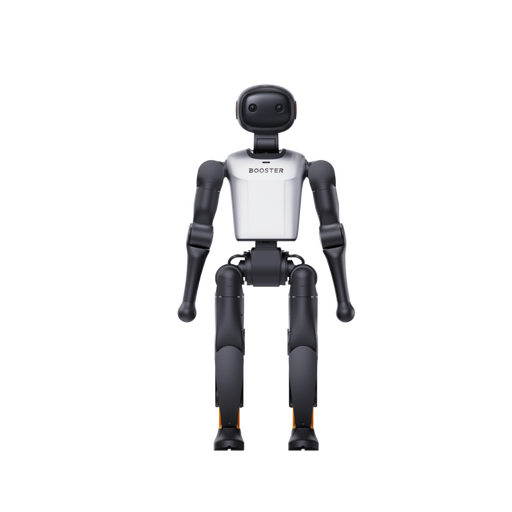
Booster Robotics K1 Geek, 48 TOPS, 22-DoF
The product name describes this model as an embodied AI development platform, making it an interesting option for supervised technical robotics projects.
Specifications listed in the product name: 48 TOPS and 22 degrees of freedom.
Joybuy
No image available
Booster Robotics K1 Edu, 117 TOPS, 22-DoF
The product name describes a platform for educational and research development, which could provide a starting point for supervised technical learning projects.
Specifications listed in the product name: 117 TOPS and 22 degrees of freedom.
Joybuy
 No image available
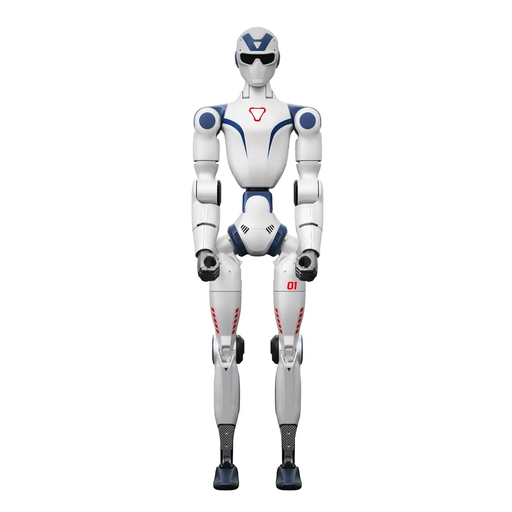
Unitree R1 Air, monocular camera, 20 degrees of freedom
The product name lists an integrated AI language model and a monocular camera for supervised demonstrations of humanoid interaction.
Joybuy
 No image available
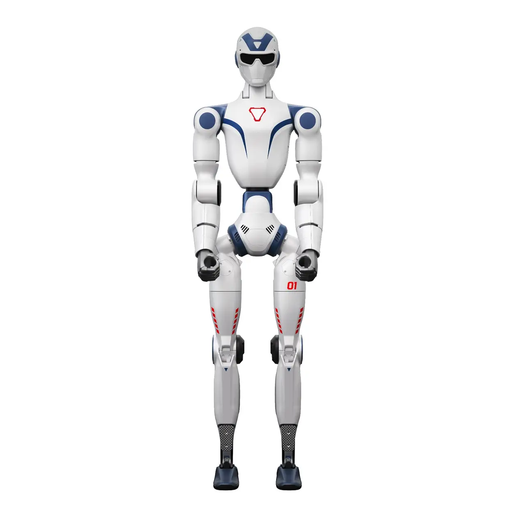
Unitree R1 Edu Blue-white
The product name describes this model as an educational robot and mentions support for secondary development.
According to the product information, the device is not suitable for anyone under 14; a clear space of at least 6 × 6 m is recommended for larger movements.
Joybuy
 No image available
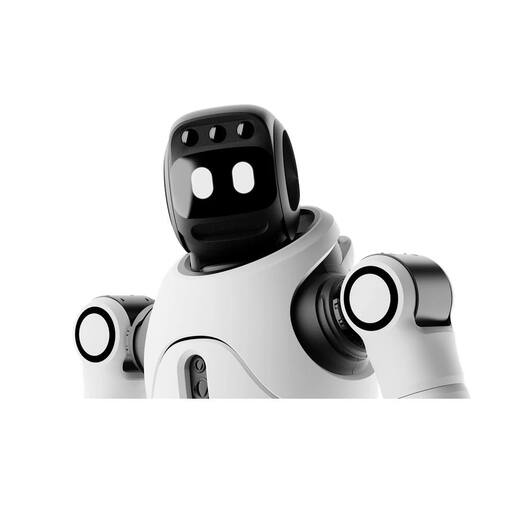
AGIBOT X2 Ultra
The product name lists secondary development, autonomous navigation and obstacle avoidance for supervised technical demonstrations.
According to the product information, children must not operate the robot or play near it while it is running; a distance of at least 2 m must be maintained.
Joybuy
Frequently asked questions
How should we prepare for our first lesson with a humanoid robot?
Choose a single programming or interaction activity and decide who will supervise the class. The Berliner Hochschule für Technik describes a modular training concept and school-based trials with NAO, but does not provide general approval for use in every school.
Is parental consent always enough for camera or voice features?
No, you cannot assume that in every case. Check the specific data processing, its legal basis and who is responsible. The Federal Commissioner for Data Protection and Freedom of Information explains the legal framework, while the data protection authority of Rhineland-Palatinate draws particular attention to data flows, storage locations and providers’ purposes. Additional school requirements may vary between federal states and depending on how the robot is used.
Who should be involved in planning purchasing and maintenance?
Involve the school and the school’s local authority early, and clarify who will handle training, updates, repairs and ongoing support. For North Rhine-Westphalia, Medienberatung NRW describes joint planning based on the school’s media strategy; this is not a single purchasing rule that applies across Germany.
Is a CE mark enough to approve a robot for classroom use?
No. According to information from the European Union, CE marking is only required for products covered by relevant harmonised legislation. It is a manufacturer’s declaration that a product conforms to the applicable requirements, not approval for a particular classroom use or data-processing activity. Check the documentation relevant to the specific device and plan for supervised operation.
Can we transfer existing NAO teaching materials to another platform?
You should confirm this for the specific replacement platform rather than assume the materials can be transferred automatically. Make a record of device and software versions, programmes and learning objectives, then check whether they can be transferred before buying or migrating.


