Who are humanoid research robots for?

Teams running their own control and AI experiments

If you want to test movements, perception or your own software, check the approved interfaces and rights for the specific variant. Unitree explicitly distinguishes between the standard G1 model, which does not support secondary development, and the EDU version.

Those responsible for regular teaching sessions

For recurring exercises with students, you’ll need reliable operation, suitable onboarding and appropriate safety arrangements. The DGUV points out that the specific working, learning and study conditions at universities must be assessed.

Teams weighing up a purchase

If you’re still working out your research question or the level of support you’ll need, a supervised practical test could help you narrow things down. Fraunhofer IOSB describes a practical route into humanoid robotics; check in advance whether the particular offer suits your institution and gives you the rights you need to carry out tests.

What should you look for when choosing one?

A platform for your own development

Suitable if: You want to test your own movement, perception or interaction software on the robot. Unitree distinguishes between the standard G1 and the EDU version, which is designed for secondary development.

Keep in mind: SDK documentation alone doesn’t confirm the rights you’ll receive or what’s included in the configuration on offer.

Purchase with onboarding and support

Suitable if: Several teachers or project groups will use one system regularly and need help with handover, training or integration.

Keep in mind: Terra Robotics described these services as part of its research offer, but the September 2026 terms mentioned there have expired. Make sure the scope of any current, individual offer is set out in writing.

Supervised lab access before you buy

Suitable if: You want to find out whether a humanoid setup and the support it requires are right for your research question. Fraunhofer IOSB describes a practical route into the field and testing initial use cases.

Keep in mind: The Fraunhofer offer described is aimed particularly at businesses. It doesn’t confirm that university hire is generally available or that you’ll have your own development rights.

Your priority What to check before buying Who is this important to?
Usable development access Get confirmation of the exact model variant, approved APIs, sensor access, licences and rights to run your own software. If I want to test my own movement or AI software, I need interfaces that are suitable and actually approved. Around 31% of consumers put development access first.
Safe operation for teaching Assess the planned movements, room, supervision and protective measures for each specific test; CE marking does not replace a risk assessment. For supervised exercises with students, I need to consider the risks of each test and its surroundings. Around 25% of consumers prioritise teaching sessions that can be organised safely.
Onboarding and ongoing support Specify training, support hours, maintenance, repair arrangements, spare parts and responsibilities individually in the offer. If several groups use a device regularly, I need clear handover and support procedures. Around 25% of consumers say onboarding and support are their top priority.
Testing before a long-term purchase Clarify access, supervision, permitted modifications, available models, data access and fees for the specific test. While my research question is still open, I want to carry out a supervised practical test before operating my own system. Around 19% of consumers put testing before buying first.

Common purchasing pitfalls

  • Assuming the standard Unitree G1 is a development platform based on its model name alone

    Unitree states that the standard G1 model on offer does not support secondary development, and that the EDU version is intended for this purpose. Choosing the wrong version could prevent you from testing your own software.

    Compare the full model name with the development features promised in the specific offer.

    If the model supplied isn’t suitable for testing your own software, you may have to buy another one.

  • Assuming previous research terms are still available

    The research terms quoted by Terra Robotics applied from 1 to 30 September 2026 and have now expired.

    Ask for a new, dated offer that clearly sets out the services included in your purchase.

  • Treating CE marking as approval for every teaching session

    Under § 3 BetrSichV, CE marking does not remove the need for a risk assessment when equipment is used as a work tool. The specific learning and study conditions must also be taken into account.

    Check product conformity and the safety of each test setup separately.

Key brands at a glance

Unitree

The G1 variants are positioned differently for movement and development testing; the specific configuration determines what development access is available.

  • Unitree publishes G1 developer documentation and distinguishes between the standard and EDU versions.
  • According to Unitree, the standard G1 on offer does not support secondary development. The exact configuration and usage rights for an individual offer must be confirmed separately.

PAL Robotics

PAL Robotics describes TALOS as a ROS-based, bipedal research platform for suitably equipped laboratories.

  • The manufacturer documents its control functions and a simulation model; its specifications give a height of 175 cm and a weight of 95 kg.
  • These manufacturer specifications don’t confirm that it’s suitable for every teaching space or detail the software and support included in a specific offer in Germany.

ROBOTIS

ROBOTIS describes OP3 as a miniature humanoid platform for research and teaching; it belongs to a different size and testing category from TALOS.

  • ROBOTIS publishes information about open hardware and software, ROS support and maintenance for OP3.
  • The manufacturer’s documentation doesn’t specify current delivery, warranty or training terms in Germany.

UBTECH

Terra Robotics describes Walker Tienkung in its offer as a platform for humanoid research, development and teaching.

  • For its research offer, Terra Robotics lists an SDK, ROS 2 support, and help with training and integration.
  • This information comes from the supplier. The advertised September 2026 terms have expired; the scope and conditions of any current individual offer must be checked separately.

Humanoid robots on Joybuy

The following Joybuy offers cover humanoid platforms for AI, movement and development testing. Before buying, check the conformity documents and the specific development rights promised for the product.
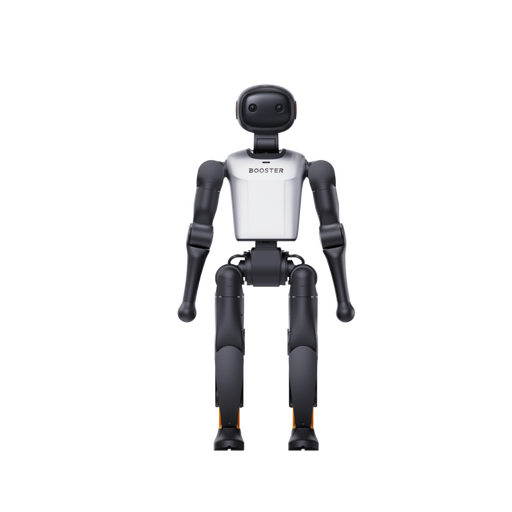
Booster Robotics K1 Geek, humanoid robot with 48 TOPS and 22 DoF

Booster Robotics K1 Geek, 48 TOPS, 22 DoF

For your own AI and robotics experiments; before buying, check which development features are included in the configuration on offer.

Specifications in the product name: 48 TOPS and 22 DoF.

View on Joybuy
Booster Robotics K1 Edu, humanoid education and research platform with 117 TOPS and 22 DoF

Booster Robotics K1 Edu, 117 TOPS, 22 DoF

For teaching and research projects using your own software; the product description lists software APIs and development tools for programming your own tasks.

Specifications in the product name: 117 TOPS and 22 DoF.

View on Joybuy
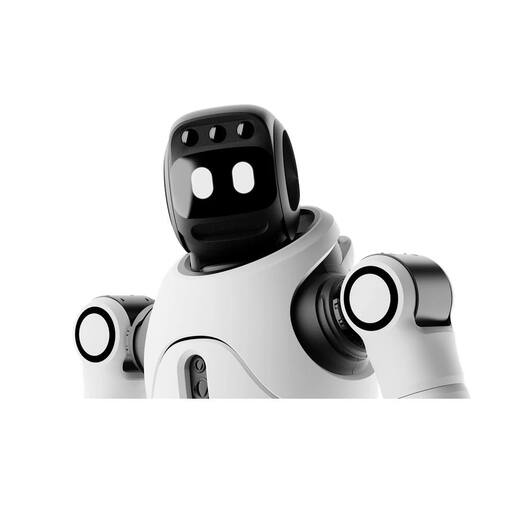
AGIBOT X2 Ultra, humanoid robot

AGIBOT X2 Ultra

For your own control and AI experiments; the offer title mentions support for secondary development. Check which features and rights are included in the specific configuration.

The product description warns of high-torque joints, unsupervised autonomous operation and obstacles that may not be detected. It specifies a minimum distance of 2 m and supervision.

View on Joybuy
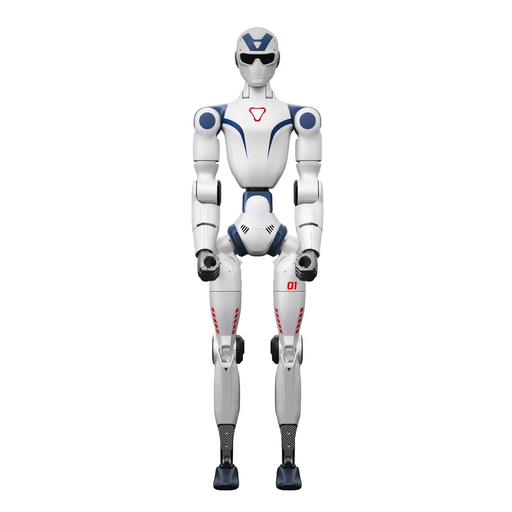
Unitree R1, humanoid robot with two cameras and 26 DoF

Unitree R1, 26 DoF, two cameras

For initial experiments in AI interaction and humanoid movement; check whether the specific version gives you the development rights you need.

Specifications in the product name: 26 DoF and two cameras. The product description warns of collision and crush hazards caused by movement and recommends plenty of space and adult supervision.

View on Joybuy
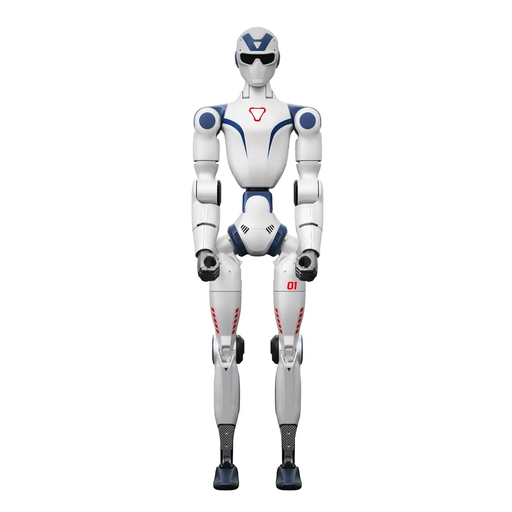
Unitree R1 Air, humanoid robot with monocular camera and 20 DoF

Unitree R1 Air, monocular camera, 20 DoF

For initial AI, robotics and human–robot interaction experiments; check in advance which software access is available for your project.

Specifications in the product name: monocular camera and 20 DoF. The product description warns against operating it near stairs, edges or uneven surfaces, and of crush hazards around moving joints.

View on Joybuy

Frequently asked questions

Is the phrase ‘with SDK’ enough for developing your own research software?

No. You should check the approved features and usage rights for the specific variant. Unitree explicitly distinguishes between the standard G1 model, which doesn’t support secondary development, and the EDU version. Public documentation doesn’t specify what will be included in your order.

What should you prepare before the first teaching session?

If staff use the robot as a work tool, § 3 BetrSichV requires a risk assessment before use; CE marking doesn’t replace it. The DGUV recommends assessing the specific working, learning and study conditions, including the activities involved. The measures required will depend on the test and the room.

Are students covered by statutory accident insurance during robot exercises?

According to the German Social Accident Insurance (DGUV), enrolled students are insured for activities that take place within the content-related and organisational responsibility of a state-recognised university. This doesn’t mean that any visitors or privately organised tests are covered; their situation must be checked separately.

What ongoing costs and services should an offer list?

Ask for training, software maintenance, servicing, repairs, spare parts and, where applicable, supervised test sessions to be listed individually in the specific offer. Also clarify who is responsible for handover, technical queries and each of the services.

Which EU machinery rules apply to a purchase in October 2026?

For machinery first placed on the EU market before 20 January 2027, the European Commission refers to Machinery Directive 2006/42/EC. Whether a specific platform falls under this or other harmonised rules must be assessed for the individual product. CE marking should only be affixed where applicable EU legislation requires it.