Teaching team running regular programming courses
Needs clear, repeatable exercises, a programming environment that can be supervised, and time for set-up and practice. UBTECH lists Blockly, Python and supporting courses for Yanshee.


For regular programming courses, the software and teaching materials supplied with the specific version on offer should suit your teaching format. For movement or interaction research, focus on the functions and interfaces actually available. Supervised interaction systems and research platforms serve different purposes. Before using a robot near learners, check the documentation for the exact device and carry out a site-specific safety assessment.
Needs clear, repeatable exercises, a programming environment that can be supervised, and time for set-up and practice. UBTECH lists Blockly, Python and supporting courses for Yanshee.
Needs documented interfaces and the capabilities of a precisely specified version, along with expert supervision of the experimental set-up. Unitree distinguishes between G1 and G1 EDU; PAL Robotics describes TALOS as a ROS-based research platform. The DGUV treats the assessment of learning and study conditions as a site-specific task.
Wants to run dialogues or demonstrations with learners, and needs suitable training, predictable procedures and clarity on data processing. United Robotics Group describes uMe Uno as suitable for teaching and demonstrations, and says training can be part of the purchasing process.
A good fit if: Learners are to practise programming, movement or sensors hands-on, and the team can supervise the environment supplied.
Bear in mind: UBTECH lists Blockly, Python and courses for Yanshee; check that the software version actually supplied is suitable for your course.
A good fit if: Dialogue and human-robot interaction matter more than grasping or autonomous LiDAR navigation.
Bear in mind: United Robotics Group says that uMe Uno cannot grasp or navigate autonomously using LiDAR, and that its voice dialogue currently uses an external AI service.
A good fit if: An expert team wants to investigate bipedal movement, control or complex robot interfaces.
Bear in mind: Unitree offers G1 and G1 EDU with different specifications; PAL Robotics describes TALOS as a ROS-based research platform. Check the exact version and experimental set-up.
The right platform depends on your main priority: teaching activities, safely planned operation, research interfaces or ongoing support.
| Priority | What to check before buying | Who is it important to? |
|---|---|---|
| Programming environment and teaching materials | Ask for teaching examples to be demonstrated using the software version on offer; check which devices and interfaces are needed. | If I’m planning regular programming courses, I need exercises that will actually work with the software version ordered. Around 33% of consumers put the programming environment and teaching materials first. |
| Safe operation near learners | Check the robot’s movements, positioning, supervision and emergency intervention options against its instructions and a site-specific assessment. | If learners are working near the robot, I need to plan the space, its movements and supervision for the specific activity. Around 27% of consumers prioritise safe operation. |
| Research interfaces and capabilities | Compare the full version name, enabled APIs, sensors and options with your experimental plan. | For movement or control experiments, I need the exact functions and interfaces included with the version ordered. Around 20% of consumers prioritise research interfaces and specific capabilities. |
| Set-up, support and service | Make sure the quote lists training, support responsibilities, maintenance and software updates separately. | If we don’t have an integration team in-house, I want to know in advance who will provide training and ongoing support. Around 20% of consumers prioritise set-up and service. |
Unitree distinguishes between G1 and G1 EDU, as well as optional equipment. Teaching materials and interfaces need to match the configuration actually supplied.
Make sure the full model name and options appear in the quote, and ask for an activity from your planned course to be demonstrated on the version being offered.
Failing to check can mean extra integration and support work.
The DGUV says that assessments should relate to the specific school activity or the learning and study conditions at the site.
Assess positioning, movements, supervision and emergency intervention options for the activities you have planned.
Planning the space, training and protective measures may require additional organisational work.
United Robotics Group says that uMe Uno’s voice dialogue currently uses an external AI service.
Before using the robot with learners, check every enabled function and the data flows involved.
UBTECH describes Yanshee as a compact platform for education, programming and robotics.
The supplier describes uMe Uno as a platform for supervised teaching, dialogue and demonstrations.
Unitree offers G1 and G1 EDU as bipedal platforms for robotics experiments, with different configuration options.
PAL Robotics describes TALOS as a ROS-based bipedal research platform for specialist labs.
NAO is relevant to supervised learning formats thanks to its documented programming tools and a university project focused on schools.
The Joybuy products below are humanoid platforms for supervised interaction, movement and demonstration scenarios. Their programming options and operating conditions vary. Before using one near learners, check the documentation for the specific version and carry out a site-specific safety assessment.
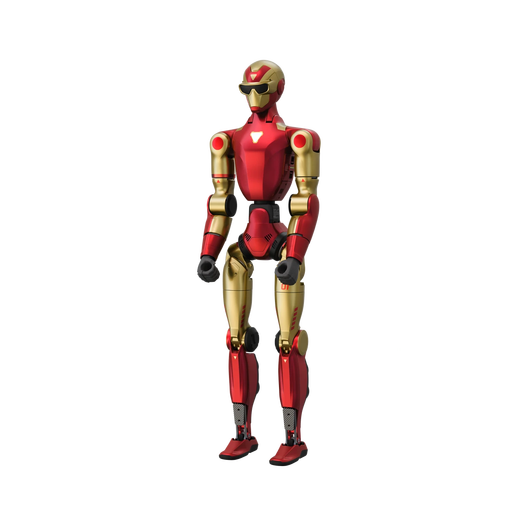 No image available
For supervised interaction demonstrations where camera and voice functions are part of the learning goal; product information does not replace checks on data processing or device safety.
Listed in the product title: 20 degrees of freedom, monocular camera and AI voice interaction.
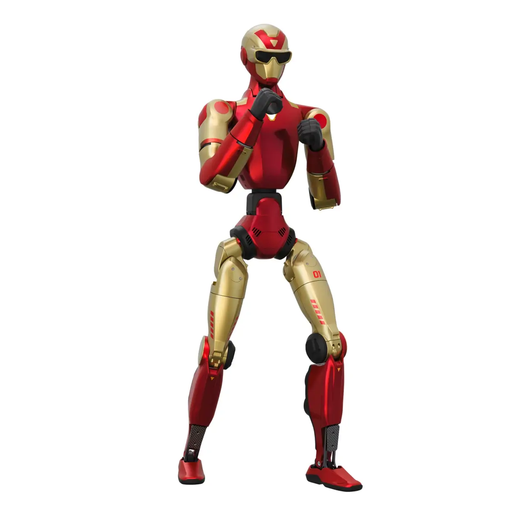 No image available
Could be considered for supervised demonstrations involving camera and voice interaction; check the planned procedures and operating conditions before buying.
Listed in the product title: 26 degrees of freedom, dual cameras and AI voice interaction.
The product text warns users to keep clear of the robot’s immediate movement area when starting it or during fast movements, and not to move its joints manually while it is switched on.
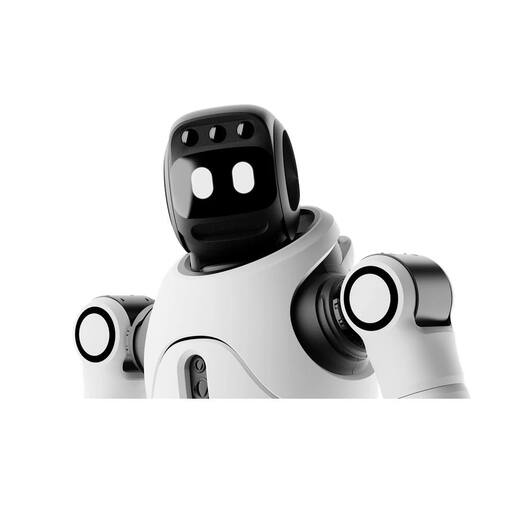 No image available
For supervised interaction and movement demonstrations, provided its functions suit the task and the operating conditions have been assessed on site.
For the Ultra version, the product text lists 31 degrees of freedom, LiDAR and an RGB-D camera, as well as secondary development.
The product text lists a weight of 37 kg and says children must not operate the robot or play near it while it is running. It specifies a safety distance of at least 2 m during autonomous operation; according to the product text, transparent surfaces or sudden drops may not be detected.
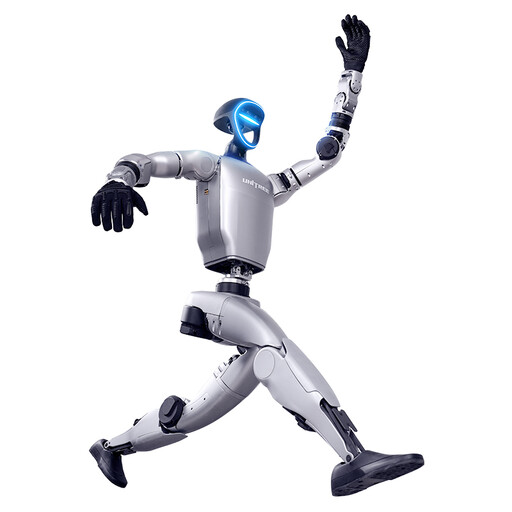 No image available
Could be relevant for supervised demonstrations of movement and manipulation, but according to the product information, it is not available for custom programming or development using an SDK/API.
The product text says the device is not suitable for anyone under 14 and calls for extra caution when children are present.
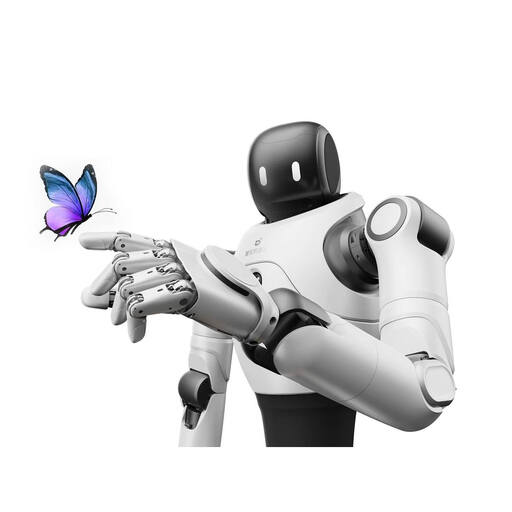 No image available
For supervised interaction demonstrations where visual, voice or tactile functions suit the learning goal; any development work must be compatible with the version on offer.
The product description lists 27 degrees of freedom, an interactive RGB camera and a touch sensor; it states that secondary development is not supported for this version.
The product text lists a weight of 35 kg and warns of high-torque joints. It also says that children must not operate the robot while it is running or play nearby.
Check the instructions and relevant conformity documents for the exact model with the manufacturer or supplier placing it on the market. The European Commission describes Machinery Directive 2006/42/EC as the applicable framework for machinery first placed on the EU market before 20 January 2027; the Machinery Regulation (EU) 2023/1230 becomes mandatory from 20 January 2027. This does not, in itself, determine whether a specific offer is compliant.
No. In addition to product-specific conformity requirements, you need to assess how the robot will actually be used. The DGUV treats safety during school activities, and the assessment of working, learning and study conditions at universities, as tasks that depend on the site and activity.
Compare the instructions and items supplied for the exact version with your room, storage area and supervised procedures. Unitree publishes separate information on the G1 battery and charger, as well as packaging; this does not amount to an approved charging or movement procedure for your organisation.
Clarify training, maintenance, repair responsibilities, software updates and any rental services separately and in writing. United Robotics Group lists purchase or rental with installation and training; this does not provide a comparable total price across different offers.
The product information does not give blanket approval. If personal data is being processed, check the purpose, legal basis and data flows. United Robotics Group says that uMe Uno’s voice dialogue currently uses an external AI service; the guidance from the Data Protection Conference is not a product-specific authorisation.