What should you look for when buying?
First, decide what you want students to programme on the robot itself. Then check that those exact exercises can be carried out under supervision and that the robot can be operated across several courses.
| Criterion |
What to check before buying |
Who it matters to |
| Programming and simulation |
Ask the supplier to confirm the exact variant and access to the APIs, ROS versions, joint and sensor data, and simulation tools you need. |
If I want to teach control or perception as a hands-on subject, pre-programmed routines aren’t enough. Around 33% of consumers put programming and simulation access first. |
| Supervised teaching use |
Set out a risk assessment, operating modes, start and stop procedures, and supervision arrangements for the planned exercises. |
With groups of students changing regularly, I need procedures that make it possible to repeat movement trials in a controlled way. Around 27% of consumers say supervised operation is their top priority. |
| Procurement and maintenance |
Confirm in writing what’s included, training, a point of contact, repair arrangements, spare parts, batteries and software updates. |
If the robot is to be used across several courses, I need to be able to plan around a fault, too. Around 27% of consumers prioritise long-term operability. |
| Manipulation and interaction |
Check that the hands or grippers, sensors and teleoperation access are suitable, and that the robot can carry out the tasks you have in mind. |
If grasping and interaction are at the heart of my project, walking dynamics alone won’t meet my needs. Around 13% of consumers say manipulation and interaction are their primary requirements. |
Joybuy products for teaching and development projects
This selection includes humanoid models for movement and hands-on development projects. For each model, check that it has the interfaces and operating conditions your course requires. The variants shown here are not interchangeable with the R1, T1 or OP3 platforms mentioned above.
 Image unavailable
AGIBOT X2 humanoid robot
Consider this for projects involving humanoid movement and interaction. Before buying, ask the supplier to confirm access to the development features you need for your tasks, and plan supervised exercises with enough clearance around moving joints.
Purchase link unavailable
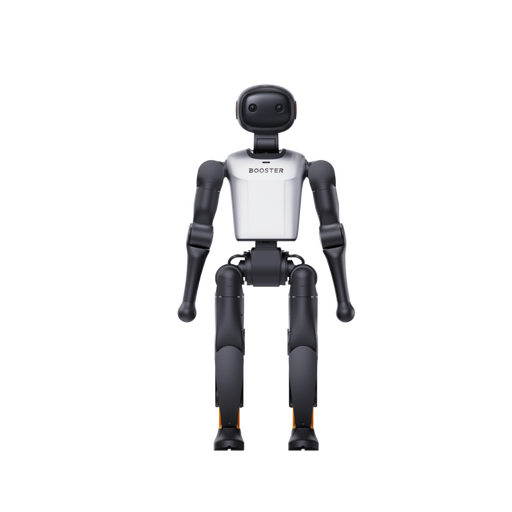 Image unavailable
Booster Robotics K1 Edu, 22-DoF
Designed for teaching projects involving humanoid movement and hands-on programming. The product name specifies 22 degrees of freedom; check that the available APIs, sensor access and simulation tools suit your course activities.
View at Joybuy
Image unavailable
Booster Robotics K1 Geek, 22-DoF
Designed for development projects that combine humanoid movement with your own algorithms. The product name specifies 22 degrees of freedom; before buying, check access to the software and sensor data you need, along with support for teaching use.
View at Joybuy
Frequently asked questions
What should a university lab check before using a robot for the first time?
Before use, assess the risks associated with the planned exercises and clarify who is responsible for operating the robot. For employees, Section 5 of Germany’s Occupational Safety and Health Act requires employers to assess work-related risks. Supervision, training and protective measures must also be planned for students and specific course activities.
Is CE marking enough for exercises with students?
No. CE marking alone doesn’t authorise a specific teaching exercise. The European Union associates it with product conformity; the place of use, planned movements and people involved must also be taken into account separately when planning operation.
How should a course introduce walking movements?
Start with clearly defined, supervised exercises and set start and stop procedures, rather than trying unrestricted movements. Fraunhofer IPA notes that practical experience with humanoid robot functions is still limited; only expand the exercises within the established safety procedures.
What should procurement cover for batteries and maintenance?
Check whether batteries and chargers are included, how they may be handled, and what the repair arrangements, spare parts and update procedures are. For lithium-ion batteries, the DGUV recommends avoiding mechanical impacts such as knocks, so make sure you also consider storage and transport in day-to-day lab use.
Are humanoid robots being tested in practical settings in Germany?
Yes. Fraunhofer IGP reports on tests of a Unitree G1 in real-world conditions, while Fraunhofer IOSB-INA describes a lab for exploring the potential, limitations and safety aspects of humanoid robotics. This doesn’t necessarily mean a particular model will suit your learning objectives or operating conditions.


