HRI and AI teaching labs with ROS experience
For teams developing dialogue, perception, user tracking or navigation, with Linux and Python or C++ skills to draw on. PAL Robotics documents a ROS 2 development pathway for ARI.


Choose a platform to suit your teaching or research focus: for ROS-based human–robot interaction, consider a documented social robot; for full-body movement and manipulation, look for a suitably equipped bipedal platform. The key factors are the development access available with the specific variant, a safe experimental set-up and the ongoing support your team can realistically provide.
For teams developing dialogue, perception, user tracking or navigation, with Linux and Python or C++ skills to draw on. PAL Robotics documents a ROS 2 development pathway for ARI.
For groups studying full-body movement, manipulation or depth-camera data, and able to operate a bipedal platform with a safety plan suited to their experimental set-up. Unitree Robotics documents different G1-EDU configurations for this purpose.
For courses with repeatable exercises in image processing, audio, sensors and robotics programming, where dynamic locomotion or forceful manipulation is not the learning objective. Developer and camera documentation for NAO is available from Aldebaran and SoftBank Robotics.
First, decide whether your priority is social interaction, full-body movement or a focused teaching exercise. Then check the configuration on offer and what your lab can support in day-to-day use. A demonstration can help answer practical questions, but it is no substitute for checking the specific offer you intend to buy.
| Priority | What to check before buying | Who it matters to |
|---|---|---|
| Development access | Ask for documentation for the model and variant covering the operating system, SDK, interfaces and how to restore an application. | If we want to run and modify our own applications repeatedly in practical classes, the development pathway must be manageable; around 31% of consumers would see this access as a top priority. |
| Sensors and movement | Check that the cameras, depth sensors, hands and degrees of freedom you need are included in the variant actually on offer. | For our research question, what matters is whether we can access the movement or sensor data we need; around 25% of consumers would put the right specification first. |
| Integration into the lab | Plan a risk assessment for the experiment, as well as the movement area, emergency stop and power connection. | If students will be working close to the robot, we need controllable procedures and supervision; for around 25% of consumers, safe integration into the lab would be the main concern. |
| Ongoing support | Get written details of the update process, responsibilities, repairs and spare parts for the specific offer. | We need to keep the equipment running across several semesters, even after faults or changes in users; around 19% of consumers would therefore prioritise long-term support. |
PAL Robotics lists sensors as options for ARI, while Unitree states that degrees of freedom and hardware options vary by G1 configuration. The product family name alone therefore doesn’t tell you what’s included.
List the sensors, hands, computing options, accessories and developer access you need individually in the specification.
Components needed later may require additional purchasing and integration work.
PAL Robotics and Unitree Robotics document development environments with operating system and software dependencies. A successful demo doesn’t show how easily course applications can be restored after a reset.
Assign technical responsibility and, before buying, test user changes, recovery and an example application of your own.
Maintaining the operating system, installing updates and onboarding new users will all take time after set-up.
The German Social Accident Insurance (DGUV) explains how impact forces are measured and assessed in collaborative workspaces. A product label is no substitute for assessing the specific experimental set-up.
Before using the robot, assess the movement area, proximity to users, ways to intervene and supervision required for the planned exercises.
A manufacturer’s portal may describe documentation and repair routes without setting out the terms for a particular university order.
Get the contracting party, repair process, spare parts and software support for the model on offer agreed in writing.
PAL Robotics describes ARI as a mobile social robot for human–robot interaction research.
Unitree Robotics’ G1 and G1-EDU documentation is intended, among other things, for development projects involving bipedal movement and sensors.
NAO is worth considering for focused teaching exercises in programming, perception and interaction.
These models may suit robotics development projects and relevant teaching activities. Compare each variant with the interfaces you need and the requirements of your lab.
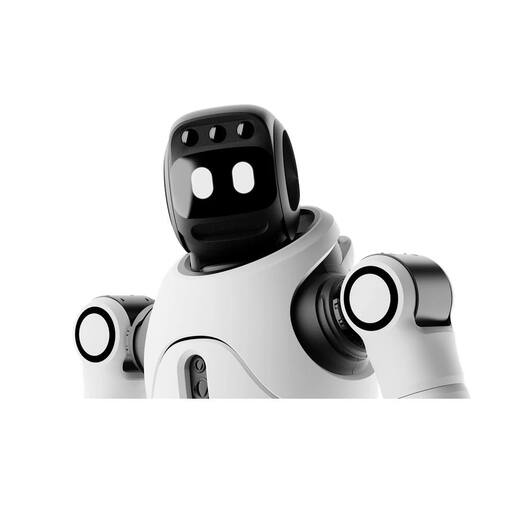 No image available
For development projects involving navigation and interaction: the product listing mentions autonomous navigation and support for your own development work.
The product description recommends supervision and a safety distance of at least 2 m during operation. Before ordering, check that you’ll have access to the developer and sensor data you need, and assess the specific experimental set-up before use.
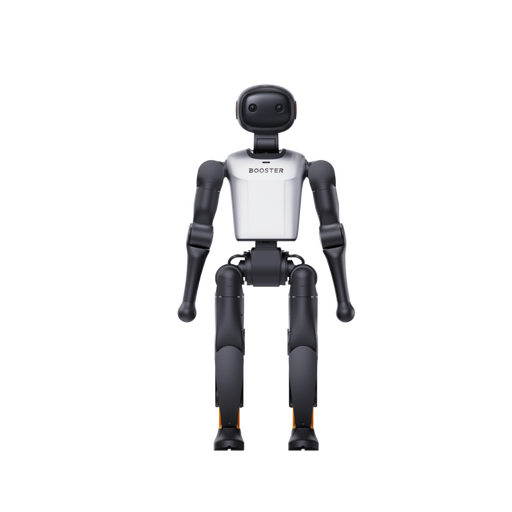 No image available
For programming practicals and development projects: the listing mentions access to software APIs and development tools.
Specifications include 22 degrees of freedom and 117 TOPS of AI computing power. Ask for the API documentation, sensor interfaces and safety documents for this specific variant.
No image available
For development projects involving humanoid movement: the listing is aimed at those programming their own algorithms.
Specifications include 22 degrees of freedom and 48 TOPS of AI computing power. Check that the SDK functions, sensor data access and safety documents you need are available for this exact configuration.
No. What matters is documented development access for the model and variant on offer. Check the operating system, programming languages, interfaces, examples and version maintenance. PAL Robotics describes a ROS 2 development pathway for ARI, while Unitree Robotics documents a Linux build environment for SDK2.
Plan the movement area, supervision, emergency stop procedures and development environment needed for the specific experiment. For activities involving close contact, the German Social Accident Insurance refers to the measurement and assessment of impact forces in collaborative workspaces. The risk assessment must reflect the actual set-up.
Ask for the legal classification of the specific robot to be checked, along with the conformity and safety documents relating to the offer. According to EUR-Lex, the Machinery Regulation (EU) 2023/1230 replaces the Machinery Directive from 20 January 2027. The rules that apply to a particular model depend in particular on its classification and the relevant date.