What should university and AI labs look for when buying?
Compare platforms against your project’s main objective: development access, movement, perception or reliable day-to-day lab operation.
| Priority |
What to check before buying |
Who should prioritise this? |
| Development access |
Ask the supplier to confirm the exact model and variant, SDK/API, ROS version and support for your own code. |
If we’re developing our own control or AI software, we need access to the right commands and data. Around 31% of consumers prioritise development access on their specific variant. |
| Movement and test setup |
Plan the movement task, dimensions, control access, test area and required supervision together. BAuA describes risk assessment as an employer’s duty for workplaces. |
For gait and whole-body experiments, the robot and test area must suit the planned setup. Around 25% of consumers put movement and test setup first. |
| Sensors and data processing |
Check the cameras, microphones and accessible data streams for each variant. For personal data, check the legal basis and, where relevant, any transfers outside the EEA. The European Commission and the European Data Protection Board set out the applicable conditions. |
If we’re researching perception or interaction, we need the right image or audio data and a suitable way to process it. Around 25% of consumers prioritise sensors and data processing. |
| Integration and operation |
Clarify what’s included in the delivery, training, responsibility for integration, spare parts arrangements, response times and warranty handling in the specific quotation. |
For regular lab experiments, responsibilities for setup, faults and spare parts need to be clear. Around 19% of consumers focus on integration and service. |
Humanoid development platforms at Joybuy
The product options below are for humanoid development, perception and movement projects. For the specific system, check the CE marking, manufacturer information, German-language user manual with instructions for use and warnings, and declaration of conformity. The product description alone does not confirm that these documents are available.
 No image available
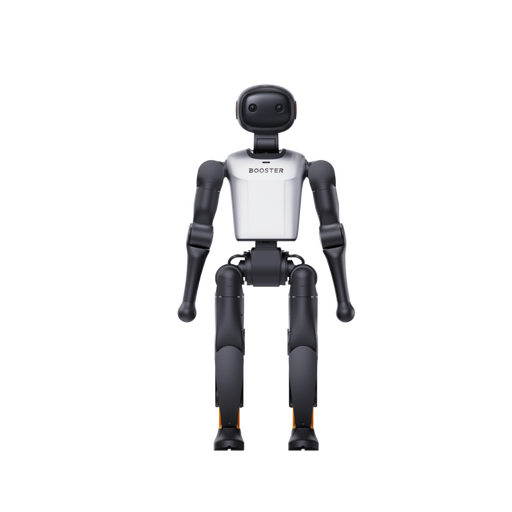
Booster Robotics K1 Geek, 48 TOPS, 22 DoF
For teams comparing humanoid platforms for their own development work and movement experiments.
Listed in the product name: 48 TOPS and 22 DoF.
View at Joybuy
No image available
Booster Robotics K1 Edu, 117 TOPS, 22 DoF
An option for research teams considering a development platform described as an EDU model.
Listed in the product name: 117 TOPS and 22 DoF.
View at Joybuy
 No image available
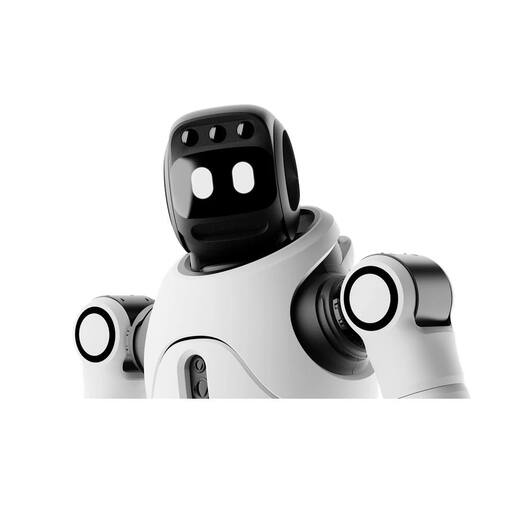
AGIBOT X2 Ultra
For teams considering a humanoid platform for development, perception and movement projects.
The product description lists the X2 Ultra as having 31 DoF, an Orin-NX computing board, an RGB-D camera and LiDAR, and a weight of around 37 kg. It states that operation should be supervised and that a safe distance should be maintained during autonomous operation.
View at Joybuy
 No image available
Unitree R1 Air, monocular camera, 20 DoF
A compact platform option for teams comparing visual perception and movement projects.
Listed in the product name: monocular camera and 20 DoF.
View at Joybuy
 No image available
Unitree R1, two cameras, 26 DoF
An option for teams looking to combine visual perception with movement or interaction experiments.
Listed in the product name: two cameras and 26 DoF.
View at Joybuy
Frequently asked questions about humanoid research robots
Is “ROS-compatible” enough to ensure the robot will work with our existing code?
No, that statement alone isn’t enough. Check the robot model, variant, ROS version and packages provided against your code. ROBOTIS specifically describes the 2025 re-release of OP3 as developed for ROS 2; this does not mean that other versions are automatically compatible.
What should we arrange before running movement experiments in a university lab?
Plan the test area, supervision and safety measures to suit the specific movement, and involve the relevant health and safety team. BAuA describes risk assessment as an employer’s duty for workplaces; this does not establish a general safe distance for any particular robot model.
Can we simply upload recordings of research participants to an external cloud?
No, not just because the recordings are part of a research project. Projects processing personal data need an appropriate legal basis. If an external processor is involved, check the contractual obligations; for transfers outside the EEA, also check the applicable requirements. Whether a robot uses a cloud service depends on the specific setup.
What service arrangements can be confirmed for a university purchase in Germany?
United Robotics Group offers a support route for NAO, as well as a way to make enquiries about spare parts and maintenance. RBTX says it can recommend a partner from its network if integration is needed; this does not mean the marketplace itself will integrate every humanoid robot. The scope of the service and response times should be included in the specific offer.
Which conformity documents should we check for the system on offer?
For the specific system, check the CE marking, manufacturer information, a German-language user manual with instructions for use and warnings, and the declaration of conformity. Germany’s Federal Network Agency lists these points in connection with its market surveillance. A general product description or SDK manual is no substitute for checking the documents for the specific system.


