What should you look for when choosing?
Start with the experiment you plan to run, then check the exact variant, software access and requirements for operating it in your lab.
| Requirement |
What to check before buying |
Who it matters most to |
| Development access |
Confirm in writing which SDK and API features are available for the variant being ordered, along with the ROS 2 interfaces, sensor data and simulation models you need. |
If I want my own algorithms to run on the robot, I need access to the specific control and data layers my project requires. This is the main priority for around 36% of consumers in university and research teams. |
| Safe lab operation |
Establish the movement area, safety measures and a project-specific risk assessment before conducting experiments with people. |
When carrying out repeated movement trials, I need to account for falls and potential collisions as part of the lab procedure. Around 29% of consumers give safe testing the highest priority. |
| Manipulation and sensors |
Check the hand and arm configuration, along with the camera, depth or audio data required for the experiment, against the exact variant. |
For grasping or interaction research, a programmable robot is only useful to me if its specific equipment suits the task. The right manipulation and sensor configuration is the main concern for around 21% of consumers. |
| Service and integration |
Agree on what is included, maintenance, spare parts, training and responsibilities for network integration. |
If the platform is part of a teaching or project plan, I need clear responsibilities for commissioning and ongoing support. For around 14% of consumers, these organisational requirements come first. |
Joybuy products for development projects
These two humanoid platforms may suit teaching and development projects. Before choosing, check in particular which software and sensor data access is available for the specific offer. Documentation for another model variant is no substitute.
 No image available
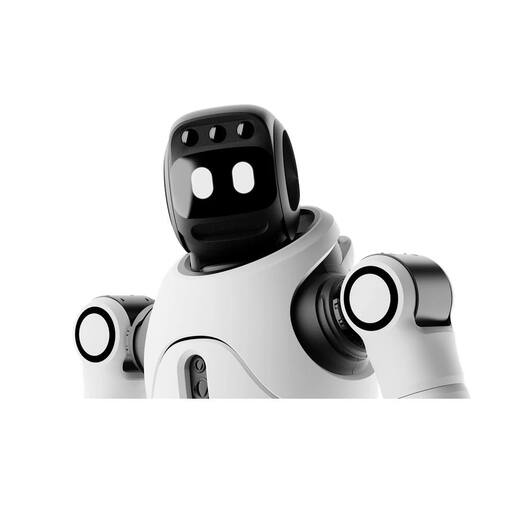
AGIBOT X2 Ultra humanoid robot
The X2 Ultra may suit projects using custom control software, provided the development access you need is confirmed in writing for the variant on offer.
For perception or manipulation experiments, teams should also check the accessible sensor data, usage rights and limits on the planned arm movements against the offer.
View at Joybuy
 No image available
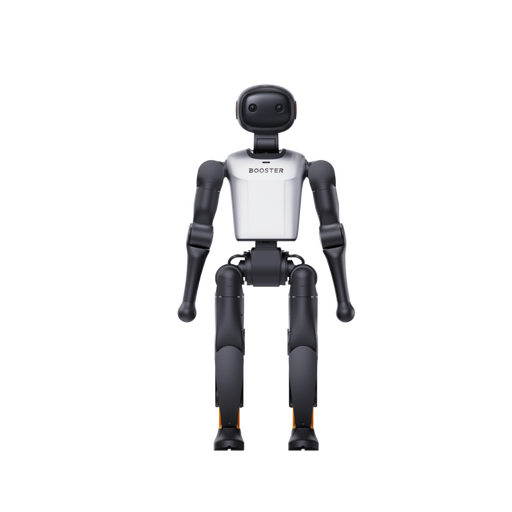
Booster Robotics K1 Edu humanoid robot, 22 DoF, 117 TOPS
The K1 Edu may be a suitable platform for teaching and AI prototyping, provided its actual API features meet the needs of your experiment.
The listing specifies 22 degrees of freedom and 117 TOPS of computing power. Check the sensor access, software permissions and lab operating requirements for the variant on offer.
View at Joybuy
Frequently asked questions
Is “SDK included” enough for a research purchase?
No. On its own, this doesn’t tell you which features are accessible on the variant you are ordering. Ask for specific confirmation of the control layer, sensor data, ROS 2 integration, simulation model and usage rights. Unitree’s G1 developer documentation does not prove that every G1 offer provides the same access.
What should you consider when using camera and audio data in a research lab?
If personal data is involved, clarify the research purpose and how the data will be processed before collecting it. The European Data Protection Board stresses the importance of protecting individuals in scientific research. The University of Hamburg also outlines the documentation of purposes, data categories, recipients and retention periods. Include your data protection and IT security teams in the experimental design.
Is a humanoid robot automatically suitable for experiments near people?
No. Suitability depends on the specific system and experimental setup. For collaborative robotics, the German Social Accident Insurance (DGUV) describes the need for a risk assessment and refers to suitable impact force measurements. You should also take movement, tools, space and safety measures into account.
What documents should a lab request before placing an order?
Request documents for the exact model variant, particularly details of software access, operating and safety measures, what is included, network connections and service arrangements. Also check which conformity documents apply to the specific system and its intended use. These do not replace a risk assessment for the lab experiment.


