What should you look for when choosing?
A clearly defined logistics task
Suitable if: you want to test a specific task, such as picking, moving or handing over an item, under set conditions.
Trade-off: A narrowly scoped test is easier to evaluate, but it does not tell you how the robot will cope with changing tasks or multiple shifts.
Integration with warehouse processes
Suitable if: orders or handovers need to work with a warehouse management system and existing material flows.
Trade-off: Testing within the process gives you more meaningful results, but requires interface work, access permissions and support.
A phased trial
Suitable if: you want to assess task suitability and how the robot works alongside employees first, before deciding whether to expand the trial.
Trade-off: Multiple test stages take time and staff. An announced pilot is not proof that the robot will work in full-time operation.
Start by defining the task and operating conditions. Then compare the complete pilot setup, not just the robot model.
| Consideration |
What to check before buying |
Who this matters most to |
| Suitability for the warehouse task |
Record the range of objects, weights, pick-up points and handover heights. Under the same conditions, track successful handovers, errors and any interventions required. |
If I want to test a specific task, I need trials using the actual objects and handover points. Around 26 % of consumers put suitability for the task first. |
| Safety at the site |
Before use, assess risks for the specific task and site, along with the safeguards required and how effective they are. Don’t rely on a blanket safety distance taken from a data sheet. |
If employees and robots share the same area, I want to understand the risks and safeguards for that exact process. Around 26 % of consumers prioritise approving the operating area as safe. |
| IT and process integration |
Ask for the proposed configuration to be demonstrated, including order handovers, feedback, access rights, the test environment and responsibility for handling faults. |
If the robot is to receive orders from my WMS, I want to test the whole data flow, including feedback and fault scenarios. Around 21 % of consumers focus first on integration with existing IT and material flow processes. |
| Pilot and potential expansion |
Request a quote for the exact configuration tested, including commissioning, interfaces, support, power supply and acceptance criteria. |
If I’m planning a limited trial to begin with, I still want to know what’s included and what would need to change to expand it later. Around 16 % of consumers put complete pilot costs and scalability first. |
| Operation and working together |
Record operating and intervention times, and ask employees about the processes actually tested. |
If my team will be responsible for the robot later, I want to try out the workload involved and how we work together in the actual process. Around 11 % of consumers prioritise support and employee experience. |
Humanoid robots for early-stage logistics pilots at Joybuy
The following products are humanoid platforms for early technical pilot projects. Model specifications alone do not prove suitability for a specific warehouse process or approval for safe operational use.
 No image available
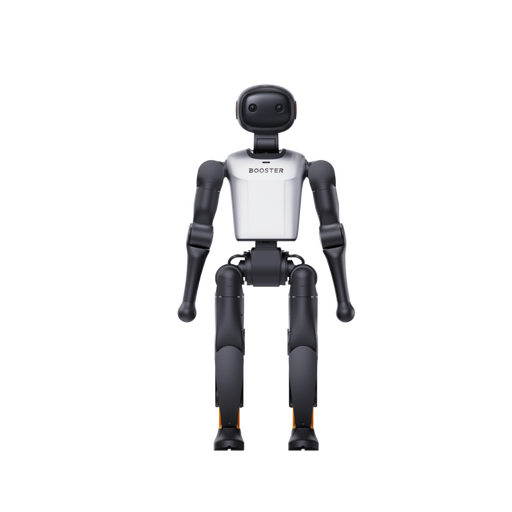
Booster Robotics K1 Geek
Could provide a starting point for an early technical pilot setup if development work is part of the project; the product title describes it as a development platform.
Specifications in the product title: 48 TOPS AI and 22 DoF.
View at Joybuy
 No image available
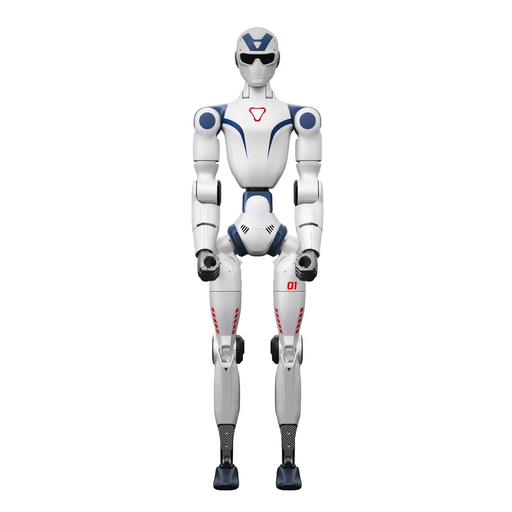
Unitree R1
May be suitable for a narrowly scoped platform pilot if the camera and joint features listed in the offer are relevant to your planned trial.
Specifications in the product title: two cameras, 26 DoF and an integrated AI language model. The product listing notes that sufficient space is needed to avoid collisions.
View at Joybuy
 No image available
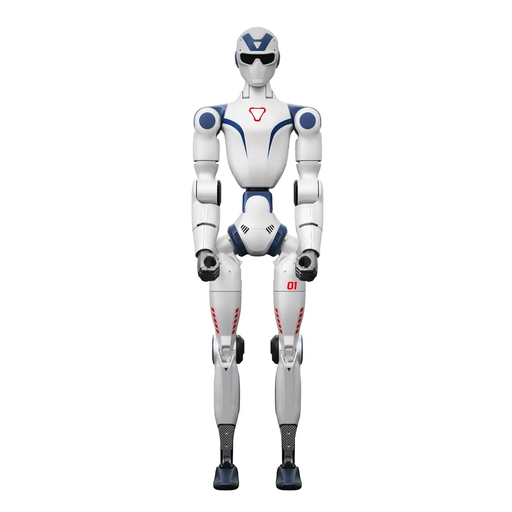
Unitree R1 Air
Could be considered for a narrowly scoped technical platform pilot; the listed model specifications are no substitute for testing it with the intended warehouse task.
Specifications in the product title: monocular camera, 20 DoF and an integrated AI language model. The product listing warns against operating it near stairs, edges or uneven surfaces, and against exposure to moisture.
View at Joybuy
Frequently asked questions
Which task is suitable for a first test you can measure?
A clearly defined, repeatable handover is a good place to start. Set the object types, start and end points, and permitted interventions in advance, then record results under the same conditions. The container handover described by GXO and Agility Robotics is an example of a US application, not a performance guarantee for your site.
What IT should I plan for a WMS-connected trial?
Test order handovers, feedback, permissions and fault handling on your own system. For its German proof of concept at BITZER, NEURA Robotics describes a connection to SAP EWM via the SAP Business Technology Platform. Different software or robot configurations require their own interface checks.
Is CE marking enough to operate the robot alongside employees?
No. Under § 3 BetrSichV, CE marking does not exempt an employer from assessing the risks of the specific application. Under § 4, the necessary safeguards must be in place and safe use confirmed before operation. The exception mentioned there applies to effectiveness checks before first use where the relevant inspections under § 14 or § 15 BetrSichV have been carried out.
Which machinery legislation applies to a machine newly placed on the market in Germany in 2026?
If the system offered qualifies as machinery within the scope of the legislation, the rules under Machinery Directive 2006/42/EC, implemented through the 9. ProdSV, remain applicable to products placed on the market up to and including 19 January 2027. The Machinery Regulation (EU) 2023/1230 applies to products placed on the market from 20 January 2027. The German Federal Institute for Occupational Safety and Health explains this distinction between the two dates; this does not establish the conformity of any specific product offered.


