Developers creating their own motion control
You need access to the control interfaces for the exact configuration, not just pre-programmed demo movements. For the G1 SDK, Unitree documents interfaces including motor and motion control.


First, check the documented control access for the exact robot configuration. Then confirm that there’s a verified way for private customers in Germany to buy it. RobotShop lists the Unitree G1 EDU Standard U1 and Booster Robotics K1 Geek as suitable for development. However, this doesn’t confirm that private customers can buy them, that they can be delivered, or that the documentation needed to operate the specific device safely is available.
You need access to the control interfaces for the exact configuration, not just pre-programmed demo movements. For the G1 SDK, Unitree documents interfaces including motor and motion control.
If you want to use the sensors and onboard computing power for your own experiments, check the delivery terms and any time-limited software access alongside the features. RobotShop says the K1 Geek comes with a six-month Doubao LLM licence.
Make sure the robot’s range of motion, supervision requirements and accessible emergency stop are suitable for your private testing space. Pollen Robotics’ safety guidance applies to Reachy 2; you can’t simply apply model-specific clearance requirements to other robots.
First check the features available for the full model designation, then confirm the specific route to purchase as a private customer. Finally, make sure you can arrange operation and support in your working environment.
| Buying criterion | What to check before buying | Who needs to consider this? |
|---|---|---|
| Control access | Check the model designation against the enabled features and SDK documentation; ask whether any additional hardware is required. | If I want to develop my own motion control, I need documented interfaces for the exact version I’m buying. Around 26 % of consumers put control access first. |
| Private customer purchasing options | Confirm the terms of sale for the specific item, delivery to your address in Germany and a firm delivery status. | If I’m ordering as a private customer, I want to know before paying whether the retailer will sell and deliver this exact model to me. Around 21 % of consumers prioritise a confirmed way to buy as a private customer. |
| Safe testing setup | Check the model-specific guidance on supervision, space for movement, emergency stops, charging and storage. | If I’m testing the robot at home, the space I set it up in must be suitable for its movements and safety guidance. Around 21 % of consumers pay particular attention to having a manageable workspace. |
| Repairs and support | Find out who to contact for technical support, whether spare parts are available, how repairs are handled and what conditions apply to modifications. | If a fault could disrupt my project, I need a clear point of contact and a straightforward repair process. Around 16 % of consumers prioritise support and repairs. |
| Project hardware and software | Check what’s included, the runtime under the stated conditions and the duration of any bundled services separately. | If I’m budgeting for a project, I want to know which costs and software access may matter beyond the initial purchase. Around 16 % of consumers focus on the total cost of their project. |
The Reichelt listings reviewed for the Unitree G1 EDU U1, R1 EDU U1 and Booster K1 Geek state that delivery is restricted to businesses, institutions and public authorities. A general statement about private customers on the shop’s website doesn’t override the terms for these specific products.
Check the delivery and sales terms for the specific product, and ask the retailer to confirm that you can buy it as a private customer and have it delivered to your address in Germany.
The model listed by MediaMarkt is the G1 Base; SDK access is described for a different configuration, the G1 EDU U1. A similar model name doesn’t mean that the development features are the same.
Check the full model designation against the documented features enabled for the version actually being offered.
RobotShop says the K1 Geek comes with a Doubao LLM licence limited to six months.
If your project depends on this feature, check the renewal options, terms and possible alternatives in advance.
Depending on the version, the G1 EDU and R1 EDU are bipedal platforms for a range of development tasks.
The K1 Geek is a bipedal platform that may suit your own prototyping and development work.
Reachy 2 is a humanoid upper body on a mobile base, not a bipedal walking platform.
The Joybuy options below are humanoid robots whose names or product descriptions refer to AI, learning or development projects. This doesn’t automatically mean that programming features are enabled or that a delivery route for private customers has been confirmed.
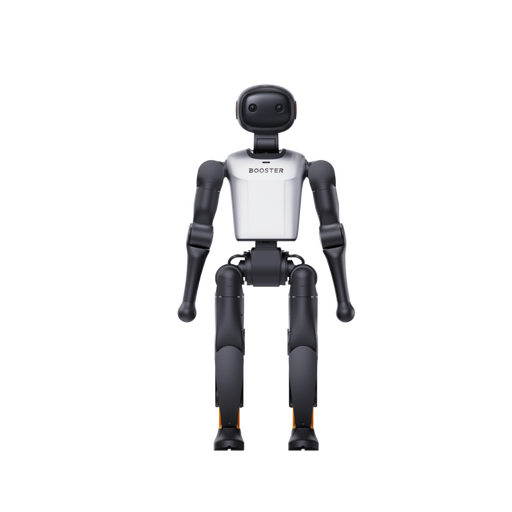 No image available
This model may suit your own robotics experiments; RobotShop describes the K1 Geek as suitable for secondary development.
The product title lists 48 TOPS and 22 degrees of freedom. Check which development features and delivery terms apply to this specific listing.
No image available
The EDU designation suggests it may suit learning and development projects. Before buying, confirm which programming features are accessible on this exact version.
The product title lists 117 TOPS and 22 degrees of freedom. These details alone don’t confirm SDK access or the specific capabilities available for running your own software.
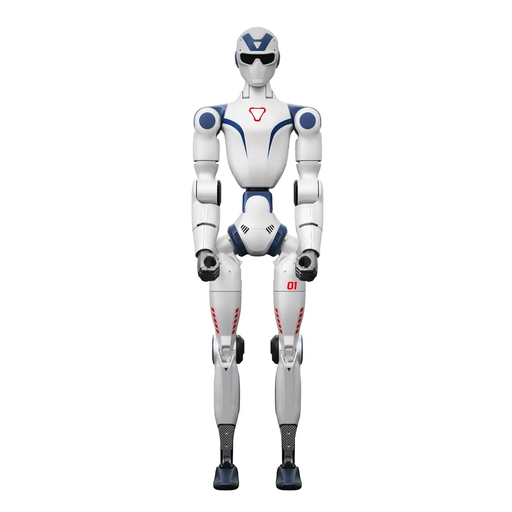 No image available
The product description lists AI and interaction features, but doesn’t confirm access to your own programming. If you want to use your own software, check which development features are enabled for this exact version.
The product title lists a monocular camera, an integrated AI language model and 20 degrees of freedom.
No. Check the full model designation against the documented SDK interfaces, and ask the seller to confirm which features are enabled on the device you’ll actually receive. Unitree and retailers distinguish between different Base and EDU configurations in their product information.
Set up your test area according to the instructions for the specific model. Unitree recommends a protective support for development work with the G1; Pollen Robotics requires supervision for Reachy 2, among other things, as well as an accessible emergency stop and model-specific clearance. These instructions don’t automatically apply to other models.
A stated procurement or dispatch time doesn’t, by itself, confirm that your order is guaranteed. RobotShop says the G1 EDU U1 and K1 Geek listings in question are not normally kept in stock. Confirm the stock status and delivery to Germany directly for the specific purchase.
In its market surveillance guidance for electrical and radio equipment, the Bundesnetzagentur lists requirements including correct CE marking, user and safety instructions in German, and a declaration of conformity. Ask to see the documentation for the specific device and check which requirements apply to this product.
No. For the general application relevant here, Regulation (EU) 2023/1230 replaces the Machinery Directive from 20 January 2027; on 19 October 2026, that date was still in the future. This doesn’t отмене other product regulations that are already in force.