What should you look for when buying?
Start by measuring the room’s humidity, and continue to ventilate regularly. Then compare the output for your room size, how easily you can adjust the settings, and how much time everyone using the space can commit to changing the water and cleaning the unit.
| Priority |
What to check before buying |
Who will find this important? |
| Humidity control and hygienic use |
Measure room humidity; check the humidity settings, access to the tank and cleaning instructions. |
When several people use the room, I want to keep humidity and maintenance in check rather than humidifying unnecessarily. Around 36% of consumers are likely to put humidity and hygiene controls first. |
| Output for the room size |
Measure the floor area and, if necessary, the ceiling height; compare the model’s room-size and output specifications with the ventilation conditions. |
For a larger or open-plan space, I need an output suited to the actual room size. Around 29% of consumers are likely to consider room coverage their most important buying priority. |
| Quiet operation |
Check the noise levels for each operating mode and whether the output is adjustable; don’t assume figures for different models are directly comparable. |
If conversation or reading matters in the room, I want to be able to choose an operating noise level that suits the space. Around 21% of consumers are likely to prioritise quiet operation. |
| Maintenance and running costs |
Compare access for cleaning, how often the water needs changing, replacement filters and power consumption. |
When sharing a humidifier, I want to know whether cleaning and any replacement parts will remain manageable in the long term. Around 14% of consumers are likely to see ongoing maintenance as their main priority. |
Humidifiers at Joybuy
The following Joybuy products are humidifiers for shared living spaces. Depending on the model, the focus may be on humidity control, room-size recommendations, or ease of filling and maintenance.
 No image available
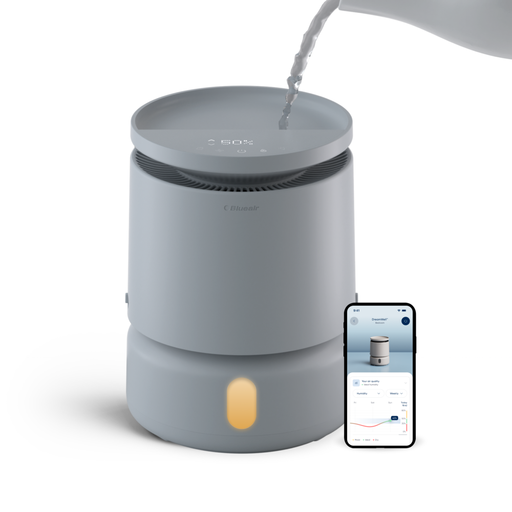
Blueair DreamWell H38i
The stated humidity targets, automatic mode and real-time readings make this a good option if you want to monitor and regulate humidity.
The stated noise level is 20 dBA. According to the product specifications, it can run for up to 48 hours, and the machine-washable filter is designed to last for up to 12 months.
The tank should be cleaned weekly. Unplug the unit before filling or cleaning it.
View at Joybuy
 No image available
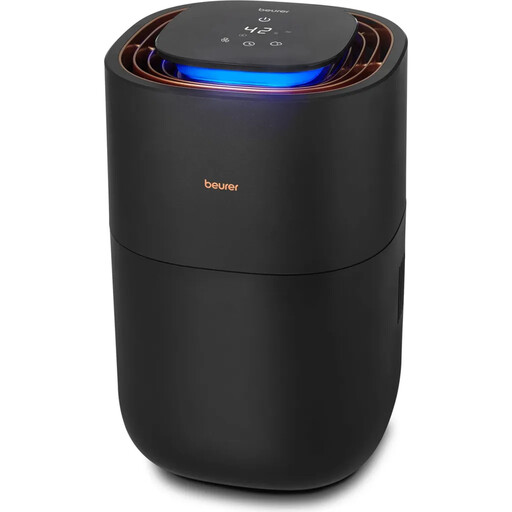
Beurer LB 300 Plus, Black
This evaporative humidifier has an automatic mode and selectable humidity levels, making it suitable if you want to set a target humidity.
Beurer specifies coverage of up to 45 m² and an output of up to 300 ml/h. It has three fan speeds and humidity settings of 40%, 50% and 60%.
According to the product description, the filter should be replaced approximately every six months.
View at Joybuy
 No image available
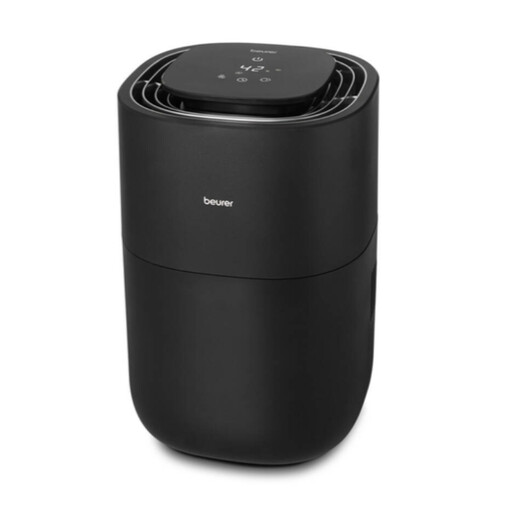
Beurer LB 200, Black
According to the product specifications, this cool-mist evaporative humidifier has an automatic humidity control mode and three selectable humidity settings.
It’s specified for rooms of up to around 30 m², with a maximum humidification output of around 200 ml/h. It has three fan speeds and a night mode.
The filter should be replaced approximately every six months. Weekly descaling is also recommended.
View at Joybuy
 No image available
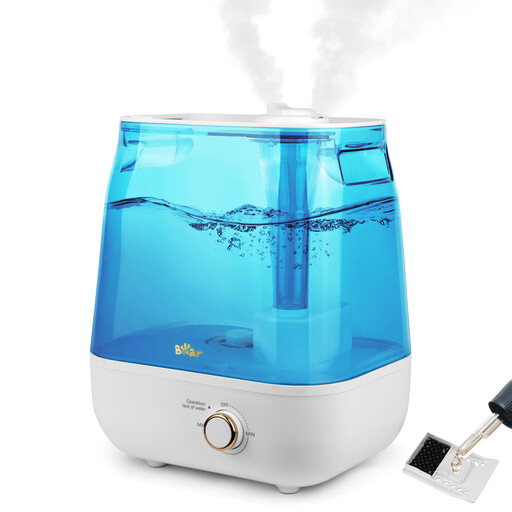
BEAR 6L Top-Fill Humidifier
The removable tank and wide opening are practical features for a shared humidifier, making it easier to organise filling and cleaning.
The product is specified with a 6 L tank, a run time of up to 35 hours and a noise level of 28 dB. The mist output is infinitely adjustable, and the unit automatically switches off when the water level is low.
View at Joybuy
 No image available
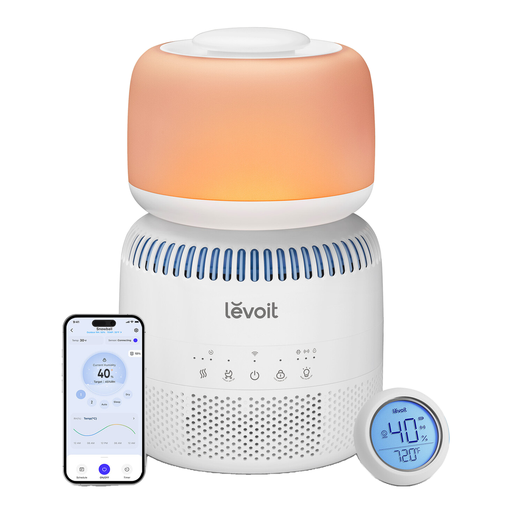
Levoit Sprout Evaporative Humidifier, 3.8 L
Evaporative technology and a humidity sensor with adjustable target levels make this model suitable if you want to control the humidity in your room.
The model features a dual-filter system, app control and automatic filter drying. According to the product specifications, it’s designed for small to medium-sized rooms.
View at Joybuy
Frequently asked questions about humidifiers in shared spaces
When do you actually need a humidifier in winter?
Start by measuring the temperature and relative humidity in the room. The German consumer advice centre gives around 40–60% relative humidity at 18–22 °C as a comfortable range, while also warning that the risk of mould increases if humidity regularly exceeds 50% in winter. So take cold walls, windows and the number of people in the room into account instead of setting a high target without checking first.
How should I maintain a portable humidifier?
As general care guidance, the US Environmental Protection Agency (EPA) recommends emptying the tank daily, drying the surfaces and refilling the unit with fresh water, as well as cleaning portable humidifiers regularly. Also follow the instructions provided by the manufacturer of your model. The EPA’s guidance is not German law.
What ongoing costs and rights should I bear in mind?
Check the cost of replacement filters or descaling products and the power consumption of the specific model. For faulty goods bought from a business seller in the EU, the European Union explains that you have a legal guarantee of at least two years from the date you receive the goods. This is separate from any voluntary manufacturer’s warranty.
What should I check when buying an electric humidifier in Germany?
For relevant electrical and electronic household products, Germany’s Federal Network Agency lists checks including the CE marking, product and manufacturer details, a declaration of conformity, and German-language instructions with any required warnings. These checks can help you assess a specific listing, but they don’t prove that a particular product or offer has already been checked.


