A humidifier is only worthwhile in a heated conservatory if measurements and how you use the space show that extra humidity is needed. Germany’s consumer advice centre gives 40 to 60% as a general comfort range, while also warning that the risk of mould increases if relative humidity regularly exceeds 50% in winter. This isn’t a one-size-fits-all target for conservatories. If you decide to buy a humidifier, compare the recommended room size and humidity controls, and consider filter maintenance, water hygiene and keeping a safe distance when using warm mist.
Who might benefit from a humidifier in their conservatory?
A conservatory with cold windows
You’d like to counter dry air, but sometimes notice condensation on the windows, or you have lots of plants. For you, humidity around cold surfaces matters more than choosing a humidifier with the highest possible output. Germany’s consumer advice centre warns of a risk of mould if humidity regularly exceeds 50% in winter; this isn’t a one-size-fits-all target for every conservatory.
A large, heated conservatory
You regularly use a larger space and want to check the manufacturer’s recommended room size against your conservatory. Beurer states that the LB 300 Plus is suitable for up to 45 m²; Stadler Form gives a maximum of 100 m² or 250 m³ for the Oskar big. Manufacturer figures like these don’t replace taking measurements in your own conservatory.
Regular users who prioritise maintenance
You plan to humidify frequently, so cleaning, water choice and consumables all factor into your decision. Venta describes how to clean the water tray on the LW25 Classic Original, while Stadler Form recommends replacing Oskar filters regularly.
What should you consider when choosing one?
Measure relative humidity and keep an eye on windows and frames before choosing a humidifier or increasing its output. The following points will help you weigh up room size, maintenance and where to position it.
| Your priority |
What to look for |
Who should pay particular attention? |
| Preventing condensation |
Measure relative humidity and regularly check windows and frames; humidity controls don’t replace these checks. |
If you notice moisture on cold windows, check the readings, ventilation and sources of moisture before simply increasing humidification. Around 28% of consumers say preventing condensation is their top priority. |
| Suitable room coverage |
Compare your room’s floor area and height with the figure given for the exact model; don’t assume manufacturer figures or units are directly comparable. |
If you have a large or high-ceilinged conservatory, you’ll want to know whether the stated coverage suits your space rather than choosing based on tank size alone. Around 22% of consumers put sufficient room coverage first. |
| Water hygiene and cleaning |
Check the cleaning instructions and how easy it is to access the tank or water tray. For ultrasonic models, also follow the water recommendations for that model. |
If you humidify regularly, you’ll want to be able to clean the tank and water-carrying parts thoroughly, and know what water care is required. Around 22% of consumers prioritise hygiene and maintenance. |
| Ongoing requirements |
Check the power consumption for the operating mode you plan to use, as well as which filters, anti-scale pads or hygiene additives are compatible with the model. |
If you use your humidifier frequently, you’ll want to understand the consumables and electricity use before buying. Around 17% of consumers give particular consideration to ongoing requirements. |
| Noise and positioning |
Check the noise level for the setting you’ll use and leave space between the humidifier, glass, plants and delicate objects. Position warm-mist models safely out of children’s reach. |
If you also use your conservatory as a living space, you’ll want to position the humidifier appropriately for your seating area and avoid disruption or hot surfaces. Around 11% of consumers prioritise quiet operation and positioning. |
Which mistakes should you avoid?
-
Setting a target without checking cold windows
A general comfort range doesn’t automatically take account of the coldest surfaces in a conservatory. Germany’s consumer advice centre warns that the risk of mould increases if humidity regularly exceeds 50% in winter.
Start by measuring relative humidity and checking the windows and frames. If condensation appears, also check ventilation and other sources of moisture rather than increasing humidification further.
-
Confusing “filter-free” with “maintenance-free”
A stack of discs without replaceable humidifier mats still needs looking after. Venta explains how to clean the water tray on the LW25 Classic Original and use a hygiene additive.
Before buying, read the care instructions for the specific model and check which consumables it requires.
-
Pointing ultrasonic mist at glass or delicate surfaces
Ultrasonic humidifiers can release minerals and micro-organisms from the tank water into the air. You should keep an eye on moisture on cold surfaces regardless.
Follow the model’s water recommendations, clean the tank regularly and don’t direct the outlet at windows or delicate objects. The US Environmental Protection Agency (EPA) recommends using water low in minerals to reduce the amount released into the air.
-
Comparing purchase prices alone, not maintenance and running costs
Depending on the type of humidifier, filters, anti-scale pads, hygiene additives and electricity use may all be worth considering. Requirements vary from model to model.
Check the power consumption, recommended consumables and care instructions for each model. To compare electricity costs, you’ll also need to use the same running time and your own tariff.
Brands to help guide your choice
Beurer
The models mentioned use different technologies and have different maintenance requirements; the figures refer to the specific products.
- Beurer states that the LB 300 Plus is suitable for up to 45 m² and has an output of up to 300 ml/h; the LB 55 is rated for up to 50 m².
- Beurer doesn’t specify a target humidity setting for the LB 55. The LB 45 doesn’t have one either, and Beurer rates this model for up to 30 m².
Stadler Form
The Oskar big is an evaporative humidifier rated by the manufacturer for rooms up to 100 m² or 250 m³.
- Stadler Form states that the Oskar big has an output of up to 700 g/h and a 6-l tank. These are manufacturer figures, not measurements taken in a conservatory.
- Stadler Form recommends replacing the compatible Oskar filters regularly, so filter maintenance is part of ongoing use.
Venta
According to Venta, the LW25 Classic Original uses a stack of discs for cold evaporation instead of replaceable humidifier mats.
- Venta rates the LW25 Classic Original for rooms up to 49 m².
- Not having replaceable humidifier mats doesn’t mean there’s no maintenance: Venta explains how to clean the water tray and use a hygiene additive.
Philips
The Philips Series 2000 HU4816/10 is an example of a humidifier with automatic humidity settings.
- Philips rates this model for up to 44 m², with a humidification rate of 300 ml/h.
- These room coverage and output figures apply to the model mentioned; check that the conditions suit your conservatory.
Humidifiers for different needs
This selection includes evaporative humidifiers and models that produce cool or warm mist. When choosing one for a conservatory, compare room coverage, humidity controls, water care and safe positioning away from glass and plants.
 No image available
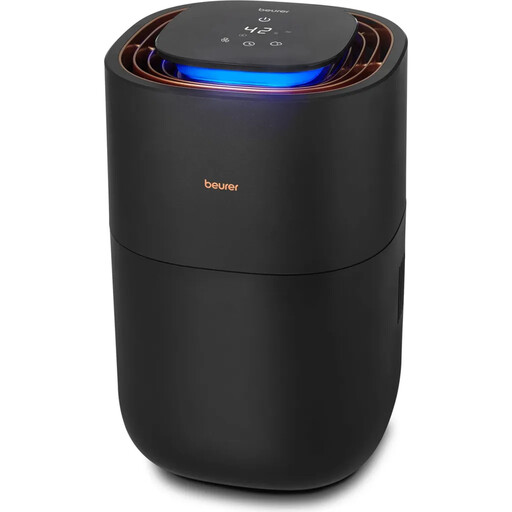
Beurer LB 300 Plus humidifier, black
Consider this model if you’re looking for an evaporative humidifier with humidity controls for regular use.
Beurer states that it’s suitable for up to 45 m², with an output of up to 300 ml/h. The filter is a consumable; according to the product information, it should be replaced approximately every six months.
View on Joybuy
 No image available
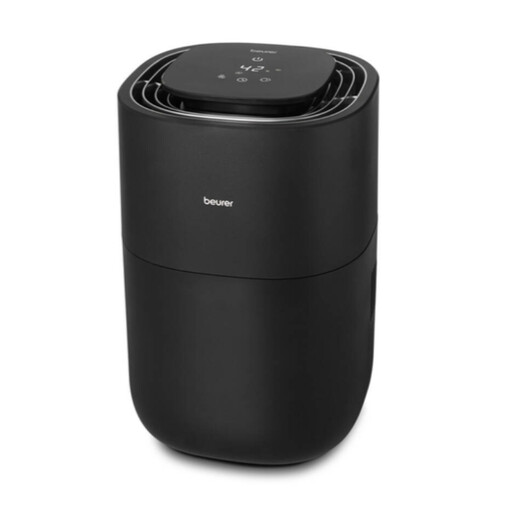
Beurer LB 200 humidifier, black
Consider it if you’re looking for an evaporative humidifier with humidity controls and are happy to check the model’s recommended room size.
The product information recommends replacing the filter approximately every six months, making it part of ongoing maintenance.
View on Joybuy
 No image available
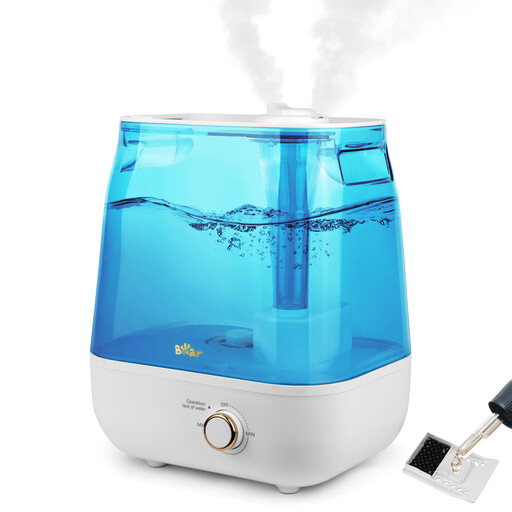
BEAR 6L top-fill humidifier
This could suit you if you want a top-fill tank and an adjustable mist outlet to direct the mist where you need it.
The product information lists a 6-l tank, a 360° nozzle and a run time of up to 35 hours.
View on Joybuy
 No image available
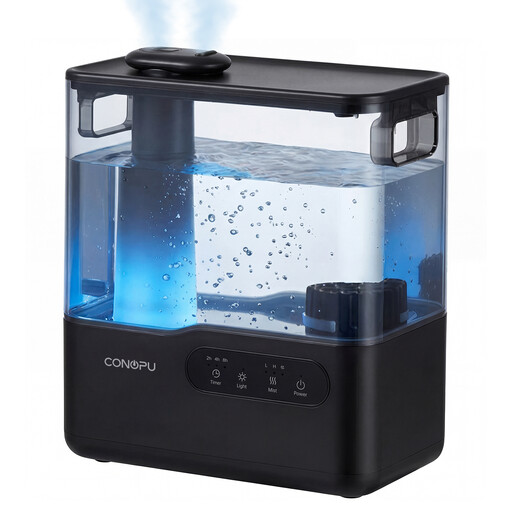
CONOPU 5L top-fill ultrasonic humidifier, dual 360°
Consider this ultrasonic model if you want to direct the mist and its water care requirements suit your routine.
The product information lists two 360° nozzles. Don’t add oils to the water tank or base chamber; the safety instructions say to use only the designated aroma compartment.
View on Joybuy
 No image available
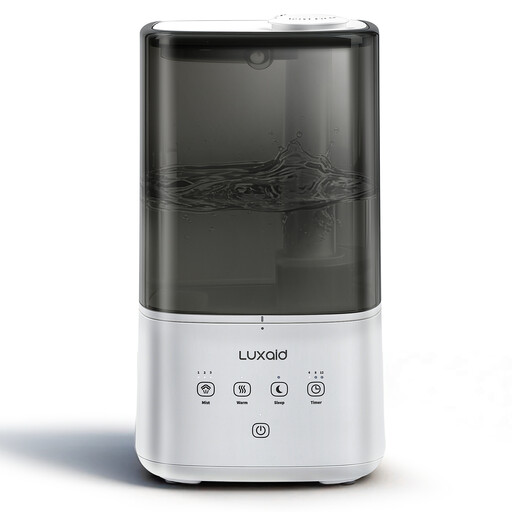
Luxaid 6L humidifier with cool and warm mist
Consider this model only if you want both mist options and have a safe place to position it when using warm mist.
The product information lists a 6-l tank. Power consumption is stated as 150 W for warm mist and 25 W for cool mist. Keep the warm-mist unit and steam away from children, plants and surfaces people might touch. Oils should only go in the designated aroma compartment, not the water tank or base chamber.
View on Joybuy
Frequently asked questions
Should I humidify the air if my conservatory feels dry in winter?
Don’t rely on how it feels alone. Measure relative humidity and check cold windows and frames. Germany’s consumer advice centre gives 40 to 60% as a general comfort range, and warns that the risk of mould increases in winter if humidity regularly exceeds 50%.
How do I maintain a portable humidifier?
Empty the tank regularly and follow the instructions for your specific model. The US Environmental Protection Agency (EPA) recommends emptying portable humidifiers daily, wiping them dry and refilling them with fresh water, as well as giving them a thorough clean every third day. These are EPA recommendations, not German legal requirements.
Can I use tap water in an ultrasonic humidifier?
Check the instructions for your specific model first. Ultrasonic humidifiers can release minerals from the tank water into the air; the EPA recommends using water low in minerals, such as distilled water, to reduce this.
What ongoing costs and consumer rights should I check before buying?
Check which filters, anti-scale pads or hygiene additives are compatible, as well as the power consumption for your planned usage. According to the European Commission, purchases from a business seller in the EU come with a legal guarantee of at least two years from the date you receive the goods. An additional manufacturer’s guarantee must not limit these rights.
Does a CE mark mean the product has undergone an independent safety test?
No. According to the European Commission, the manufacturer uses the CE marking to declare that the product meets the relevant EU requirements. It isn’t a general quality mark awarded by an independent body; also check that the humidifier is suitable for where you plan to use it.


