People who work for long periods in a dry room
If you spend hours at your desk, measure the humidity first and only then adjust it as needed. The consumer advice centre recommends checking room humidity with a thermo-hygrometer.


Start by measuring relative humidity with a thermo-hygrometer: a room feeling dry isn’t proof that humidity is too low, as the Federal Institute for Occupational Safety and Health explains. If your readings and how you use the room suggest that humidification could help, an adjustable evaporative humidifier may suit longer working sessions. Ultrasonic and warm-mist models are also options if their water care, cleaning and placement fit your routine. Compare the manufacturer’s stated room coverage and factor in the maintenance required for the specific model.
If you spend hours at your desk, measure the humidity first and only then adjust it as needed. The consumer advice centre recommends checking room humidity with a thermo-hygrometer.
If hygienic operation matters to you, compare the water and cleaning requirements of each type of humidifier. The US Environmental Protection Agency (EPA) notes that ultrasonic models can release minerals and microorganisms from the tank water into the air.
If the unit will be within earshot while you’re concentrating, check the noise levels for the setting you’ll actually use. Also factor in suitable replacement filters or limescale pads, as well as the cleaning required.
Measure the room’s humidity first, then choose a type with settings, noise levels and maintenance requirements to suit your home office or hobby room.
| What matters | What to check before buying | Who it matters most to |
|---|---|---|
| Controlling room humidity | Measure it with a hygrometer; compare the controls and the manufacturer’s stated room coverage. | If I spend long periods at my desk, I want to measure first rather than raise the humidity unnecessarily. Around 33% of consumers put controlled room humidity first. |
| Water hygiene | Check how easy the unit is to clean and what care it requires; with ultrasonic models, also consider water quality. | If fresh water and clean water-contact parts matter to me, I want to know what routine is required in advance. Around 27% of consumers prioritise hygienic water use. |
| Quiet operation while working | Check the noise levels for the setting you’ll use and whether there’s a night mode. | If I’m reading, writing or concentrating on work, I don’t want the unit to be distracting within earshot. Around 20% of consumers place particular importance on working without disruption. |
| Ongoing maintenance | Compare filter or limescale pad compatibility and replacement guidance, as well as cleaning requirements. | If I want to keep maintenance manageable, I need to know which model-specific parts are required. Around 20% of consumers prioritise cleaning and accessory requirements. |
The Federal Institute for Occupational Safety and Health points out that a dry feeling can also be linked to temperature or dust levels. Extra moisture can encourage mould to grow on cold surfaces.
Measure the humidity with a thermo-hygrometer before you buy. If it’s already high, assess the room and ventilation first rather than adding more moisture.
The US Environmental Protection Agency (EPA) notes that ultrasonic models can release minerals and microorganisms from the tank water into the air. A manufacturer’s hygiene claim doesn’t replace caring for the specific unit.
Plan how you’ll clean the unit and manage its water in line with the instructions for your chosen model.
A replacement filter is listed for the Beurer LB 200/300 Plus, while limescale pads are listed as accessories for the Beurer LB 55.
Before buying, check the exact part number, compatibility and replacement guidance for your chosen model.
The models covered include evaporative, ultrasonic and warm-mist humidifiers.
The HU5710/03 is an evaporative humidifier with model-specific manufacturer information on room coverage and humidification output.
According to Venta, the LW25 Comfort Plus humidifies using a rotating stack of discs rather than a humidifier mat.
The H300 combines humidification with an air purification function that can be used on its own or alongside humidification.
The range includes evaporative and ultrasonic humidifiers with humidity control features. When choosing, pay particular attention to room size, water care and whether you’ll need replacement filters.
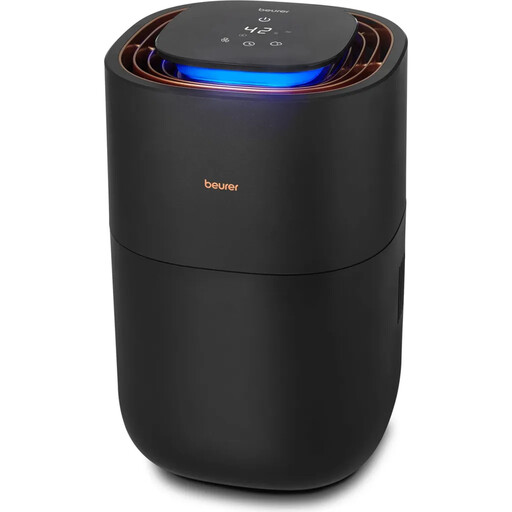 No image available
For longer working sessions when you want humidity to adjust automatically; night mode dims the control panel.
Evaporative humidification; up to 300 ml/h; manufacturer’s stated coverage up to 45 m²; 3-litre tank; automatic mode with target humidity levels of 40%, 50% and 60%; filter drying function.
According to the product description, the filter should be replaced approximately every six months.
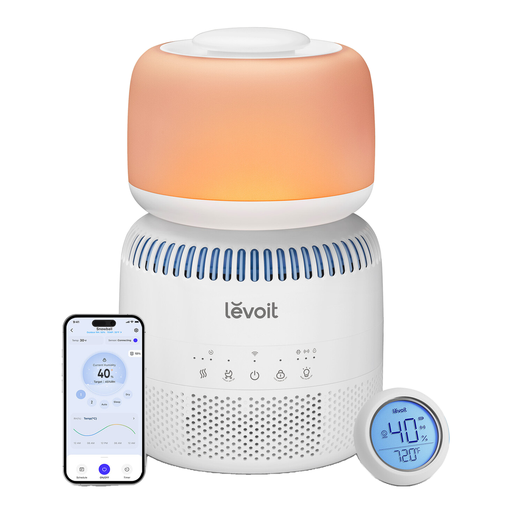 No image available
An option if you’d like evaporative humidification and the ability to adjust humidity targets via an app.
3.8-litre tank; dual-filter system; automatic wick filter drying; separate humidity sensor and control via the VeSync app.
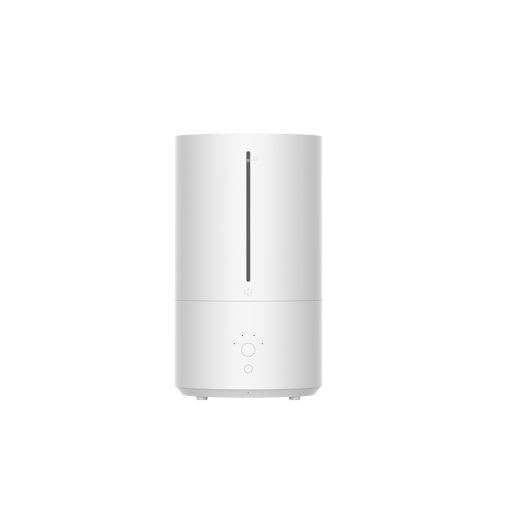 No image available
For anyone considering an ultrasonic humidifier with an automatic mode and app control.
Up to 350 ml/h; two adjustable outlets; top-fill design; automatic mode; control via the Mi Home app.
The US Environmental Protection Agency (EPA) notes that ultrasonic models can release minerals and microorganisms from the tank water into the air. Water quality and cleaning are therefore important factors in your choice.
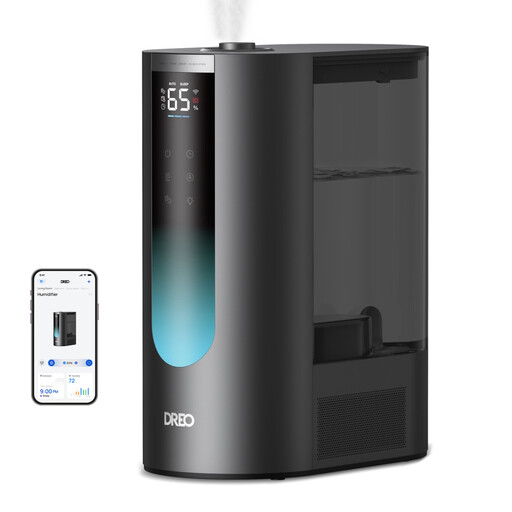 No image available
For anyone looking for an ultrasonic humidifier with app control and a warm- or cool-mist function.
6-litre tank; warm and cool mist; 500 ml/h according to the product name; automatic mode with adjustable humidity target; app control.
The US Environmental Protection Agency (EPA) notes that ultrasonic models can release minerals and microorganisms from the tank water into the air. Make sure you follow the guidance on water and cleaning.
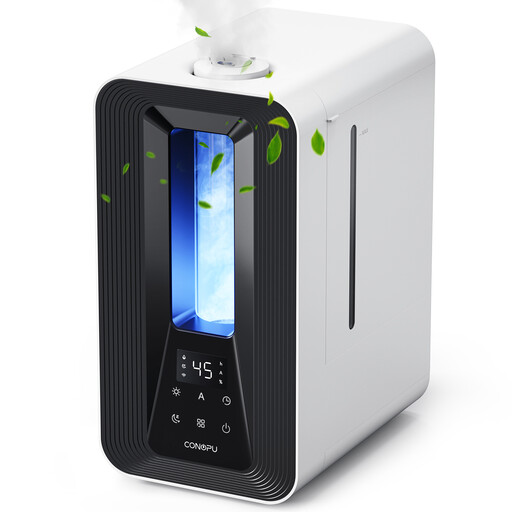 No image available
An option if you want automatic humidity control and adjustable outlets.
5-litre tank; two adjustable 360° nozzles; built-in humidity control and automatic mode.
The product description recommends cleaning the tank and ultrasonic probe weekly. The US Environmental Protection Agency (EPA) also notes that minerals and microorganisms from the tank water may be released into the air.
Measure the temperature and relative humidity with a thermo-hygrometer before buying a unit. The consumer advice centre gives 40 to 60% relative humidity as a general comfort range and notes that in winter, mould risk may increase if humidity regularly exceeds 50%. So take cold walls and how you actually use the room into account rather than blindly aiming for a particular reading.
Choose a stable spot where mist won’t fall directly on your work materials, and follow the instructions for your specific model. As general hygiene advice for portable units, the US Environmental Protection Agency (EPA) recommends changing the tank water daily and cleaning the unit regularly. This is not a German legal requirement.
Check which replacement parts and cleaning tasks are required for the model. For example, Beurer lists a replacement filter for the LB 200/300 Plus and limescale pads for the LB 55. Before buying, read the care and replacement guidance for the exact model you want.
Look for clear manufacturer and product information, appropriate German safety and operating instructions, and a valid CE marking. Germany’s Federal Network Agency lists these as criteria in its market surveillance of electrical household products. A CE mark alone isn’t an independent quality label and doesn’t prove that a unit is suitable for your room.