Start by measuring the relative humidity. A humidifier is only worthwhile if the air is repeatedly too dry, as excess moisture can increase the risk of mould in winter. Choose a model based on your actual room size, its stated humidification output and a target humidity you can control. Remember to factor in regular cleaning and possible filter replacements, too.
Who might benefit from a humidifier?
People with a large, dry living room
If you repeatedly measure dry air caused by central heating, compare the stated room size and humidification output of the specific model with your living room. A manufacturer’s maximum coverage figure is not a guarantee for every room.
Households with high hygiene standards
If thorough cleaning is important to you, look for water tanks and humidifying components that are easy to access. Evaporative and ultrasonic models differ in design and cleaning requirements.
People who want to refill less often
If you want to use your humidifier for longer periods, compare tank capacity, ease of use, operating noise and the replacement parts it needs. A large tank alone doesn’t tell you how long the unit will run on each setting.
What should you look for when buying?
First, measure the humidity and floor area of your living room. Then compare suitable models, taking their controls, cleaning requirements and ongoing maintenance into account.
| What matters |
What to check when buying |
Who it matters to most |
| Suitable room size |
Compare your living room’s floor area with the model’s stated coverage and maximum output in ml/h. Then monitor the humidity with a hygrometer. |
If my living room is large, I want to know whether the specific model is suitable for the space, rather than relying on a maximum figure alone. Around 36% of consumers put room size first. |
| Cleaning and water hygiene |
Check how easy the tank and water-carrying parts are to access, read the cleaning instructions and check which replacement parts are available. |
If looking after the water in the tank is especially important to me, I want to be able to reach the tank and humidifying components easily. Around 29% of consumers put hygiene first. |
| Controlled humidity |
Look for adjustable controls and monitor the room humidity with a thermo-hygrometer. The Verbraucherzentrale gives 40–60 % relative humidity as a general comfort range and warns that regularly exceeding 50 % in winter can increase the risk of mould. |
If I want to avoid unnecessary moisture, being able to control the target humidity matters more to me than having the highest possible output. Around 21% of consumers put humidity control first. |
| Refilling and maintenance |
Compare tank capacity, noise levels on each setting and whether the unit needs compatible replacement filters. |
If I plan to use the humidifier regularly, I want to understand how refilling, noise and replacement-part maintenance will fit into my routine. Around 14% of consumers put low ongoing maintenance first. |
Common buying mistakes
-
Treating the highest m² coverage figure as a guarantee for your living room
Room-size and output figures are manufacturer specifications for individual models. Actual humidity also depends on the conditions in the room and how often you ventilate it.
Measure the floor area and starting humidity, check the specifications for the exact model, then monitor the room’s humidity once you start using it.
-
Assuming “no filter” means “no maintenance”
Even without a replaceable humidifying pad, the water tank and water-carrying parts still need cleaning. The US Environmental Protection Agency (EPA) recommends cleaning portable humidifiers every third day.
Before buying, check how easy the water tray and tank are to clean, and whether the unit needs compatible replacement filters.
Replaceable pads or filters may mean ongoing costs. Filter-free water trays still take time to clean.
-
Assuming ultrasonic mist is automatically more hygienic or powerful
Ultrasonic models can release minerals and microorganisms from the tank into the air. The design alone is no guarantee of hygiene or suitability for a large living room.
Check the coverage figure, water recommendations and cleaning instructions for the specific model. The EPA recommends regular maintenance for portable units.
Depending on the model and the water you use, you may need to treat the water and clean the unit carefully.
Key brands at a glance
Comedes
According to Comedes, the Umecto 300 and Umecto 600 evaporative humidifiers are designed for rooms up to 45 m² and 82 m² respectively.
- Comedes states that the Umecto 300 has an output of up to 300 ml/h and the Umecto 600 up to 600 ml/h. The larger model also has an automatic mode.
- Both models need an evaporative element. Factor in the care it needs and the availability of compatible replacement parts.
Meaco
According to Meaco, the Armin 680 evaporative humidifier is designed for rooms up to 89 m².
- The manufacturer states a maximum output of 680 ml/h and a 4,7-l tank.
- Meaco recommends replacing the evaporative pads every 3–6 months. Actual room humidity will depend on the conditions in your home.
Philips
According to Philips, the HU5710/03 evaporative humidifier from the 5000 Series is designed for rooms up to 56 m².
- Philips states that this model has an output of 400 ml/h and a 4,5-l tank.
- Remember to factor in filter replacements when choosing a model. Specifications for this product don’t necessarily apply to other Philips humidifiers.
Venta
The LW45 Comfort Plus is a cold evaporative humidifier with a stack of discs and a humidistat. According to Venta, it is designed for rooms up to 68 m².
- The manufacturer states that no replaceable humidifying pad is needed.
- The water tray still needs cleaning. The advertised reduction in particles is not independent evidence of air-purifier performance.
Stadler Form
According to Stadler Form, the Karl big evaporative humidifier is designed for rooms up to 150 m².
- The manufacturer states that it has a 10-l tank and a maximum output of 1100 g/h.
- Noise levels range from 27 to 60 dB(A), depending on the setting. Four humidifying filters are included; check whether you may need to buy replacements later.
Beurer
According to Beurer, the LB 300 Plus evaporative humidifier is designed for rooms up to 45 m².
- Beurer states that it has an automatic mode and a maximum output of 300 ml/h.
- The manufacturer’s claim about reducing bacteria is based on a specific comparison with standard ultrasonic models without the same technology. It is not a general guarantee of hygiene.
Related products at Joybuy
The products below include evaporative and ultrasonic humidifiers. Compare their design, stated room size, controls and maintenance requirements with your living room and your needs.
 No image available
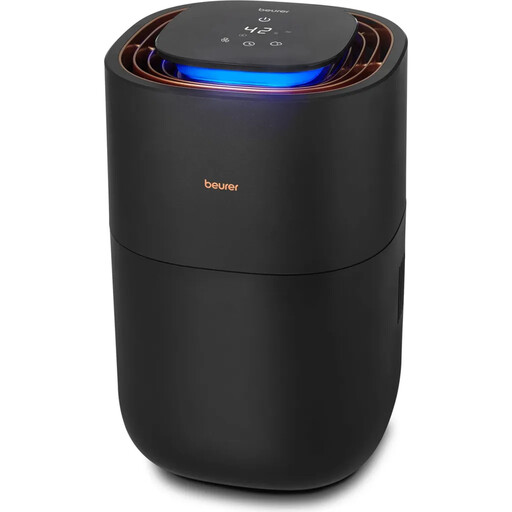
Beurer LB 300 Plus
Described as an evaporative humidifier with automatic mode and selectable target humidity levels. Check that the stated room size suits your living room.
For up to 45 m² and up to 300 ml/h; 3-l water tank. The product description suggests replacing the filter approximately every six months.
View at Joybuy
 No image available
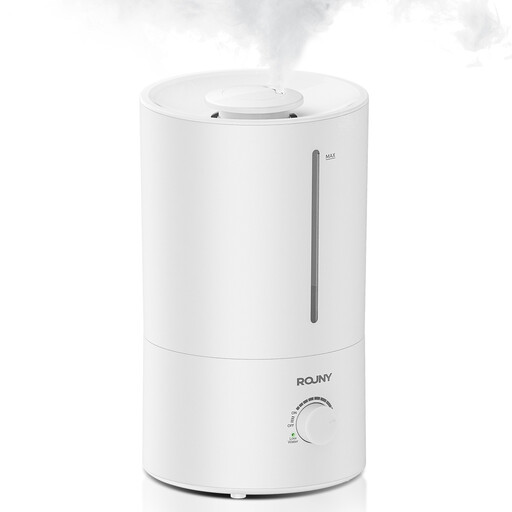
ROUNY MOS W3 ultrasonic humidifier
Described as an ultrasonic humidifier. Before buying, check that this type of humidifier and its cleaning routine suit your lifestyle.
4-l tank with top filling, stepless output control and a maximum mist output of 350 ml/h.
View at Joybuy
 No image available
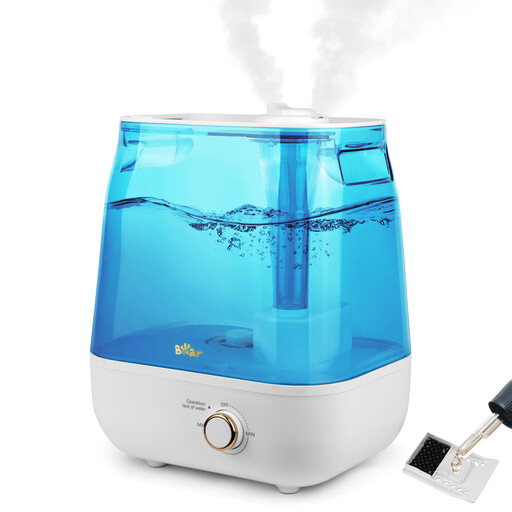
Bear humidifier, 6 l
The removable tank may suit longer periods of use, but actual running time depends on the setting you choose.
6-l tank, mist control dial and automatic shut-off when the water level is low. The description mentions two rotating nozzles with 360° adjustment.
View at Joybuy
 No image available
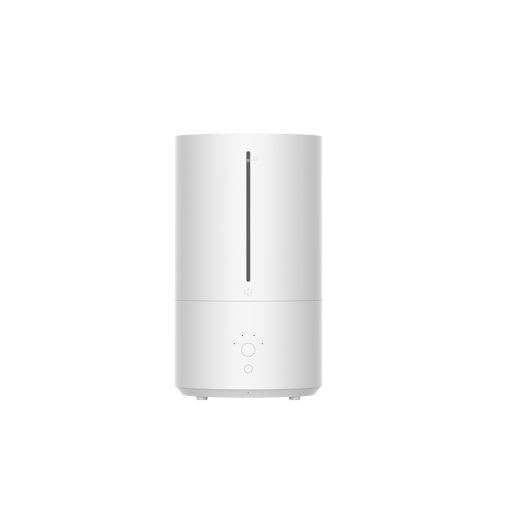
Xiaomi Smart Humidifier 2
Described as an ultrasonic humidifier with automatic mode. Bear in mind the maintenance requirements of this type of humidifier.
The product description states an output of up to 350 ml/h, app control and two adjustable nozzles with 360° adjustment.
View at Joybuy
 No image available
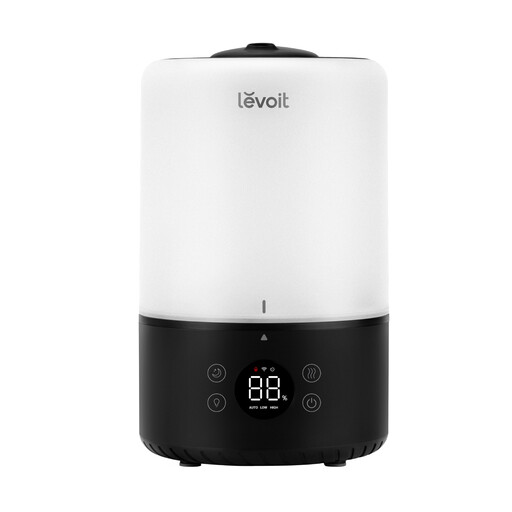
Levoit smart humidifier, 3 l
If you want to use app control, check before buying that the controls described meet your needs.
3-l tank with top filling, automatic humidity control and Wi-Fi. The description lists a cleaning brush and a water-filter sponge as accessories.
View at Joybuy
Frequently asked questions
When should I start humidifying a heated living room?
Start by taking a reading with a thermo-hygrometer. The Verbraucherzentrale gives 40–60 % relative humidity as a general comfort range and points out that regularly exceeding 50 % in winter can increase the risk of mould. A humidifier isn’t a blanket solution for achieving the highest possible humidity.
Where should I place the unit, and what doesn’t it replace?
Follow the set-up instructions for the specific unit and monitor the humidity in the room you use. Humidifying doesn’t replace regular ventilation. The German Environment Agency also highlights the need to ventilate living rooms and notes that plants and drying laundry can add moisture.
How do I care for an ultrasonic humidifier?
For portable units, the US Environmental Protection Agency (EPA) recommends emptying the tank daily, wiping it dry and refilling it, as well as cleaning the unit every third day. Low-mineral water, such as distilled water, reduces the amount of minerals released into the air. You should also follow the instructions for your specific model. This is hygiene advice, not a claim that German law requires you to do this.
What ongoing costs and rights should I check before buying?
Check whether the specific model needs humidifying pads or other replacement parts. For example, Meaco recommends replacing the Armin pads every 3–6 months. If a product is faulty, you have statutory rights against the seller in Germany. These are separate from any voluntary manufacturer’s guarantee.
Is a CE mark an independent hygiene certification?
No. According to information from the European Union, the CE mark is the manufacturer’s declaration that the product meets the relevant EU requirements. There is no central EU body that issues a general CE certificate. A CE mark doesn’t prove how well a humidifier will perform in your living room or that it will operate free from germs.


