People keeping an eye on indoor humidity
You want to add moisture to a frequently used small room only when the readings call for it, while avoiding dampness on cold surfaces.


First, measure the relative humidity in the room you actually use. If it’s already at a suitable level, or condensation is forming, adding more moisture isn’t the answer. If the air is consistently dry, both compact evaporative humidifiers and ultrasonic models may be suitable for small rooms. The key is to choose a model rated for the right room size, with humidity you can control, and maintenance that fits your routine.
You want to add moisture to a frequently used small room only when the readings call for it, while avoiding dampness on cold surfaces.
For you, suitability for the room, operating noise, lights and overnight controls matter just as much as the maximum humidification output.
You want to consider tank cleaning, water choice and the availability of replacement filters before using a humidifier frequently during the heating season.
Measure the temperature and relative humidity in the room you use before choosing a humidifier. Germany’s consumer advice centre gives 40–60% at 18–22 °C as a guide to a healthy indoor climate. In winter, regularly exceeding 50% and condensation on cold surfaces are important reasons not to keep increasing the humidity.
A good choice if: You want to add moisture without visible mist and are happy to maintain a filter.
Things to consider: Filter changes, cleaning and possible fan noise are all part of using one.
A good choice if: You want adjustable mist output and can take water choice and cleaning into account.
Things to consider: The US Environmental Protection Agency notes that ultrasonic humidifiers can release minerals and microorganisms from the tank into the air.
A good choice if: You specifically want a warm mist function and can check where it will be placed and how it is set up.
Things to consider: If space is tight or you have children, take particular care with hot water and warm mist.
A good choice if: The readings are already within a suitable range, or moisture is appearing on windows and cold surfaces.
Things to consider: First check ventilation, heating and possible sources of moisture. If you later find that the air is dry, a humidifier may still be worth considering.
| Buying priority | What to check before buying | Who is it important to? |
|---|---|---|
| Controlling humidity | Measure the relative humidity in the room you use; check whether the specific model has an adjustable humidistat. | If I want to establish whether humidification is needed at all, I look at the readings and check for condensation. Around 31% of consumers are likely to put humidity control first. |
| Bedroom suitability and footprint | Compare the dimensions, night mode and noise levels for the relevant operating setting. | If the humidifier will sit near my bed, light, noise and the space it takes up are key. Around 23% of consumers are likely to focus mainly on bedroom suitability. |
| Water and cleaning | Check how easy it is to reach the tank and water-contact parts; for ultrasonic models, also check the water recommendations and instructions. | If I plan to use the humidifier regularly, I want to know how easy it is to clean the tank and the unit. Around 31% of consumers are likely to prioritise hygiene and maintenance. |
| Filters and electricity use | Factor the right replacement filter, power consumption and planned running time into your budget. | If I want to keep ongoing costs down, I check filter requirements and electricity use before buying. Around 15% of consumers are likely to put running costs and replacement parts first. |
Cold surfaces can respond to moisture differently from the middle of the room. Adding more humidity isn’t automatically the right solution.
Measure the room’s humidity first and take ventilation, heating and sources of moisture into account. A humidifier is no substitute for ventilation.
The US Environmental Protection Agency notes that ultrasonic humidifiers can release minerals and microorganisms from the tank into the air.
Before buying, check the water recommendations and cleaning instructions for the specific model. Evaporative humidifiers need maintenance too.
A large tank or high rated output alone won’t tell you whether a humidifier is right for a small room. Some evaporative models also need filter maintenance.
Compare the room-size rating for the exact model with your room, and take controls, filters and planned running time into account.
According to Stadler Form, the Oskar little evaporative humidifier is designed for small rooms up to 30 m².
The LB 300 Plus and LB 45 offer different designs and control options.
According to Philips, the HU5710/03 evaporative humidifier combines a humidity display with app features.
According to Levoit, the LV600S is an option if you want to choose between warm and cool mist and use app controls.
The models below include evaporative and ultrasonic humidifiers. When choosing, pay particular attention to humidity controls, room-size ratings and maintenance.
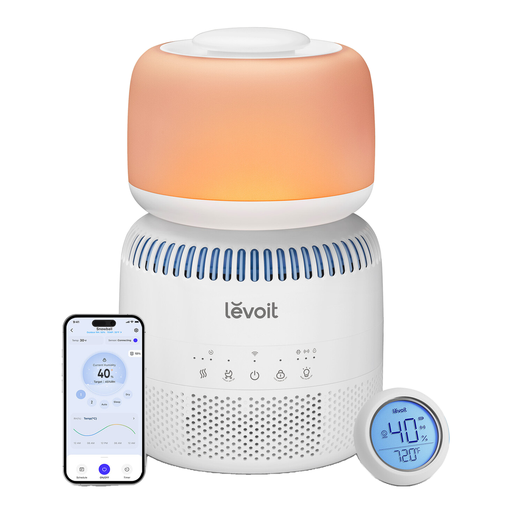 No image available
Worth considering if you want an evaporative humidifier with no visible mist and app-controlled humidity.
The product description lists a 3.8-l tank, suitability for 20 m², a humidity sensor and app control for setting your target humidity. Automatic drying of the wick filter is also listed.
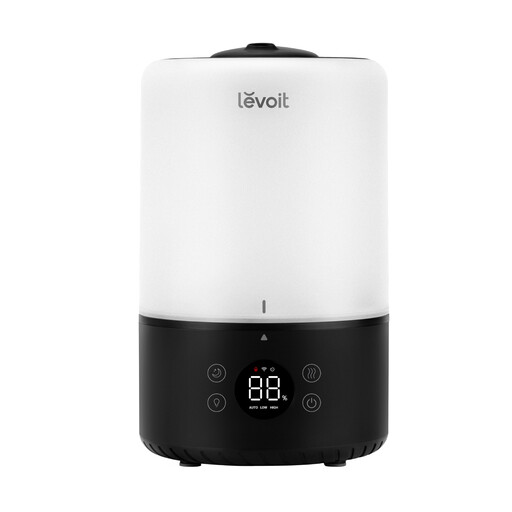 No image available
An option if you prefer app-controlled humidity and a top-fill design.
The product details list a 3-l tank, a 360° rotating nozzle, up to 25 hours of running time and a maximum noise level of 28 dB. The description includes automatic humidity control and app scheduling. It recommends using room-temperature, purified or distilled water, along with regular tank cleaning and filter maintenance.
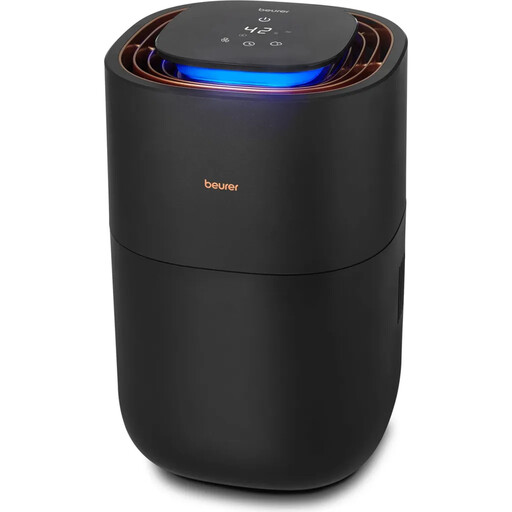 No image available
A good one to compare if you want an evaporative humidifier with an automatic mode and adjustable humidity settings.
Beurer lists this model for rooms up to 45 m², with an output of up to 300 ml/h. The product description includes target settings of 40%, 50% and 60%, as well as a night mode. The filter is due for replacement approximately every six months.
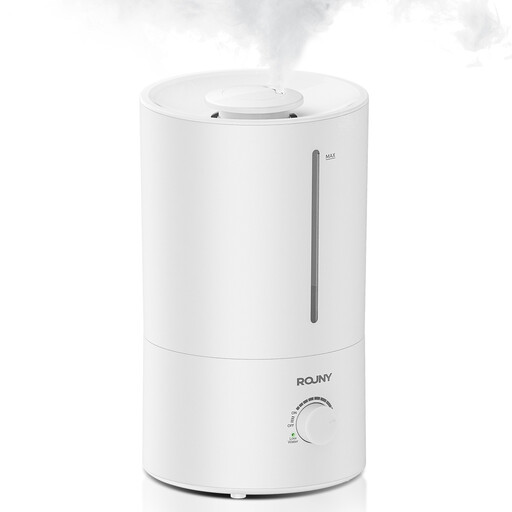 No image available
An ultrasonic option if you want adjustable mist output and a top-fill tank.
The product name lists a 4-l tank, 23 W, an output of up to 350 ml/h, a 360° nozzle and a maximum noise level of 38 dB. The US Environmental Protection Agency warns that ultrasonic humidifiers may release minerals and microorganisms from the tank, so water choice and cleaning are important considerations.
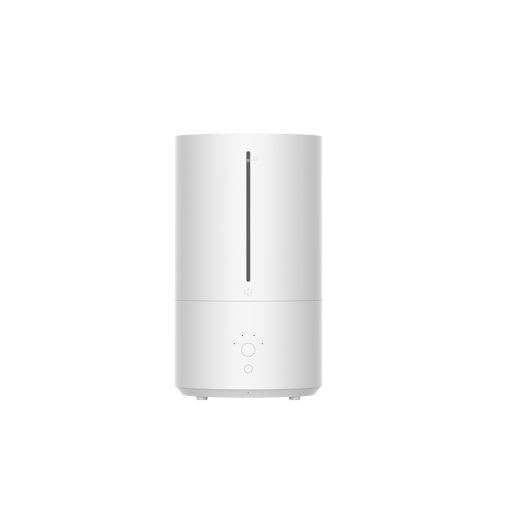 No image available
Worth considering if you want to compare ultrasonic humidification with automatic humidity control and app controls.
The product description lists an output of up to 350 ml/h, 32 dB, an automatic mode and humidity control through the app. With ultrasonic humidifiers, you should also consider your choice of water and how you’ll clean the tank.
Not just because the heating is on. Measure the temperature and relative humidity in the room in question. Germany’s consumer advice centre gives 40–60% at 18–22 °C as a guide, and also points out that humidity regularly above 50% in winter can increase the risk of mould. Keep cold surfaces and condensation in mind too.
For portable humidifiers, the US Environmental Protection Agency recommends emptying the water daily, wiping all surfaces dry and refilling the tank with fresh water. It also recommends cleaning the unit every third day. Follow the instructions for your specific model, including any advice on cleaning products.
For evaporative humidifiers, check which replacement filter fits the exact model and when it should be changed. Beurer’s German website lists a compatible filter for the LB 200 and LB 300 Plus. You can work out electricity costs using the power consumption for the setting you use, how long you run it and your electricity tariff.
According to information from the European Union, electrical and electronic equipment covered by the relevant harmonised rules must be appropriately marked. By applying the CE mark, the manufacturer declares that the applicable requirements have been met. It is not an independent EU quality mark and does not certify the hygiene of a specific model.
According to stiftung ear, retailers required to take back electrical appliances must accept an old appliance free of charge when you buy a new one, provided it is of the same type and has essentially the same function. Check in advance whether the retailer is required to take it back and how returns are handled.