People in small, heated rooms
You want to raise the humidity in the room you use most, rather than relying on a general room-size rating for your whole flat.


First, measure the humidity in the room you actually use. If it’s already at a suitable level or there’s condensation, adding more moisture isn’t the right solution. For regular use, an evaporative humidifier suited to your room size may be a good choice. Ultrasonic models need particular care when it comes to water and cleaning, while an evaporator’s heat output and electricity use are factors to weigh up. Every type needs maintenance and monitoring of room humidity.
You want to raise the humidity in the room you use most, rather than relying on a general room-size rating for your whole flat.
You want to use the device at night, so you’re considering its operating noise, lighting, controls and whether you can check the humidity in the morning.
You want to know how to change the water and clean the device before you buy, and whether filters need replacing regularly.
The German Environment Agency recommends a relative humidity of 40 to 60% as a guide to keeping the risk of mould as low as possible. Measure humidity in the room you use, and look out for condensation rather than choosing a device based solely on its maximum output.
A good fit if: you want to humidify a heated room regularly and avoid visible mist.
Worth bearing in mind: Fan noise, cleaning and, for some models, regular filter changes are all part of using one.
A good fit if: you prefer a compact misting device and can make regular water changes and thorough cleaning part of your routine.
Worth bearing in mind: Ultrasonic devices can release minerals and microorganisms from the tank into the air. Low-mineral water may be important.
A good fit if: you specifically prefer this type and take heat output and placement into account when choosing.
Worth bearing in mind: Hot water and surfaces, as well as electricity use, need to be considered in relation to the specific device and where you’ll place it.
| Buying priority | What to check before buying | Who it matters most to |
|---|---|---|
| Controllable humidification | Check the room-size rating, control range and automatic shut-off for the specific model. Measure humidity in the room you use and look out for condensation. | If I only want to humidify the room I actually use, suitable controls matter more than the highest possible output. Around 33% of consumers are likely to put controllable humidity first. |
| Water hygiene and cleaning | Check the tank opening, accessible surfaces, cleaning instructions and the type of water permitted for the specific model. | Anyone wanting to build regular water changes and thorough cleaning into their routine will pay particular attention to hygiene and an easy-to-access tank. Around 27% of consumers are likely to prioritise this. |
| Quiet operation at night | Compare the model’s noise levels at each setting, lighting, timer and automatic controls. | If the device will be within earshot or in sight of your bed, noise and light are key considerations. Around 20% of consumers are likely to give quiet night-time operation particular importance. |
| Maintenance and ongoing costs | Check which filters fit, how often they need changing, how easy the device is to clean and the specific model’s power consumption. | If you want to plan filter purchases, cleaning and electricity use as easily as possible, factor in the ongoing effort and costs. Around 20% of consumers are likely to make this their top buying priority. |
Room-size and output ratings apply to the specific model and the conditions under which it was tested. Choose based on the room you actually want to humidify, as well as how easily you can control humidity.
First measure the humidity, then check the controls and the room-size rating for the specific model.
Ultrasonic devices can release minerals and microorganisms from the water tank into the air. A UV-C feature or other extra function doesn’t automatically replace cleaning.
Check the instructions on water and cleaning for the specific device. If your water is high in minerals, low-mineral water may be worth considering.
Depending on the device, you may need to allow for regular maintenance and, where necessary, sourcing low-mineral water.
A filter can be an ongoing expense, and regular water changes and cleaning are also part of using the device.
Before buying, check the filter reference, replacement guidance and where to buy filters for the specific model.
With filter models, replacement filters and sourcing them can mean recurring costs and effort.
The manufacturer rates the 5000 Series HU5710/03 evaporative humidifier for rooms up to 56 m², with an output of up to 400 ml/h. These figures don’t replace checking whether it’s suitable for the room you actually use.
The LB 300 Plus is a cool-mist evaporative humidifier with automatic and night modes. Beurer rates it for rooms up to 45 m², with an output of up to 300 ml/h.
The manufacturer describes Oskar little as an evaporative humidifier for small rooms up to 30 m². For the larger Oskar model, the manufacturer lists a humidistat.
The AH 680 is an ultrasonic humidifier with sensor control, a top-fill tank, lighting and aroma functions.
This selection includes evaporative and ultrasonic humidifiers for individual rooms. Compare the controls and maintenance requirements, and check whether each model’s stated ratings are suitable for your room.
 No image available
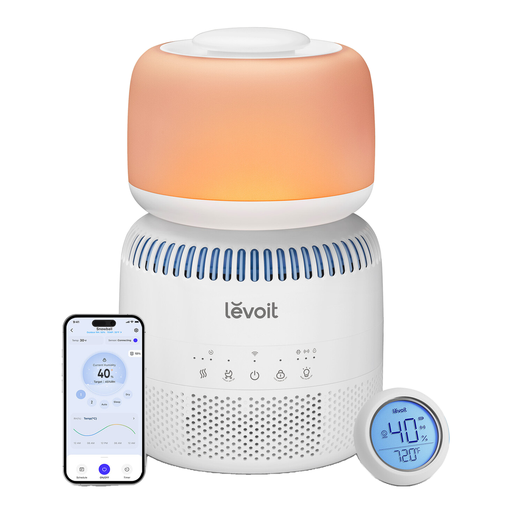
Described as an evaporative humidifier with a humidity sensor, which may be useful for controlling humidity in a small to medium-sized room.
Listed features: 3.8-litre tank, humidity sensor, app control, filter drying and a stated room size of 20 m². The description also mentions night lighting without blue light.
 No image available
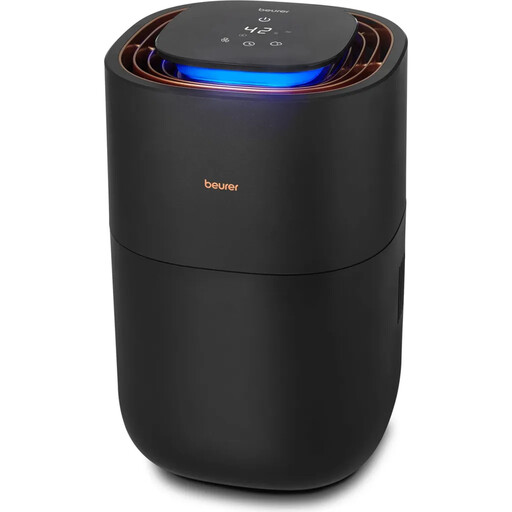
This cool-mist evaporative humidifier may suit anyone looking for automatic and night modes for use in a heated room.
Listed features: 3-litre tank, three humidity settings and automatic mode. Beurer rates it for up to 45 m² and up to 300 ml/h; according to the manufacturer, the output rating is based on set test conditions. The product description recommends changing the filter roughly every six months.
 No image available
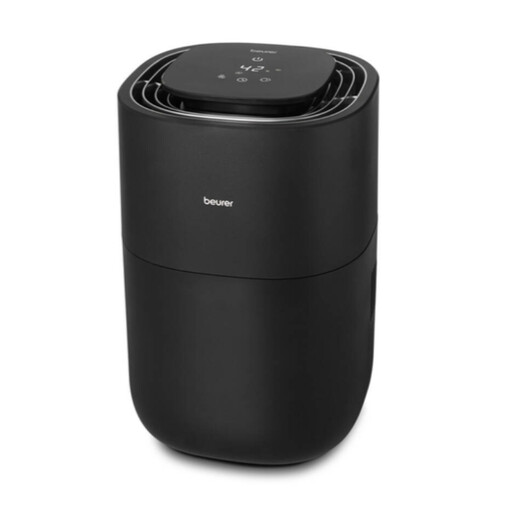
This cool-mist evaporative humidifier may suit a heated room if you want automatic humidity control and a night mode.
Listed features: 3-litre tank, three selectable target humidity levels of 40%, 50% or 60%, humidity display and three fan speeds. The product description gives a room size of up to around 30 m² and recommends changing the filter roughly every six months.
 No image available
This ultrasonic model may appeal if you prefer a humidifier with humidity control and a top-fill tank; bear in mind the water and maintenance requirements of this type of device.
Listed features: up to 350 ml/h, 32 dB, top filling and app control. Ultrasonic devices can release minerals and microorganisms from the tank into the air.
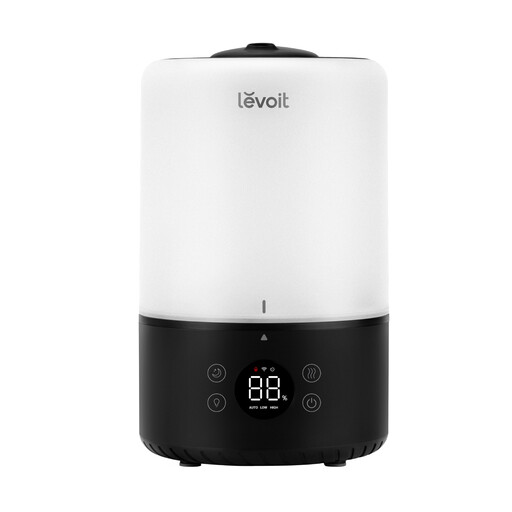 No image available
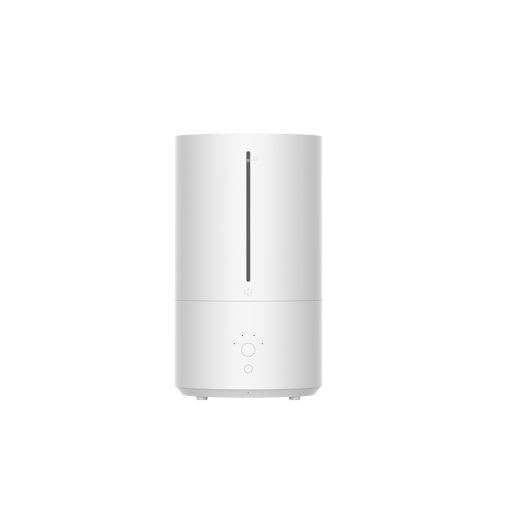
This compact ultrasonic humidifier may suit you if you prefer a top-fill tank and app control; looking after the water is still important.
Listed features: 3-litre tank, humidity control, app scheduling, up to 25 hours’ runtime and a maximum noise level of 28 dB. Ultrasonic devices can release minerals and microorganisms from the tank into the air.
First, use a hygrometer to measure humidity in the room in question. The German Environment Agency recommends a relative indoor humidity of 40 to 60% as a guide to reducing the risk of mould. If humidity is already adequate or there’s condensation, don’t add more moisture. This range isn’t a legal requirement.
Follow the instructions for your specific device, paying particular attention to cold walls and condensation. The US Environmental Protection Agency recommends emptying the tank of portable humidifiers daily, wiping all surfaces dry and refilling with fresh water, as well as cleaning the device thoroughly every three days. This is maintenance advice, not German law.
For filter models, factor in compatible replacement filters and how often they need changing. For all electrical devices, consider electricity use and cleaning. Stadler Form recommends changing its Oskar filters every two to three months; this manufacturer’s recommendation doesn’t automatically apply to other models.
No. According to the European Union, CE marking is required for products covered by harmonised EU rules that explicitly require it. The manufacturer declares that the product complies; there is no central EU body that routinely issues an approval or CE certificate for this purpose. Check the marking on the specific device and whether the relevant rules apply to it.