Students who have measured dry air in their room
You want to raise the humidity in a heated living and sleeping space without encouraging damp patches or mould.


A humidifier isn’t necessary in a student room just because the heating is on. Measure the relative humidity first. The German Environment Agency recommends 40 to 60 per cent. If humidity is below this range, an adjustable evaporative humidifier may suit a room used for sleeping, while an ultrasonic model requires fresh water every day and regular cleaning. If you notice moisture on windows or cool walls, check the ventilation and investigate the cause first.
You want to raise the humidity in a heated living and sleeping space without encouraging damp patches or mould.
If the humidifier will be close to where you sleep, its operating noise, lighting and controls matter just as much as the recommended room size.
When comparing models, look beyond the purchase price to water changes, ease of cleaning and whether replacement filters may be needed.
The German Environment Agency recommends a relative humidity of 40 to 60 per cent and advises monitoring it with a hygrometer. Compare humidifiers only once your readings and the moisture levels in your room suggest that humidification is needed.
Suitable if: your hygrometer already reads 40 to 60 per cent, or you notice moisture on windows or cool walls.
The trade-off: You avoid the extra appliance and maintenance, but if you later find that the humidity is too low, the problem will remain unresolved.
Suitable if: the air is genuinely dry and you want adjustable humidification without visible mist in a room used for sleeping and working.
The trade-off: Some models need their filters replacing; filter-free models still need cleaning.
Suitable if: you can reliably refill it with fresh water every day and keep up with regular cleaning.
The trade-off: Ultrasonic humidifiers can release minerals and microorganisms from the tank into the air. Water quality is especially important if your water has a high mineral content.
Suitable if: you specifically prefer this type and have checked its electricity use and safe positioning in your room.
The trade-off: It still needs maintenance. Factor in electricity use and a suitable place to position it when making your decision.
| Priority | What to check when buying | Who is it most relevant to? |
|---|---|---|
| Humidification to suit your needs | A hygrometer and adjustable humidity controls; consider the room’s humidity and any damp problems in cool spots. | If I want to humidify only when the air in my room is genuinely dry and avoid excess moisture, adjustable controls are essential. Around 31% of consumers put humidification to suit their needs first. |
| Quiet and low lighting at bedtime | Check for a night mode, a display that can be switched off and noise levels for each operating setting. | If the humidifier is near my bed, I want as little disruptive noise and light as possible. Around 25% of consumers prioritise a good night’s sleep. |
| Water hygiene and maintenance | Check access to the tank and water-contact parts, as well as water changes, cleaning and any filter requirements. | If my day-to-day routine leaves little time for cleaning appliances, the maintenance instructions need to fit my routine. Around 25% of consumers pay particular attention to water hygiene and maintenance. |
| Space and ongoing costs | Compare the dimensions with the space available and factor in any model-specific replacement filters. | If space is limited and my budget is tight, I want to assess the space needed and any potential ongoing costs in advance. Around 19% of consumers prioritise cost and space. |
Adding moisture without taking a reading may be unnecessary and can make damp patches in cool areas worse. The German Environment Agency recommends keeping an eye on relative humidity.
Take a reading with a hygrometer first. If windows or cold walls are damp, check the ventilation and investigate the cause rather than simply adding more moisture to the air.
A stated running time doesn’t remove the need to change the water or clean the humidifier. The US Environmental Protection Agency recommends emptying, drying and refilling portable humidifiers every day, and cleaning them every three days.
Check the instructions for the specific model and work tank maintenance into your routine before you buy.
Some models need replacement filters; filter-free models still need their water-contact parts cleaned.
Compare the maintenance instructions and filter requirements for the specific model instead of choosing based solely on the type of humidifier.
The Oskar little is an evaporative humidifier that the manufacturer describes as suitable for smaller rooms and equipped with a night mode.
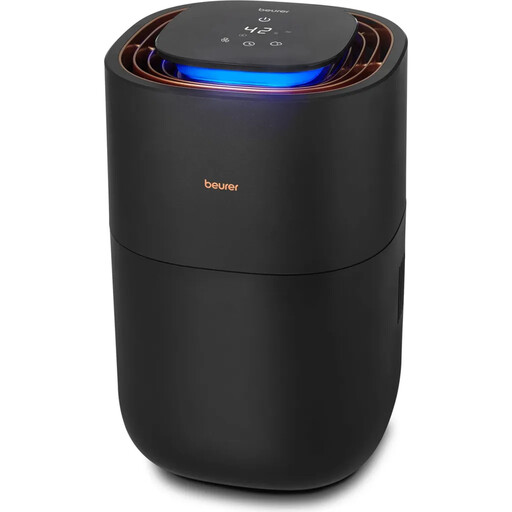
The LB 300 Plus is a cool-mist evaporative humidifier with automatic and night modes.
The manufacturer states that the NanoCloud evaporative humidifier HU5710/03 is suitable for rooms up to 56 m² and has an output of 400 ml/h.
According to the manufacturer, the LW15 Classic Original is a cool-mist evaporative humidifier for rooms up to 29 m² that works without a replaceable humidifying mat.
The Classic 300S is an ultrasonic option; the German product page lists a 6-l tank.
This selection includes cool-mist evaporative and ultrasonic humidifiers. Compare them based on whether you want precise humidity control, plan to use the humidifier at night and can fit the required water care into your routine.
 No product image available
For a room where adjustable humidification and use at bedtime are important. The LB 300 Plus is a cool-mist evaporative humidifier with automatic and night modes; Beurer also describes a filter-drying function.
A replacement filter is available for the LB 200/300 Plus. Factor model-specific filter changes into your maintenance plans.
 No product image available
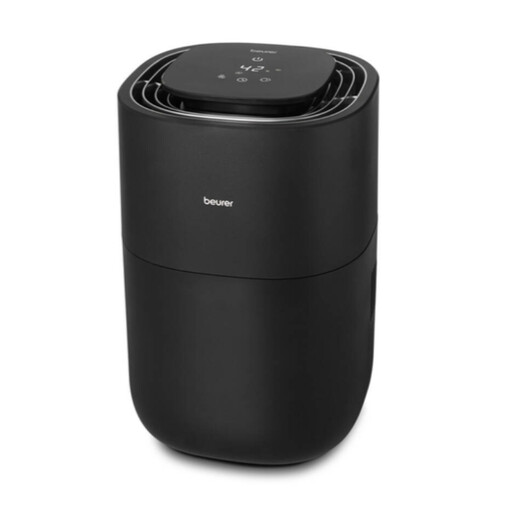
An option if you’re specifically considering an evaporative humidifier from the LB 200 range. Beurer offers a compatible replacement filter for the LB 200/300 Plus; check the filter requirements and maintenance instructions for the specific model before choosing.
 No product image available
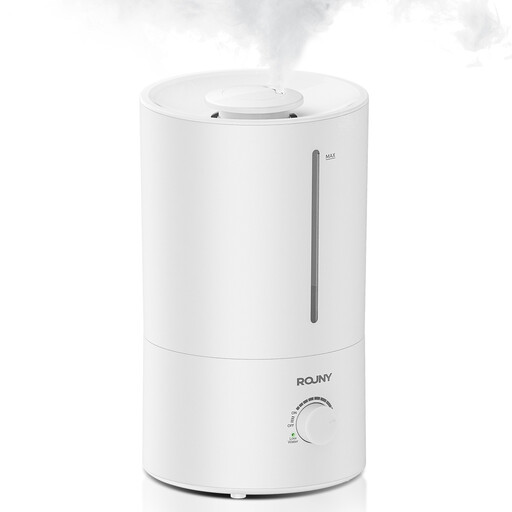
Worth considering if you’re looking for an ultrasonic model with a top-fill tank. The product title lists a 4 l capacity, 23 W, a maximum mist output of 350 ml/h, a 360° outlet and a maximum noise level of 38 dB.
The product description recommends cleaning the tank regularly. Only use additives if the instructions explicitly allow them.
 No product image available
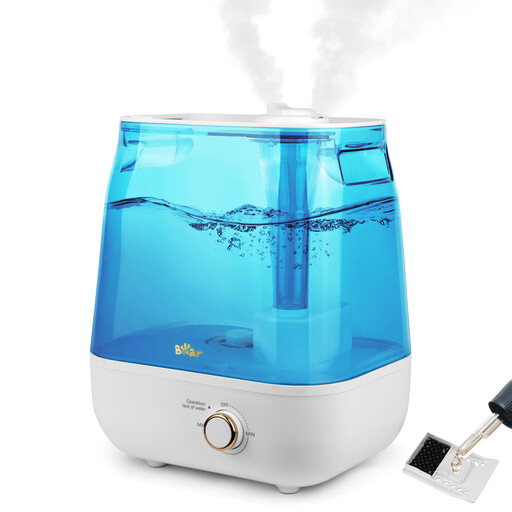
If you’re looking for a top-fill tank, the product title states a capacity of 6 l. It also lists a noise level of 28 dB and a running time of up to 35 hours.
A stated running time doesn’t replace regular water care. Follow the appliance instructions and make time to clean the tank.
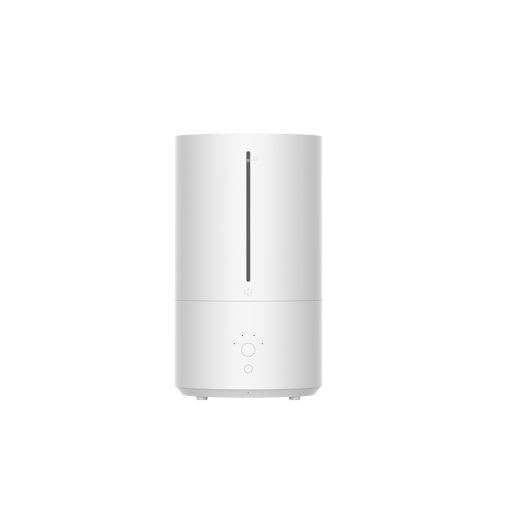 No product image available
An option if you’re specifically looking for an ultrasonic model. Before choosing, check the control features, access to the water tank and maintenance instructions for this model.
For ultrasonic humidifiers, the US Environmental Protection Agency recommends using low-mineral water to reduce the amount of minerals released into the air.
No. First, measure the relative humidity with a hygrometer. To limit the risk of mould, the German Environment Agency recommends 40 to 60 per cent and highlights the risk of damp in cool areas.
The US Environmental Protection Agency recommends emptying the tank every day, wiping it dry and refilling it with fresh water, as well as cleaning portable humidifiers every three days. Also follow the instructions for your specific model; this recommendation is not a legally prescribed cleaning interval in Germany.
Models with replaceable evaporative filters may need replacement filters, depending on the model; appliances without filters still need cleaning. Check compatible replacement parts and the manufacturer’s maintenance instructions before estimating ongoing costs.
Under EU consumer rules, goods bought from a business seller are covered by a minimum statutory guarantee of two years from receipt; claims should be made against the seller. These EU rules don’t apply in the same way to purchases from private sellers.
No. The European Union explains that by applying the CE mark, the manufacturer declares that the product meets the relevant EU requirements. For the specific electrical appliance, check the marking and product documentation rather than treating it as evidence of an independent performance test.