Class leaders preparing several batches
If you’re making hummus for several groups, you’ll need to weigh up the bowl size, worktop space and number of batches.


For making several batches of hummus, an electric chopper with a clearly specified purée function is an obvious choice, provided you have enough worktop space and access to a socket. For small demonstrations in a spot without power, a manual pull-cord chopper may be a better fit. What matters is the usable capacity stated in the instructions, the consistency you want and how easy the individual parts are to clean – not just the wattage.
If you’re making hummus for several groups, you’ll need to weigh up the bowl size, worktop space and number of batches.
If you want to serve creamy hummus rather than a roughly chopped mixture, look for a clearly specified purée function and suitable recipe guidance.
When several groups are using the same equipment, it matters how easy the bowl, blade and lid are to clean. Care instructions may vary from one part to another.
First decide how much you want to process in each batch. Then consider the purée function, access to power and how easy the parts are to clean.
| Priority | What to look for | Who is this important to? |
|---|---|---|
| Batch size and worktop space | Capacity and fill limit stated in the instructions; appliance dimensions. | If I’m preparing food for several groups, I want to know how many batches will fit in the bowl and whether the appliance will fit on the worktop. Around 40% of consumers put batch size and space requirements first. |
| Creamy consistency | A clearly specified purée function; recipe guidance for the specific appliance. | I want the chickpeas and tahini to be more than roughly chopped. Around 30% of consumers prioritise the consistency they want. |
| Cleaning between groups | Care instructions for the bowl, blade and lid; permitted cleaning methods for each part. | Between groups, I want to be able to clean shared parts according to the instructions. Around 20% of consumers put ease of cleaning first. |
| Working without a socket | Access to power at the class venue; whether the manual effort is practical for the number of batches. | If there’s no socket where the class is taking place, I need a hand-operated option that suits the size of the class. Around 10% of consumers prioritise being able to work without a socket. |
The bowl’s capacity alone doesn’t tell you how much hummus you can process in one batch. Tefal recommends filling the bowl of its manual 5-Second Chopper no more than halfway.
Plan your batches according to the fill instructions for the specific model, rather than relying on the capacity in litres alone.
A lower fill limit may mean extra batches and additional cleaning.
Rommelsbacher says the MZ 400 and MZ 500 are not suitable for making fine nut butter. This neither guarantees that they can make fine tahini nor means that you can’t use them to make hummus.
Check the purée function and hummus recipe guidance separately from any instructions about chopping dry nuts.
Care instructions may differ for the bowl, blade and lid. Tefal recommends not immersing the pull-cord lid in water.
Before the class, read the cleaning instructions for each individual part and handle blades with care.
The MZ 500 is an option for larger batches if you need a purée function and a 1.5-litre glass bowl.
The manual 5-Second Chopper K13204 is worth considering if there’s no socket at your workstation.
The KÜCHENminis chopper, with its 0.3-litre bowl, is designed for small amounts and limited worktop space.
The MMR08A1 is a compact electric universal chopper with a pulse switch.
The MultiQuick 5 Pro MQ55236M is a hand blender set with a chopper, making it a handy choice if you also need a blending wand.
This selection includes manual pull-cord choppers and electric appliances for different batch sizes. Before use, check whether the information provided for parts that come into contact with hummus meets food-contact requirements; the European Commission refers in particular to Regulation (EC) No 1935/2004.
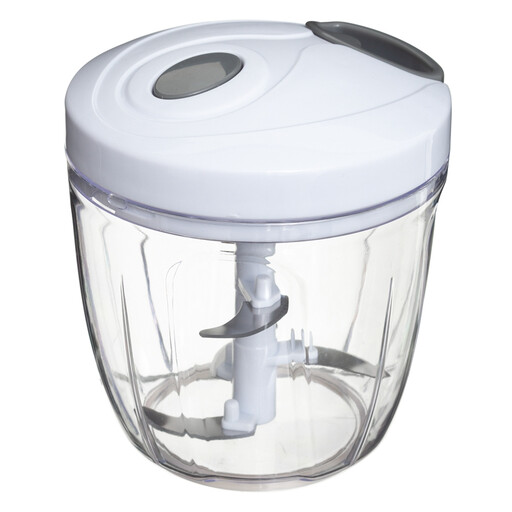 No image available
The manual mechanism suits venues without a socket and is handy for making dips.
900 ml bowl; pull-cord mechanism and mixing attachment specified. According to the product description, wipe the pull-lid assembly clean and do not immerse it in water.
 No image available
The electric purée function and two bowl sizes could come in handy for varying batch sizes during a class.
The description lists 2 L and 0.6 L glass bowls, as well as a purée function. According to the description, the bowls and lids are not heat-resistant or microwave-safe.
 No image available
This electric chopper is an option if you need a larger stated bowl capacity and a purée function.
The description lists two speeds and 304 stainless steel blades. Do not run it for more than 40 seconds at a time; leave it to rest for at least 2 minutes afterwards. Do not use it for dry ingredients, bones, ice or frozen food.
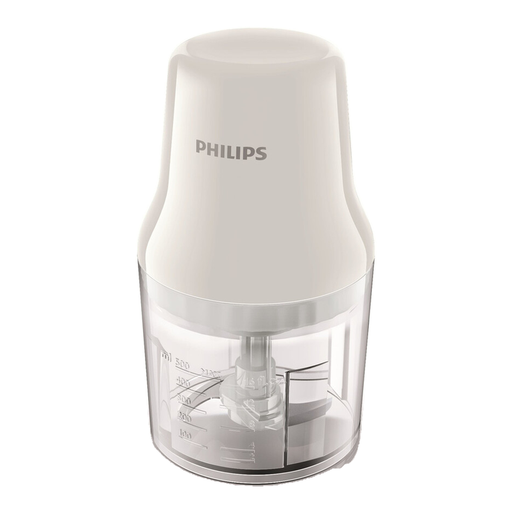 No image available
This electric chopper could be a good fit for smaller prep tasks at your class venue.
450 W, one-button operation and a stainless steel blade; according to the description, the removable parts are dishwasher-safe.
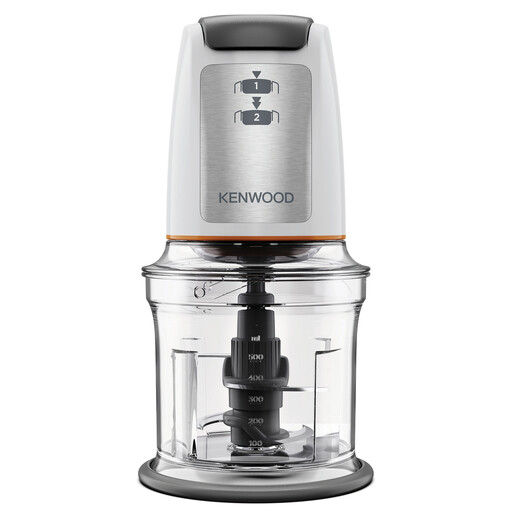 No image available
The product description lists small to medium portions and dips as suitable uses.
500 W and two speeds. The guidance on dips and puréeing doesn’t specify a particular hummus consistency.
No. The stated capacity doesn’t tell you how much you can safely put in for a recipe. Tefal recommends filling the bowl of its manual 5-Second Chopper no more than halfway; follow the instructions for other appliances.
The Rommelsbacher recipe suggests stopping the appliance briefly if needed and scraping the mixture down. If it’s too thick, it recommends adding a little iced water. Before reaching into the bowl, always follow the safety instructions for your specific appliance.
It depends on the appliance and the individual part. Tefal says the bowl and blade can be washed by hand or in the dishwasher, but recommends wiping the pull-cord lid clean without immersing it. Follow the care instructions for other models.
In the EU, food-contact materials are governed in particular by Regulation (EC) No 1935/2004. Check the information for the parts that come into contact with food on the specific appliance; the general regulation alone doesn’t confirm that an individual model complies.