
Lieferung heute & morgen

Qualitätsgarantie

Willkommens-Angebote freischalten: KOSTENLOSE Lieferung | Bis zu 80 % RABATT | Kostenlose 30-Tage-JoyPlus-Testphase
App herunterladen
By the Joybuy Product Recommendation OfficerLast updated: August 30, 2026
The search for a suitable hyaluronic acid day cream can quickly become complex. The market offers a plethora of products, all promising intense hydration and a reduction in wrinkles. However, not every face cream with hyaluronic acid lives up to its advertising claims. Certain formulations and overlooked product details can mean the desired effect fails to materialise or the product isn't right for your skin type. This guide will help you understand the crucial criteria and make an informed choice.
Before you make a decision, it's important to critically question common marketing promises. Two aspects in particular often lead to unsatisfactory results:
To make the right choice, you should focus your attention on three core parameters. These will help you objectively evaluate a product's performance.
An effective face cream with hyaluronic acid ideally combines different molecular sizes. On the ingredients list (INCI), look for terms like "Sodium Hyaluronate" (often high-molecular) and "Hydrolyzed Hyaluronic Acid" or "Sodium Acetylated Hyaluronate" (low-molecular). Such a combination ensures comprehensive hydration—both on the surface and deep within the skin.
For daily protection against photoaging, a day cream with SPF is fundamental. An SPF 15 offers basic protection, while an SPF 30 or higher provides more reliable protection for everyday life, especially if you spend time outdoors regularly. Ensure the product protects against both UVB and UVA rays, as the latter are a major contributor to the formation of wrinkles and loss of skin elasticity.
Hyaluronic acid rarely works alone. Its effect is complemented by other ingredients that target specific needs:
Based on the criteria above, we have compiled a selection of products suitable for different user profiles and their specific requirements.
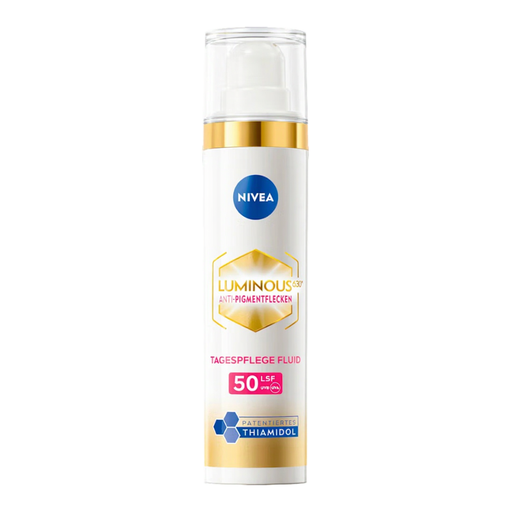
Why This Fits Their Persona: Ideal for users whose main focus is on protection against sun-induced skin aging and reducing existing pigment spots. The lightweight texture is suitable for daily use.
This fluid consistently closes the protection gap with a high SPF 50 and UVA/UVB protection. It directly combines the protective aspect with an active ingredient (LUMINOUS630) that targets a specific problem (pigment spots).
Combines high sun protection with a formula against pigment spots. Also contains hyaluronic acid and vitamin E for moisture.
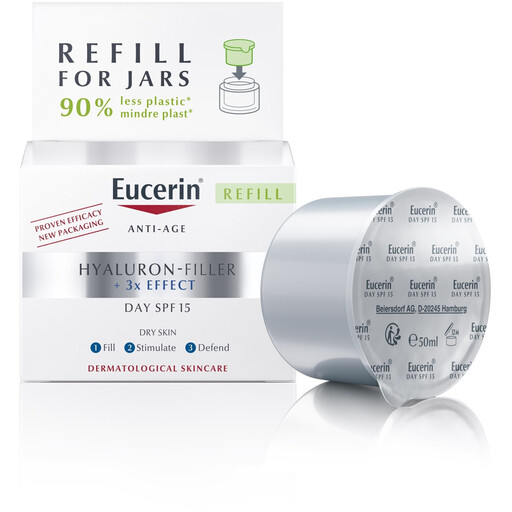
Why This Fits Their Persona: Perfect for eco-conscious individuals who want a proven formula while reducing plastic waste. Specially designed for the needs of dry skin.
This product addresses the 'hyaluron illusion' by combining high- and low-molecular hyaluronic acid. At the same time, its refill jar offers a solution for the desire to reduce packaging waste.
The refill pod saves 90% of plastic, according to the manufacturer. The formula contains Saponin to stimulate the skin's own hyaluronic acid production and SPF 15.
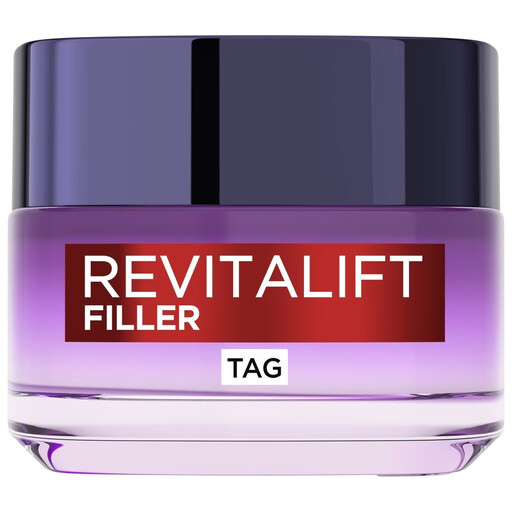
Why This Fits Their Persona: Suitable for those aged 30 and over who are looking for their first effective anti-aging care product. The focus is on intense moisture and visibly plumping up the first fine lines.
This cream counters the 'hyaluron illusion' by containing, according to the manufacturer, three types of pure hyaluronic acid. This aims for multi-level hydration and volume restoration.
The formula is designed to intensely moisturise the skin and restore its volume. The lightweight texture absorbs quickly and is suitable for all skin types.
We have compiled a complete, up-to-date list of products that fully meet these strict selection criteria and UK regulations.
It is not recommended. The sun protection factor is redundant at night and can unnecessarily clog pores. Night creams are also formulated differently: they are often richer and contain active ingredients tailored to the skin's nocturnal regeneration phase. A product without SPF is the more suitable choice for nighttime care.
A one-size-fits-all age recommendation is difficult, as skin condition is more crucial than chronological age. Generally, the skin's own production of hyaluronic acid begins to decline slowly from the mid-20s. Therefore, using a moisturising face cream with hyaluron can be beneficial even at this age to prevent moisture loss and keep the skin plump.
A look at the INCI list (International Nomenclature of Cosmetic Ingredients) on the packaging provides clarity. "Sodium Hyaluronate" is the most common name for the salt of hyaluronic acid. Terms like "Hydrolyzed Hyaluronic Acid" or "Sodium Acetylated Hyaluronate" indicate smaller, low-molecular variants. Some manufacturers also explicitly highlight the use of different molecular sizes in their product descriptions.