
Lieferung heute & morgen

Qualitätsgarantie

Willkommens-Angebote freischalten: KOSTENLOSE Lieferung | Bis zu 80 % RABATT | Kostenlose 30-Tage-JoyPlus-Testphase
App herunterladen
A hyaluronic acid serum can be a lightweight addition to your daily skincare routine when your skin feels dry, tight or dehydrated. However, there is a wide range to choose from: Korean skincare serums, hydrating serums, ampoules and products with additional active ingredients can differ considerably in texture, formulation and application.
If you focus only on terms such as “multi-layer”, “highly concentrated” or “for plumper-looking skin”, it is easy to choose a product that does not suit your skin type. The key factors are the complete INCI list, how you want to use the product and how well it fits into your personal skincare routine.
A claim such as “1% hyaluronic acid” may initially sound clear. However, it does not automatically explain which form of hyaluronic acid has been used, how the serum feels on the skin or what other ingredients it contains. Sodium Hyaluronate, Hydrolyzed Hyaluronic Acid and Sodium Hyaluronate Crosspolymer have different properties within a formulation.
It is therefore important to check the complete INCI list, rather than focusing on a single percentage. Glycerin, Panthenol and Betaine can also help the skin retain moisture.
A watery gel may feel pleasantly lightweight, while a richer formula may remain on the skin for longer. On its own, this says nothing about whether the product is suitable for dry or sensitive skin. Fragrance, alcohol and numerous plant extracts can also be important considerations for some people.
If you are looking for a facial serum for sensitive skin, it is best to start with a relatively simple formulation and carry out a patch test before applying it over a larger area.
A hyaluronic acid serum is usually applied after cleansing. A moisturiser should then follow, so that your skincare routine does not consist solely of a moisture-binding product. In the morning, you should also apply sun protection. If the serum is applied to completely dry skin and no final moisturising step is used, your skin may still feel dry afterwards.
For a hyaluronic acid serum for the face, products containing several forms of hyaluronic acid can be a useful selection criterion. High-molecular-weight forms are generally associated with a moisturising feel on the surface of the skin, while hydrolysed or low-molecular-weight forms may have different sensory properties. The term “deep-acting” should not be taken at face value as a medical claim.
It is also worth looking at complementary ingredients:
With a serum for dry skin or a hydrating serum, a lightweight texture is often desirable. Even so, check whether the product contains parfum or essential oils. For example, the Uriage SERUM HYALU BOOSTER30ML lists parfum among its stated ingredients. If you prefer to avoid fragrance, look specifically for a fragrance-free alternative.
An anti-ageing serum may contain additional ingredients such as Adenosine, Retinol or Niacinamide. These combinations do not automatically make a product more suitable. If you have reactive skin, it is advisable to introduce new active ingredients gradually, rather than using them at the same time as several other new products.
30 ml is a common size for facial serums, while 50 ml or 80 ml may offer better value for regular users. Individual ampoules, such as the Dermaroller Hyaluronic Acid Ampoules Serum 30 x 1.5ml Stock Solution, provide a pre-measured application but require careful handling. Glass ampoules should be opened safely and stored out of the reach of children.
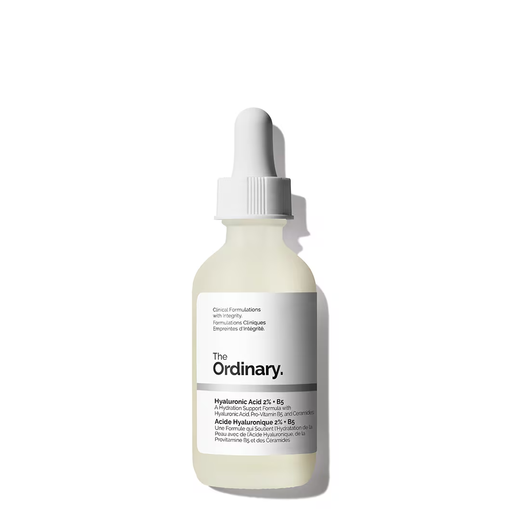
Why this product suits this profile: The 60 ml size is suitable for people who want to use a straightforward hydrating serum regularly, morning and evening. The stated formula is fragrance-free and contains several forms of hyaluronic acid as well as Panthenol.
The choice is based not just on a marketing claim, but on the stated INCI list and the clearly specified quantity. Fragrance is not listed in the product description.
60 ml, five stated hyaluronic acid variants according to the product description, Panthenol and a fragrance-free formulation.
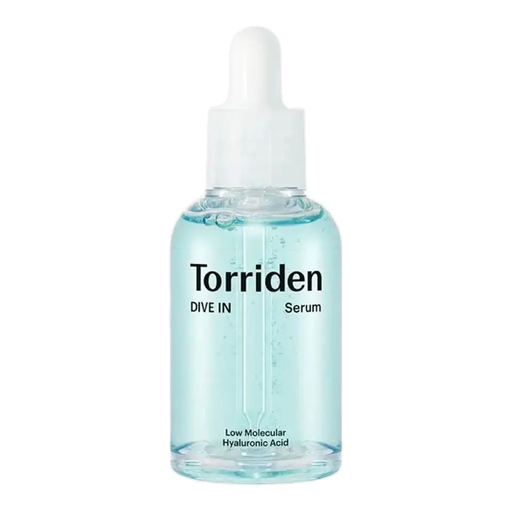
Why this product suits this profile: This Korean skincare serum is aimed at users who want to combine several moisturising components with a lightweight, fragrance-free texture.
The formulation is not assessed solely on the basis of being “low molecular weight”. Panthenol, Ceramide NP, Beta-Glucan and Allantoin are also listed.
50 ml, five forms of hyaluronic acid according to the product information, fragrance-free and containing additional ingredients to support the skin barrier.
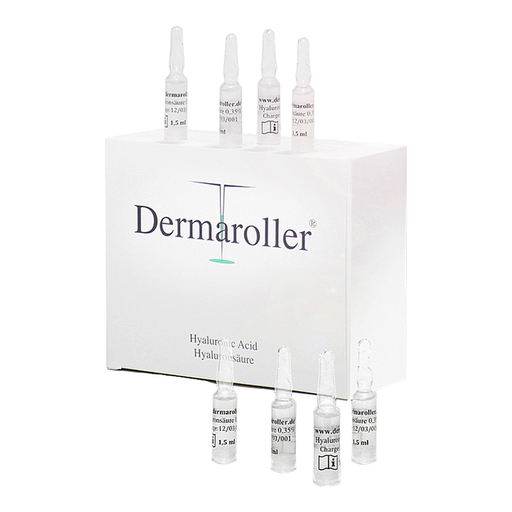
Why this product suits this profile: The individually portioned ampoules are practical for a set four-week course and for use when travelling. Pre-measured portions make it easier to keep track of how much you have used.
The amount per application is clearly defined. However, because the stated formula contains alcohol, the product is not automatically suitable for every type of sensitive skin.
30 individual ampoules of 1.5 ml each, stated hyaluronic acid concentration of 0.35% and a recommended four-week course.
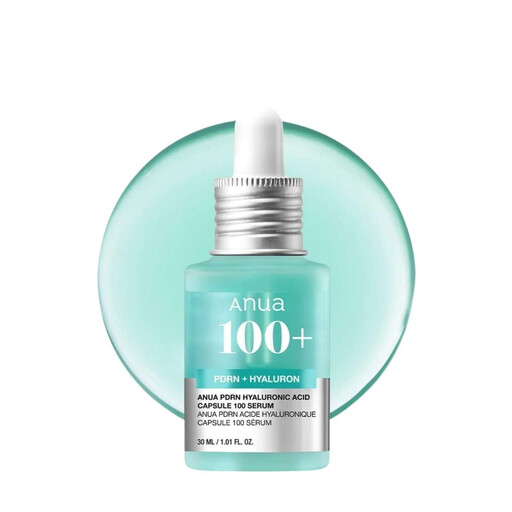
Why this product suits this profile: The product description lists 11 forms of hyaluronic acid as well as Niacinamide, hydrolysed Collagen and PDRN. The watery texture is designed for layering with moisturiser.
The choice is based on the listed ingredients and the stated fragrance-free, alcohol-free formulation. A patch test is still advisable before first use.
30 ml, 11 stated forms of hyaluronic acid, a watery texture, plus Niacinamide and PDRN according to the product description.
We have put together a complete, regularly updated list of products that fully meet these strict selection criteria and the safety regulations applicable in the EU.
After cleansing, apply a few drops to your face and neck. Follow with a moisturiser. In the morning, sun protection should be part of your facial skincare routine. The exact order may vary depending on the product instructions.
The period-after-opening symbol, the best-before date and the information on the packaging are the key references. Many products, for example, state that they should be used within twelve months of opening. Keep the serum closed, in a dry place and protected from direct heat and sunlight.
This depends on the complete formulation and your individual tolerance. Fragrance, alcohol, essential oils and additional active ingredients may all be important selection criteria. A patch test before the first full application is advisable; if irritation persists, discontinue use and seek medical advice if necessary.