
Lieferung heute & morgen

Qualitätsgarantie

Willkommens-Angebote freischalten: KOSTENLOSE Lieferung | Bis zu 80 % RABATT | Kostenlose 30-Tage-JoyPlus-Testphase
App herunterladen
A new smartphone such as the Samsung Galaxy S25, S25+ or S25 Ultra is a significant investment. A suitable screen protector can help protect the surface from scratches, dirt and fingerprints during everyday use. However, not every product marketed as “tempered glass” is automatically suitable for every device. The material, coverage and installation all determine whether the protection remains practical over time.
The 9H screen protector rating primarily describes a surface’s resistance to scratches. It does not mean that the glass will remain undamaged after every drop or that the smartphone display is fully protected. Even flexible tempered glass can crack when subjected to significant force.
Hybrid glass combines a hard layer with a more flexible backing layer. Depending on its design, this allows the material to adapt better to slightly curved surfaces. However, the actual level of protection depends on the product’s construction and the type of impact.
A full-cover screen protector extends closer to the edges of the display and can therefore cover more of the surface. If a smartphone case fits very tightly, it may press against the edges. This can cause the edges to lift or trap particles of dust underneath.
A case-friendly screen protector deliberately leaves a small gap around the edge. Before buying, you should therefore check whether the protector is explicitly suitable for your particular case. Statements such as “suitable for most cases” are not a guarantee that every combination will work.
A screen protector for the Samsung Galaxy S25 is not automatically suitable for the S25+ or S25 Ultra. The Samsung Galaxy A36 and A56 also require the correct cut-outs and dimensions for each model. The same applies to iPhone screen protectors for different generations and Pro models.
Before buying, check the model name in your smartphone’s settings or on the original packaging. Even small differences in the camera cut-out, speaker area or display edge can affect installation.
A hybrid glass screen protector combines properties of glass and film. It is generally thinner and more flexible than traditional tempered glass, which means it can adapt more easily to certain display shapes and may feel less brittle during installation. A conventional film is usually particularly flexible, but depending on its design, it may offer a different level of scratch resistance and a different feel when touched.
Look for specific details such as the material structure, thickness and surface coating. For example, the 3MK FlexibleGlass for the Samsung Galaxy S25 is listed as having a thickness of 0.3 mm and a ceramic layer with 7H hardness. The manufacturer describes the construction as combining the properties of glass and film.
A 7H or 9H rating is a technical indication of surface hardness, but it is not a complete quality assessment. The rating should be considered alongside flexibility, fit and the installation system. Very hard glass can perform well on a flat display, while a flexible construction may be more practical for certain edges or curves.
An anti-fingerprint screen protector has an oleophobic or similar surface coating that can reduce fingerprints and make cleaning easier. However, it will not prevent every type of dirt. The screen protector should also not unnecessarily affect touch controls or, where applicable, the fingerprint sensor.
For the Samsung Galaxy S25 Ultra, the 3MK FlexibleGlass Pro is described in the product information as having a thin construction intended to be compatible with the ultrasonic fingerprint sensor. After installation, it may be helpful to register your fingerprints again on some devices. This is a practical setup tip, but it is not a guarantee for every usage scenario.
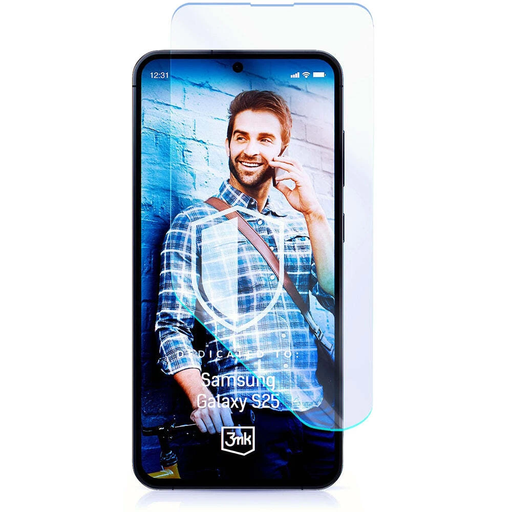
Why this product suits this profile: The protector is designed for the Samsung Galaxy S25 and, according to the product description, combines flexible properties with a hard protective layer. Its anti-fingerprint and anti-scratch coating is designed for everyday use.
The clear model designation reduces the risk of accidentally ordering a protector for the S25+ or S25 Ultra. The case-friendly design is intended to prevent many cases from lifting the protector.
Transparent finish, flexible installation and touch sensitivity retained according to the product information.
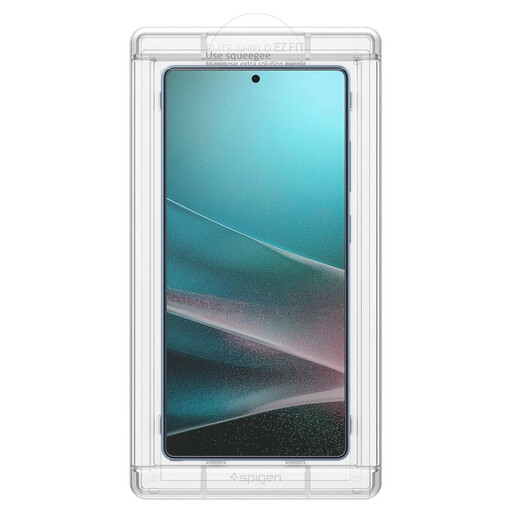
Why this product suits this profile: This model is aimed at users who prefer guided installation and precise coverage for the Galaxy S25 Ultra. The package includes two screen protectors, an EZ-Fit installation frame and a cleaning kit.
The installation frame reduces the risk of misalignment and, according to the product information, supports a bubble-free installation. The 9H rating should be understood as an indication of scratch resistance.
Two-pack, EZ-Fit template, oleophobic coating and case-friendly design according to the manufacturer’s information.
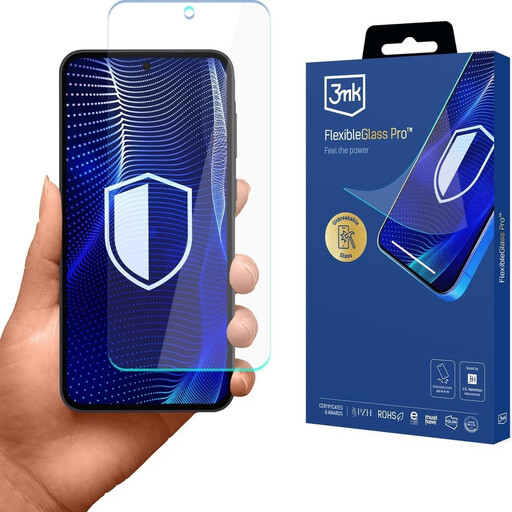
Why this product suits this profile: This version is intended for the Samsung Galaxy A36 5G and A56 5G. It is suitable for users looking for a transparent surface with anti-fingerprint and anti-scratch properties.
The compatibility information explicitly names both device series. This helps avoid the common mistake of confusing them with similarly sized Samsung models.
Flexible hybrid construction, transparent finish and touch sensitivity retained according to the product description.
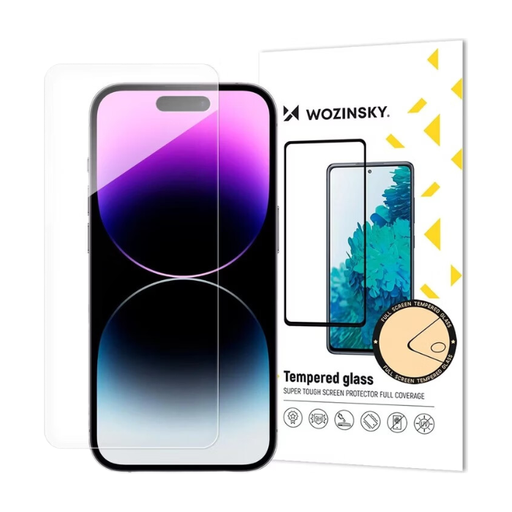
Why this product suits this profile: This model is designed to provide as much display coverage as possible and, according to the product description, is installed without traditional adhesive. This may appeal to users who value easy application.
The explicitly stated full-cover design reduces the risk of covering only the central display area. Even so, you should check the clearance around the edges if you use a very tight-fitting case.
Full-cover design, flexible construction and cleaning accessories included according to the product information.
A bubble-free installation depends on more than just the protector itself. Follow these steps as systematically as possible:
After installation, do not put the smartphone straight into a very tight-fitting case if the manufacturer recommends allowing a short setting time. Damaged screen protectors should be replaced. Reinstallation is not intended for many products, as the adhesive layer may lose its grip.
We have put together a complete, regularly updated list of products that fully meet these strict selection criteria and the safety regulations applicable in the EU.
It depends on the smartphone and how you plan to use it. Hybrid glass is generally more flexible and may be suitable for slightly curved or edge-to-edge displays. Traditional tempered glass often provides a firm, hard surface. Fit, material construction, coating and compatibility with your case are the key factors.
It is not possible to give a reliable fixed lifespan. This depends on scratches, impacts, cleaning products, pressure from the case and everyday use. The protector should be replaced if it develops cracks, the coating becomes noticeably worn or the edges begin to lift.
A suitable, correctly installed screen protector is designed for touch operation according to the relevant product information. However, dust beneath the glass, edges lifting or an incorrect model variant can affect usability. If your device has a fingerprint sensor, you may need to register your fingerprint again after installation.