
Lieferung heute & morgen

Qualitätsgarantie

Willkommens-Angebote freischalten: KOSTENLOSE Lieferung | Bis zu 80 % RABATT | Kostenlose 30-Tage-JoyPlus-Testphase
App herunterladen
Dry, tight or tired-looking skin can have various causes: dry indoor air, frequent washing, cold weather or an unsuitable skincare routine. A hydrating face mask can be a practical addition to your daily skincare routine. However, sheet masks, hydrogel masks and cream masks differ considerably in terms of application, ingredients and comfort.
Anyone who focuses only on terms such as “Hydrating Mask”, “Glow” or “Collagen” may overlook important details. The following selection criteria will help you assess marketing claims and choose a face mask that suits your skin type.
Hyaluronic acid, collagen, Cica and rice extract are common ingredients in Korean and Japanese face masks. However, simply mentioning them says nothing about their concentration, formulation or suitability. When choosing a hyaluronic acid face mask, it is therefore worth checking the complete INCI list.
A product labelled “Collagen Mask” does not automatically contain collagen in a form that is suitable for every skin type. In most cases, it is a cosmetic skincare ingredient that primarily contributes to the texture and feel of the product on the skin.
A face sheet mask is often recommended for 10 to 20 minutes. Hydrogel masks, on the other hand, can be worn for several hours or overnight. A longer application time is not automatically more beneficial. The manufacturer’s instructions, the fit of the mask and how your skin feels during use are what matter.
If a sheet mask dries out, it can feel uncomfortably tight. If you have sensitive skin, remove the mask immediately if you experience burning, itching or redness.
A label stating that a product is suitable for all skin types can be helpful, but it is no substitute for making an individual choice. Fragrances, alcohol, essential oils and certain plant extracts may not suit everyone. If you are looking for a face mask for sensitive skin, check the INCI list and carry out a small patch test before using new products.
Sheet masks made from cotton, cellulose or bamboo fibre are suitable for short applications. They should sit as evenly as possible on the skin, leaving the eyes, nose and mouth clear. A mask that is too large or too small will distribute the serum less evenly.
Hydrogel masks usually adhere more firmly and often contain a gel-like serum phase. Cream masks are applied in a thin layer and removed or rinsed off after the recommended time. A creamy texture may feel more comfortable on dry skin, while a lightweight cellulose mask is less demanding for everyday use.
Glycerin, betaine, panthenol and various forms of hyaluronic acid are common humectants. They can help the skin feel smoother after application. Ceramides, cholesterol and phytosphingosine are often used in formulations designed to care for the skin barrier.
A soothing face mask often contains Centella asiatica, madecassoside, allantoin or liquorice root extract. Products containing tea tree or Cica may be of interest if you have blemish-prone skin. However, individual tolerance remains the deciding factor.
Single sheet masks are suitable for occasional use or for trying a product for the first time. Multipacks containing 10, 18 or 30 masks are more practical for a regular routine, but they should be removed hygienically and resealed properly. With a jar or multipack, it is also important to ensure that the mask does not dry out.
Always follow the application instructions, the best-before date or the information on the packaging. Cosmetic masks are intended for external use only and should not be applied to damaged or severely irritated skin.
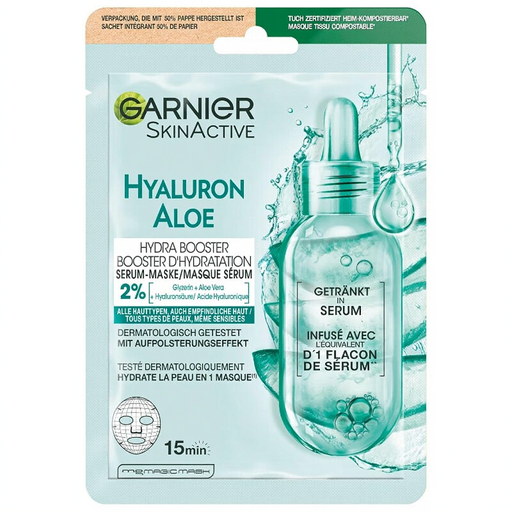
Why this product suits this profile: This single-use cotton sheet mask is designed for a simple 15-minute application and, according to the product description, contains 2 % hyaluronic acid, aloe vera and glycerin.
The clearly defined application time prevents unnecessarily long wear. The product description also states that it is suitable for all skin types, including sensitive skin; the INCI list should nevertheless be checked before purchase.
Cotton material, gel serum and a short application with no rinsing required.
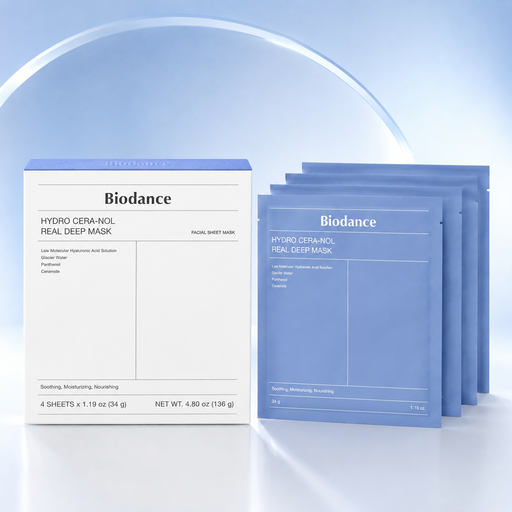
Why this product suits this profile: According to the product information, this hydrogel mask combines D-panthenol, ceramides and oligo-hyaluronic acid. It is designed for longer use of at least three to four hours or overnight.
The wear time is clearly defined and, according to the description, the mask becomes transparent once it has been sufficiently saturated or has dried. This makes it easier to judge how long to leave it on.
Hydrogel format, several ceramides and a pack containing four individually wrapped masks.
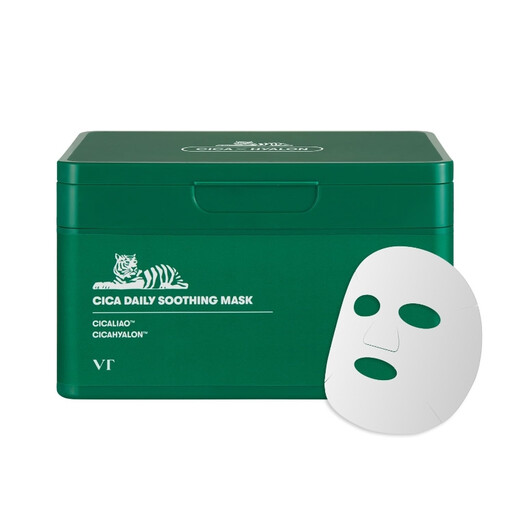
Why this product suits this profile: The pack contains 30 thin masks and, according to the product description, is designed for daily use of 10 to 20 minutes. Cica, panthenol and sodium hyaluronate complement the lightweight ampoule essence.
The short application time fits fixed routines better than an overnight mask. The included tweezers help you remove masks hygienically from the dispenser.
30 individual masks, a 0.2-mm Nude-Seal sheet and a lightweight, non-sticky texture according to the product description.
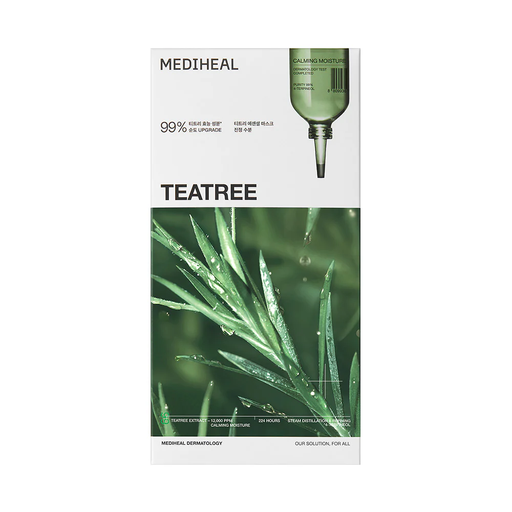
Why this product suits this profile: The product description mentions a mildly acidic formulation containing tea tree. This makes the mask interesting for anyone looking to combine hydration with lightweight care for skin that appears unbalanced.
The pack specifies an application time of 15 to 20 minutes. If you have sensitive skin, you should still check the complete list of ingredients beforehand and remove the mask if irritation occurs.
10 individual masks, tea tree as a stated ingredient and a mildly acidic formulation according to the product information.
We have put together a complete, regularly updated list of products that fully meet these strict selection criteria and the safety regulations applicable in the EU.
A face mask does not replace a complete daily skincare routine. If you have pronounced or persistent skin problems, it is advisable to seek dermatological advice.
This depends on the product and how your skin feels. Many sheet masks are used once or several times a week. According to the manufacturer’s instructions, daily mask products can also be used more frequently. If you have sensitive skin, it is best to introduce them gradually.
The usual application time is between 10 and 20 minutes. Hydrogel masks specifically designed for long-term use can be worn for several hours. Always follow the instructions on the packaging.
They serve different purposes. A mask generally provides an intensive but temporary dose of care. A cream remains on the skin and can complement your routine afterwards. For dry skin, combining a hydrating face mask with a suitable moisturiser is often more practical than using a mask on its own.