
Lieferung heute & morgen

Qualitätsgarantie

Willkommens-Angebote freischalten: KOSTENLOSE Lieferung | Bis zu 80 % RABATT | Kostenlose 30-Tage-JoyPlus-Testphase
App herunterladen
Tired-looking eyes, dry skin and visible lines lead many people to reach for hydrogel eye patches. These small patches are easy to use and fit neatly into a short morning or evening routine. However, products can vary considerably in their ingredients, fit and application.
Three common misconceptions when buying can leave eye patches unused:
For dry or tight-feeling skin, hydrating eye masks containing glycerin, panthenol, betaine or hyaluronic acid are a good place to start. Sodium hyaluronate and different forms of hyaluronic acid can help hydrate the skin’s surface and improve how it feels.
If you’re looking for eye patches for dark circles, bear in mind that dark circles can have a range of causes. Niacinamide is often used in skincare formulas designed to brighten the skin. Caffeine is found in many eye patches for puffiness and is used to care for a tired-looking eye area. However, cosmetic use is no substitute for medical advice if changes persist.
For more mature skin, anti-ageing eye patches containing peptides, adenosine or collagen may be worth considering. In a skincare product, collagen is primarily an ingredient in the formula and helps provide hydration; you shouldn’t expect a medical or permanent firming effect.
Retinal eye patches may appeal if you’d like to add retinoids to your skincare routine. However, retinal isn’t an ingredient to use every day without considering how well your skin tolerates it.
Keep the following points in mind:
Check the current ingredients directly on the product packaging, as INCI lists can change.
A jar containing 60 patches usually provides 30 applications, if you use one patch per eye each time. Products with 30 patches provide around 15 applications. Wear times also vary: some eye patches are designed to be left on for around 10 minutes, while others are intended for 20 to 30 minutes.
A good fit means the patch stays in place under your eye without slipping towards your lash line or into your eye. Winged or teardrop shapes can cover different areas, such as the lower eyelid, outer corner of the eye or upper cheek. More essence doesn’t automatically mean a better application: too much liquid can cause the patches to slip.
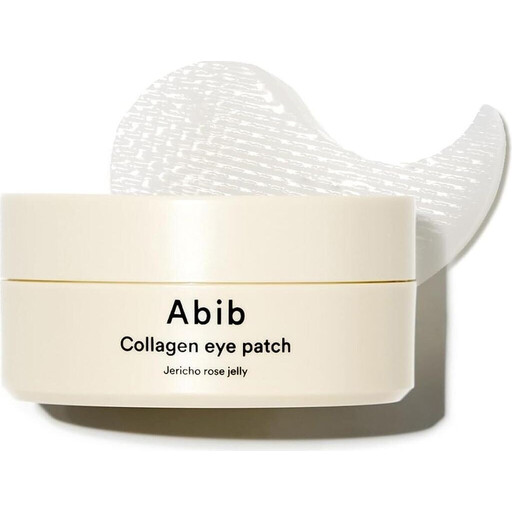
Why this product suits these needs: The pack contains 60 patches, making it suitable for regular use. The formula lists ingredients including glycerin, niacinamide, panthenol, sodium hyaluronate and ceramide NP.
The ingredient information gives a clearer picture of its hydrating properties than vague “Glow” promises. The recommended wear time of 20–30 minutes is clearly stated.
60 patches, hydrating ingredients and caffeine in the formula to care for a tired-looking eye area.
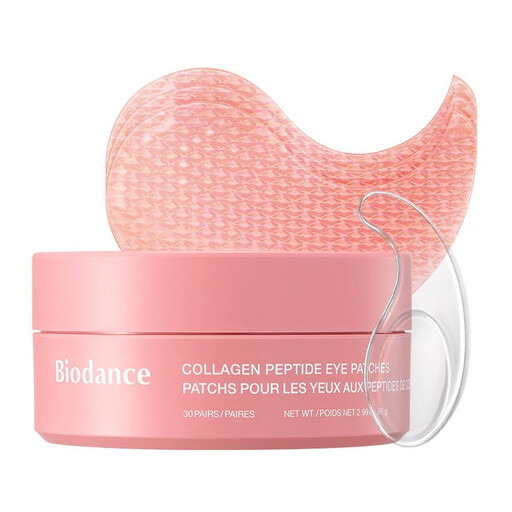
Why this product suits these needs: The product description highlights a hydrogel texture, collagen water, ten peptides, niacinamide, caffeine and several forms of hyaluronic acid.
You can check the formula against its specific ingredients. The pack includes a spatula, which can make it more hygienic to remove the patches.
30 patches, a close-fitting diamond gel texture and a formula focused on hydration and a fresh-looking eye area.
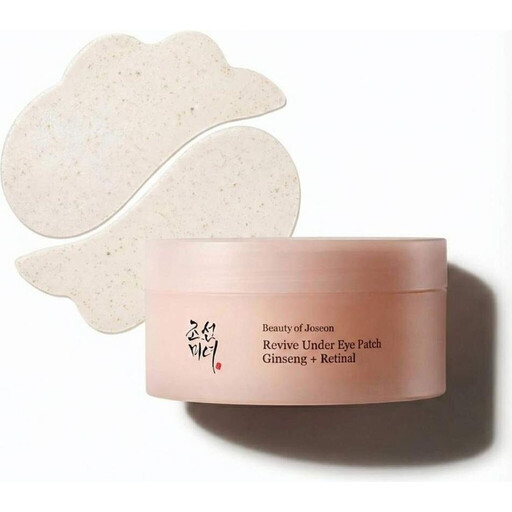
Why this product suits these needs: These Korean eye patches combine ginseng, collagen, retinal, bakuchiol, ceramide NP and acetyl hexapeptide-8 in a winged shape designed for the under-eye area.
The ingredients are clearly listed. As the formula contains retinal, pay particular attention to the directions, patch testing and sun protection.
60 patches, a winged shape and a formula containing hydrating ingredients, peptides and retinal.
We’ve put together a complete, regularly updated list of products that meet these strict selection criteria and fully comply with the safety regulations in force in the EU.
Eye patches are usually single-use products. Reusing them can affect hygiene and change how much essence they contain. If you have sensitive skin, it’s best to test the product on a small area first before applying it around your eyes.
It depends on the formula and the manufacturer’s instructions. Hydrating eye patches without retinal are often used several times a week. If you’re using retinal eye patches, it’s sensible to start cautiously while you assess how well your skin tolerates them.
They can temporarily hydrate the eye area, helping it look smoother or fresher. Caffeine is often used in eye patches for puffiness. However, results depend on what’s causing the dark circles and puffiness, and aren’t the same as medical treatment.
Check the best-before date, the open-jar symbol and the information on the packaging. Keep the container tightly closed after opening. Don’t use the patches if they dry out, change in smell or texture, or cause irritation.