
Lieferung heute & morgen

Qualitätsgarantie

Willkommens-Angebote freischalten: KOSTENLOSE Lieferung | Bis zu 80 % RABATT | Kostenlose 30-Tage-JoyPlus-Testphase
App herunterladen
An i-Size car child seat should suit your child, your vehicle and your everyday needs. Many parents initially focus on the brand, colour or a long age range. However, other factors are crucial when making the right choice: your child’s height, approval under UN ECE R129, how the seat is secured in the vehicle and correct belt positioning.
A growing child seat described as “from birth to 12 years” may sound practical. In reality, the seat shape, padding and restraint system vary considerably according to the child’s stage of development. A model for 40–150 cm must accommodate both a newborn and a much larger child. Check whether a suitable newborn insert is included, how the headrest can be adjusted and when the internal harness system needs to be changed or removed.
An ECE R129 child seat is not automatically suitable for every seating position or every vehicle. ISOFIX anchorage points, support legs, Top Tether anchor points, seat angle and existing airbags may limit your choice. Before buying, check the vehicle handbook and the manufacturer’s compatibility list.
A rotating child seat, recline position or sun canopy can make everyday use easier. However, they are only beneficial if the seat is correctly secured and your child is properly strapped in. Even a lightweight child seat must be secured during a journey when your child is not sitting in it. After an accident or if there is visible damage, you should always check whether the seat can still be used; manufacturers often require it to be replaced.
With i-Size models, your child’s height is the main consideration. Typical ranges include:
The age indication is only a guide. Your child’s height, seating position and the path of the vehicle’s seat belt are more important. With a 100–150 cm child seat, the shoulder belt should run centrally across the shoulder and the lap belt should sit low across the pelvis – not across the stomach.
A child seat with ISOFIX connects directly to the designated vehicle anchor points. Colour indicators or audible click signals can make installation easier. However, ISOFIX alone does not mean that every seating position is suitable.
Depending on the model, additional systems may be used:
A three-point seat belt is essential when using a booster seat without its own harness. A two-point lap belt is not sufficient.
For babies and smaller children, rear-facing travel is a key feature of many rear-facing child seats. Under UN R129, travelling against the direction of travel is compulsory until at least 15 months and 76 cm. Some models allow rear-facing use beyond this point.
Integrated side-impact protection may consist of reinforced side wings, energy-absorbing materials or an additional protection system. Check whether the side elements have enough room in your vehicle and whether they need to be positioned in a particular way according to the instructions.
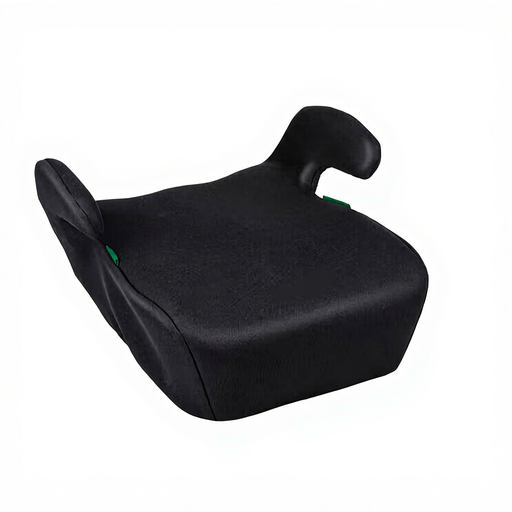
Why this product suits this profile: For older children and families looking for a compact solution for occasional journeys or changing between vehicles. According to the product details, this model is secured with the three-point seat belt and weighs approximately 1 kg.
The clearly stated size range of 125–150 cm helps prevent the booster seat from being used too early. It has no built-in harness and is therefore not suitable for smaller children.
Low weight, removable cover and armrests. Use is limited to children measuring 125–150 cm and requires a three-point seat belt.

Why this product suits this profile: For parents of babies and toddlers who value an integrated base, rear-facing use and easier access when placing their child in the seat.
This seat is not designed as a universal child seat for use up to 12 years. Instead, it is intended for children measuring 40–105 cm, or up to approximately 4 years old. This keeps the development phase clearly defined.
360° rotation, five recline positions, 12-position adjustable headrest, ISOFIX base with support leg and removable newborn insert for 40–60 cm.
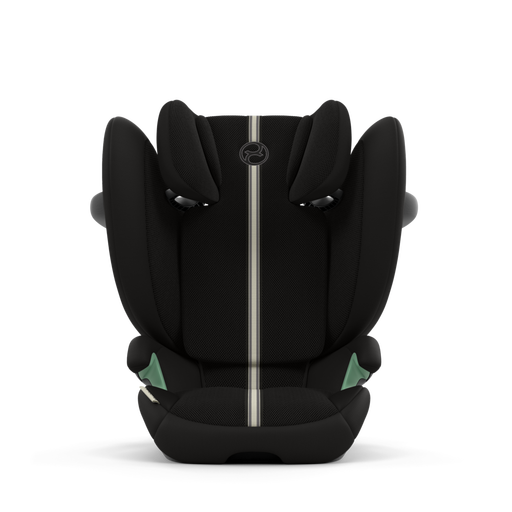
Why this product suits this profile: For families who move the seat between several vehicles, taxis or public transport and need compact storage.
This seat is clearly designed for children measuring 100–150 cm. This prevents a seat intended for older children from being mistakenly used for babies or toddlers.
Foldable design, carrying handle, weight of 5,8 kg, ISOFIX connection, adjustable headrest and machine-washable cover at 30 °C.
We have put together a complete, regularly updated list of products that fully meet these strict selection criteria and the safety regulations applicable in the EU.
Not necessarily. ISOFIX can make installation easier and create a stable connection with the vehicle. However, the correct approval, proper installation and vehicle compatibility remain crucial. Some ECE R129 models may alternatively be secured with the three-point seat belt.
The usable life depends on the approved size range and the condition of the seat. A model for 40–105 cm is intended for a different stage than a child seat for children up to 12 years measuring 100–150 cm. After an accident, if any parts are damaged or once the manufacturer’s stated service life has expired, the seat should no longer be used.
The price depends, among other things, on the size range, installation method, rotation function, materials, padding and adjustment options. An affordable booster seat for older children is not comparable with a rotating rear-facing child seat suitable from birth. So compare the technical requirements first, rather than focusing solely on the purchase price.