
Lieferung heute & morgen

Qualitätsgarantie

Willkommens-Angebote freischalten: KOSTENLOSE Lieferung | Bis zu 80 % RABATT | Kostenlose 30-Tage-JoyPlus-Testphase
App herunterladen
Choosing a car seat is one of the most important decisions parents make for their child's safety. However, the market is flooded with technical jargon, regulations, and marketing promises that can make it difficult to navigate. The i-Size standard (UN R129) in particular has set new benchmarks but also raises new questions. Many parents invest in expensive models only to find later that the seat is impractical, doesn't fit correctly, or its advertised features are more of a hindrance than a help in daily life.
As your Joybuy Product Recommendation Officer, I'm here to help you separate the essential facts from the superfluous extras. In this guide, we'll focus on the most common pitfalls and the crucial criteria to ensure you make an informed and safe decision when buying an i-Size car seat.
Before we dive into the technical details, let's look at three common misconceptions that often lead to the wrong purchase.
To make the right choice, you should focus on three fundamental technical features. These define the safety and usability of a modern car seat.
The i-Size standard isn't a marketing gimmick; it's a European safety regulation with clear advantages:
Independent organisations like the ADAC regularly conduct car seat tests, where i-Size models often perform well due to these heightened safety requirements.
ISOFIX is an international standard for attachment points in vehicles. The car seat is firmly connected to the car's chassis via two locking arms.
Before purchasing, check your vehicle's manual to see which seats are equipped with ISOFIX anchor points.
A 360-degree rotating car seat is more than just a convenience feature. It makes placing and buckling your child in significantly easier, as the seat can be turned towards the door. This not only saves parents' backs but also makes it easier to tighten the harness correctly.
Also, look for an easily adjustable headrest and a harness system that adapts simultaneously. This ensures the seat provides a correct and secure fit throughout its entire period of use.
Based on the criteria above, we have curated a selection of models suitable for different needs and life stages.

Why This Fits Their Persona: Ideal for parents seeking maximum safety and comfort right from birth (with newborn inlay). The 360° rotation function makes daily entry and exit effortless and encourages extended use as a safe rear-facing seat.
It focuses on body height (40-105 cm) rather than vague age ranges. The ISOFIX installation with a support leg minimises the risk of incorrect fitting.
Meets the strict UN R129/03 (i-Size) standard. Features integrated Linear Side-impact Protection (L.S.P. System) and a 360° rotation mechanism for easy handling.
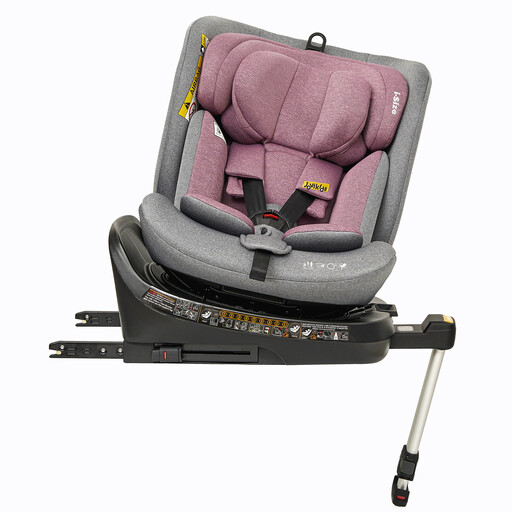
Why This Fits Their Persona: Perfect for budget-conscious parents looking for a single, long-term solution. This seat covers the entire childhood from birth until the car seat requirement ends, combining it with modern convenience features.
Instead of being a compromise, it offers genuine adaptation to every growth stage from 40 cm to 150 cm, thanks to removable inlays and a 12-position adjustable headrest.
Certified according to ECE R129 (i-Size), it combines ISOFIX with a support leg and a 360° rotation function. Covers the entire period of use with a single product.
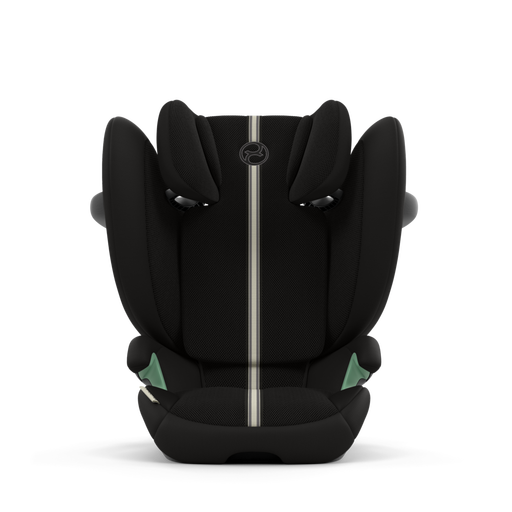
Why This Fits Their Persona: For parents whose children have outgrown their first car seat. This model for the 100-150 cm group focuses on safety and comfort for longer journeys, which is important for older, more discerning children.
Instead of being a compromise seat, it is specifically optimised for the needs of children from approx. 3 to 12 years, with a patented, reclining headrest and flexible side wings.
Meets the UN R129/04 standard, offers simple ISOFIX installation, and an air ventilation system for high comfort. According to the manufacturer, it is an evolution of the ADAC test winner, the Solution G i-Fix.
We have compiled a complete, up-to-date list of products that fully meet these strict selection criteria and safety regulations.
According to the i-Size standard (UN R129), rear-facing transport is legally required until the age of 15 months and a height of 76 cm. However, safety experts recommend transporting children rear-facing for as long as possible, ideally until the age of 4 or until the height or weight limit of the rear-facing seat is reached. This provides significantly greater protection for the head and neck in a frontal collision.
Not necessarily. Although i-Size and ISOFIX are standards, there are differences between vehicle models (e.g., the angle of the back seat, position of the ISOFIX hooks). An i-Size seat is approved for use on all i-Size certified vehicle seats. For vehicles that only have ISOFIX but no i-Size certification, you should check the car seat manufacturer's compatibility list. This can be found on the brand's website.
Car seats with an impact shield (such as the Cybex Pallas) are used for toddlers (typically from 76 cm to 105 cm in height or 21 kg in weight). The impact shield distributes the collision energy over a large area. Once your child reaches the maximum height or weight specified by the manufacturer for using the impact shield, it is removed. The seat is then converted into a high-back booster, and the child is secured, along with the seat, by the vehicle's 3-point seat belt. Always refer to the specific instructions in your car seat's manual for this.