
Lieferung heute & morgen

Qualitätsgarantie

Willkommens-Angebote freischalten: KOSTENLOSE Lieferung | Bis zu 80 % RABATT | Kostenlose 30-Tage-JoyPlus-Testphase
App herunterladen
Choosing a child car seat is one of the most important decisions a parent can make. The market is flooded with models promising durability, maximum safety, and premium comfort. However, marketing claims often hide pitfalls that lead to the wrong purchase. An expensive seat isn't automatically the right choice, and a supposed bargain can prove to be impractical.
As your Joybuy Product Recommendation Officer, I'm here to help you separate fact from marketing hype. We will focus on the crucial criteria to ensure you make an informed and safe choice for your child.
Before we dive into the technical details, let's challenge three common assumptions that often lead to unsuitable purchases:
To make the right decision, you need to understand three core technical parameters. These will help you objectively evaluate a seat's performance.
The i-Size standard, officially known as UN R129, has replaced the older ECE R44 regulation and establishes higher safety benchmarks. The key advantages are:
ISOFIX is a standardised system that creates a rigid connection between the car seat and the vehicle's chassis. It significantly reduces the risk of incorrect installation compared to using the vehicle's seat belt. With i-Size seats, ISOFIX is often supplemented by one of two additional safety features:
An all-in-one car seat will accompany your child for several years. Look for a well-thought-out design. Important features include:
Based on these objective criteria, we have identified several models that offer a suitable solution for different needs and life stages.
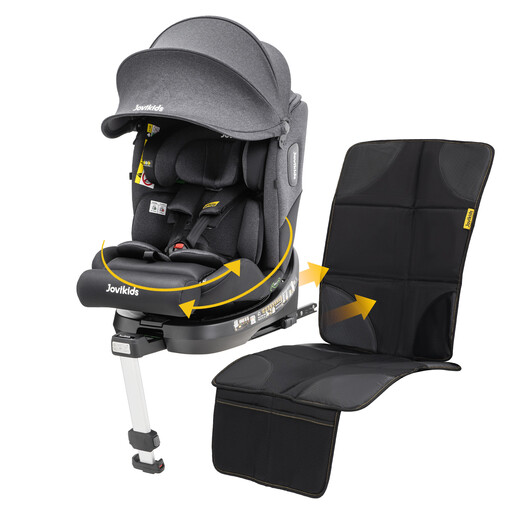
Why this model fits: Ideal for families looking for a long-term solution without having to buy multiple seats. It covers the entire period of use from birth until a car seat is no longer required, combining this with practical comfort features.
Unlike the "one-size-fits-all" compromise, this model offers thoughtful adjustments like removable newborn cushions and a 12-position adjustable headrest to ensure a proper fit at every growth stage.
The 360° rotation function makes getting your child in and out of the car incredibly easy. Installation uses ISOFIX and a support leg, ensuring stable and straightforward handling.
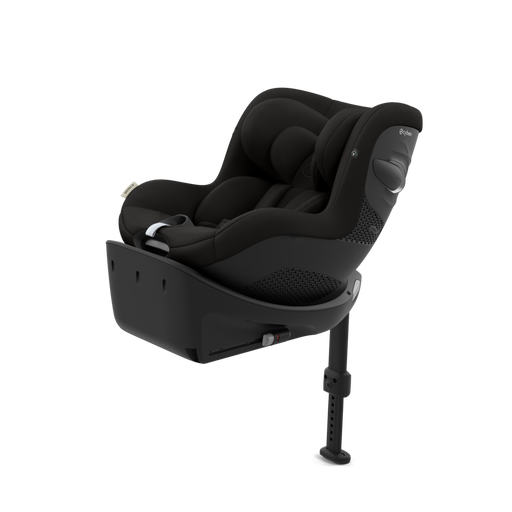
Why this model fits: For parents who prioritise proven safety and superior comfort for the first few years. This model is a specialised rear-facing seat for children up to approx. 4 years old and was rated "Good" in the ADAC car seat test (05/2024 issue).
This seat focuses on the 0-4 age group, thus avoiding the compromises of a 12-year seat. It offers specialised safety and comfort features, such as all-round air circulation, tailored to the needs of babies and toddlers.
The combination of a 360° rotation mechanism for easy entry and exit and the integrated Linear Side-impact Protection (L.S.P. System) provides a high level of safety and user convenience.
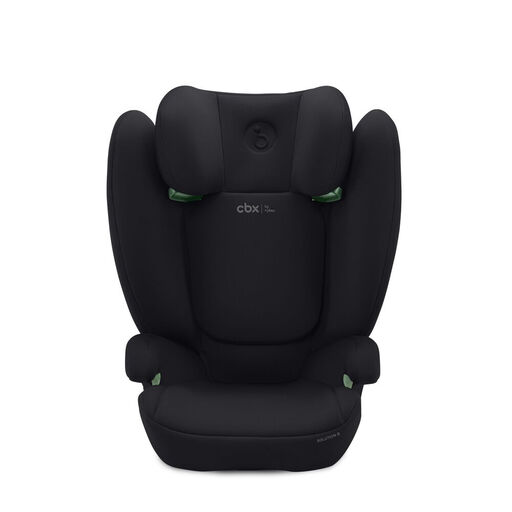
Why this model fits: A purpose-built choice for children from approx. 3 to 12 years (100-150 cm) who have outgrown their toddler seat. It offers the security of the i-Size standard and the comfort of an adjustable headrest in a lightweight, easy-to-handle package.
This model is a specialised next-stage seat and doesn't try to be a one-size-fits-all solution. It focuses on correct vehicle seat belt routing and protection for bigger kids, something an all-in-one seat often does inadequately.
The simple and secure installation via ISOFIX ensures stability, while the 12-position adjustable headrest guarantees a long-lasting, correct fit until a car seat is no longer required. Its low weight makes it easy to switch between vehicles.
We have compiled a complete, up-to-date list of products that fully meet these strict selection criteria and safety regulations.
1. How long must my child travel in a rear-facing car seat? According to the i-Size standard (UN R129), rear-facing travel is legally required until your child is 15 months old and 76 cm tall. However, safety organisations recommend keeping children in a rear-facing car seat for as long as possible, ideally up to four years of age, as this offers significantly greater protection for the head and neck in a frontal collision.
2. Will any i-Size car seat with ISOFIX fit in my car? In principle, i-Size car seats are designed to fit on any i-Size certified seating position in a vehicle. However, it is always advisable to check the car seat manufacturer's vehicle compatibility list. Factors such as the angle of the car's back seat, the position of the ISOFIX anchorage points, or the length of the support leg can affect the fit. These lists are usually available on the manufacturer's website.
3. When should I switch from a car seat to a booster seat? The switch depends on your child's height and weight, not just their age. An all-in-one car seat for Group 2/3 (approx. 100-150 cm) is essentially a high-back booster with ISOFIX. This type is preferable to a simple booster cushion, as the backrest and headrest provide crucial side-impact protection and correctly guide the vehicle's seat belt over the child's shoulder and pelvis. A backless booster cushion is only permitted from a height of 125 cm and a weight of 22 kg, but it offers less protection.