
Lieferung heute & morgen

Qualitätsgarantie

Willkommens-Angebote freischalten: KOSTENLOSE Lieferung | Bis zu 80 % RABATT | Kostenlose 30-Tage-JoyPlus-Testphase
App herunterladen
An i-Size car seat needs to fit not only your car, but also your child’s height, age and your family’s daily routine. However, many product descriptions throw around terms like side-impact protection, ISOFIX or 360° rotation without properly explaining what they mean in practice. This can lead to buying a car seat that takes up too much space in your vehicle, doesn’t suit your child’s size, or is awkward to use day to day.
This guide explains which details really matter before you buy, and which models suit different needs.
A car seat covering the range 40–150 cm might seem like a long-term solution at first glance. In reality, newborns, toddlers and school-age children differ greatly in body shape, seating position and how they need to be secured. A combination seat can cover several developmental stages, but it often takes up more space and requires careful adjustment of inserts and harnesses.
For newborns, a suitable baby car seat is often the clearer choice. If you opt for a model that claims to be suitable from birth, check that the newborn insert is actually included in the box.
A car seat with ISOFIX is usually quick to install. However, the car and the seat still need to be compatible. Depending on the model, you may also need a Top Tether, a support leg or the vehicle’s seatbelt. The seat’s instruction manual and your car’s handbook are therefore essential reading.
Before buying, parents should check:
A 360° car seat makes it easier to get your child in and out. This can be especially helpful for daily use in tight parking spaces or when switching between cars frequently. However, the rotating function doesn’t replace correct harness routing, a suitable seating position, or the required direction of travel.
The term i-Size is commonly used for child restraint systems that comply with UN Regulation R129. These are classified primarily by the child’s height rather than just weight. They also include requirements for side-impact protection.
With R129 seats, the rule is: children must travel rear-facing until at least 15 months old and 76 cm tall. Individual models may allow longer rear-facing use. A Reboarder that can be used rear-facing for longer is therefore different from a seat that is only forward-facing.
Pay attention to the specific height range:
Age is only a rough guide. What really matters is the child’s height, the weight limit, and the securing method described in the manual.
A car seat with side-impact protection should have side protection areas for the head and shoulders, plus a sturdy seat shell. What counts isn’t just the name, but whether the protective components need to be folded out or fitted correctly.
On seats with a five-point harness, the harness must lie snugly against the child’s body. Thick winter coats can affect how well the harness fits. For older children, the vehicle’s seatbelt is used depending on the model. The headrest should be adjustable so that the head is protected in the centre and the belt runs correctly over the shoulder and pelvis.
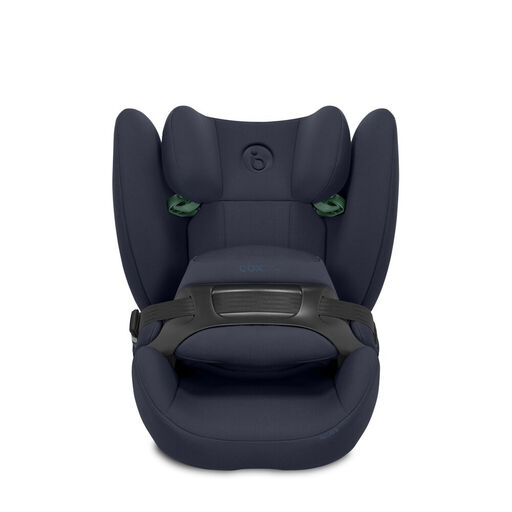
Why this product suits the profile: According to the product details, this 2-in-1 seat is designed for 76–150 cm (roughly 15 months to 12 years) and is aimed at families who don’t want to buy several different seat types.
The defined height range makes it clear that this model is not intended for newborns. The front-impact protection must be used up to 105 cm or 21 kg.
UN R129/04, 12-way adjustable headrest, ISOFIX and Top Tether; the cover is washable at 30 °C.

Why this product suits the profile: This seat is ideal for parents who want both rear-facing and forward-facing use, plus a rotating function for everyday convenience.
The height range is clearly defined as 61–105 cm; with the newborn insert, the product details state 40–105 cm is possible. This means suitability isn’t claimed for every age phase without qualification.
360° rotation, ISOFIX base with support leg, five recline positions and a 12-way adjustable headrest.
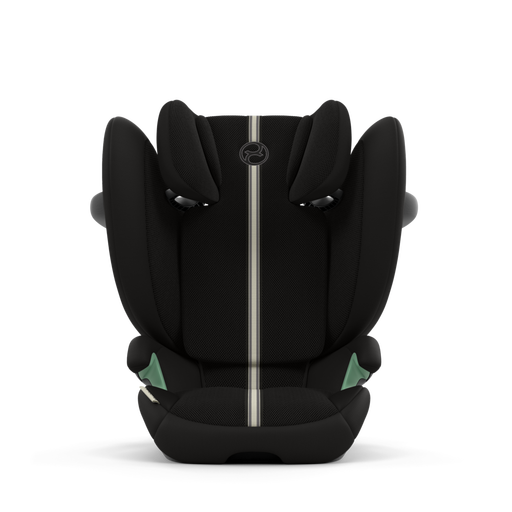
Why this product suits the profile: For families who move the seat between several cars, taxis and public transport, weight and foldability are important factors.
This seat is not designed as a car seat from birth, but for 100–150 cm. This avoids the common mistake of choosing a seat with a supposedly universal age range.
UN R129/04, ISOFIX or vehicle seatbelt, foldable design, 5.8 kg weight and adjustable headrest.

Why this product suits the profile: According to the product details, this Chicco car seat is designed for 40–105 cm, making it focused on the early childhood stage.
The stated range excludes older children. At the same time, rear-facing use for children under 15 months must be strictly observed.
ECE R129/04, ISOFIX with support leg, 360° rotation and six recline positions.
We’ve put together a full, regularly updated list of products that fully meet these strict selection criteria and the safety regulations in force in the EU.
According to UN R129, children must travel rear-facing until at least 15 months and 76 cm. Some Reboarders allow longer rear-facing use. Always follow the information on the seat and in the instruction manual.
That depends on the height range. Models covering 40–105 cm usually accompany the baby and toddler stage. A car seat for 15 months to 12 years with a 76–150 cm range can be used for longer, as long as the child fits correctly and the relevant securing requirements are met.
No. Many models use ISOFIX, some also use a Top Tether or support leg. Larger seats can sometimes be secured with the vehicle’s three-point seatbelt, depending on the model. What matters is the approved installation method for the specific seat.