
Lieferung heute & morgen

Qualitätsgarantie

Willkommens-Angebote freischalten: KOSTENLOSE Lieferung | Bis zu 80 % RABATT | Kostenlose 30-Tage-JoyPlus-Testphase
App herunterladen
An i-Size car seat needs to fit for several years, be securely fastened, and not become a cumbersome extra task in daily life. Many products advertise themselves as "growing with your child", "ISOFIX" or with side-impact protection. However, these terms alone don't tell you whether the seat is suitable for your child, your vehicle, or the length of time you intend to use it.
A growing car seat can cover different developmental stages, but it often uses different restraint systems for each one. With a 2-in-1 model, for example, a protective cushion or an integrated harness system may be used initially; later on, the child is secured using the vehicle's seatbelt. What really matters is from which height and after which changeover the seat is actually suitable.
A car seat with ISOFIX can often be attached more stably and clearly in the vehicle. However, ISOFIX does not replace the correct use of the seat. Depending on the model, the three-point seatbelt, a Top Tether or a support leg may also be required. Before buying, parents should therefore check their vehicle's owner's manual and the seat's installation requirements.
Thick padding, a cup holder or a swivel base can be useful in everyday life. However, they do not replace proper approval or the correct size specification. A ECE R129 car seat or a seat conforming to UN R129 (i-Size) is categorised by the child's height. So check the approved height range first, and only then look at comfort details.
The ECE R129 or UN R129 standard classifies car seats primarily by the child's height. For our target group, models for 76 to 150 cm are particularly relevant. Depending on the design, an i-Size car seat for 76–150 cm can be intended for use from around 15 months up to approximately 12 years. Age and weight serve as a guide, but the information on the approval label and in the instruction manual is what counts.
Also check whether the seat may only be used facing forward or whether rearward-facing use is also permitted. This information must match the specific seating position in your vehicle.
With a car seat with ISOFIX, the locking indicators should clearly show the correct status after installation. Some models also require a top tether, while others need a support leg. An ISOFIX booster seat can secure the seat to the vehicle, but the child is usually restrained by the car's three-point seatbelt. This is not the same as an integrated harness system.
An adjustable headrest makes it easier to adapt the seat as your child grows. Check that it has enough adjustment positions and that the shoulder belt runs correctly at your child's height. A car seat with side-impact protection should also offer enough space between the seat shell, headrest and the vehicle door.
Removable and washable covers are practical for daily use. Check the care instructions: some covers can be machine-washed at 30 °C, while others can only be wiped clean with a damp cloth. The external dimensions are also important if you need to fit several car seats side by side on the back seat.
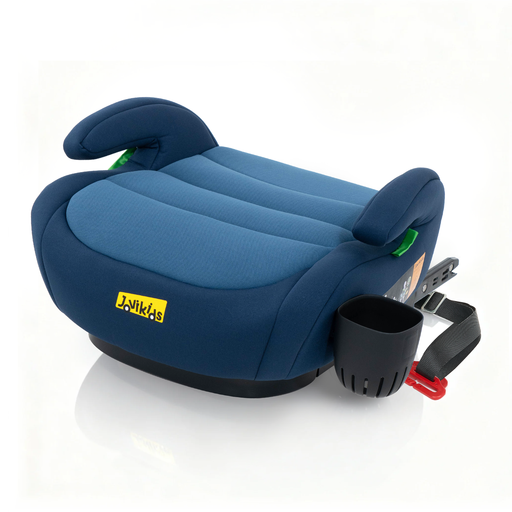
Why this product fits the profile: According to the product information, this compact booster seat is designed for children from 125–150 cm and is ideal for families looking for a simple solution for the later stage of use.
The height range is clearly stated as 125–150 cm. This makes it easier to check whether your child is ready for a booster seat.
ISOFIX compatibility, removable and washable cover, seat cushion and a stated weight of approximately 3 kg.
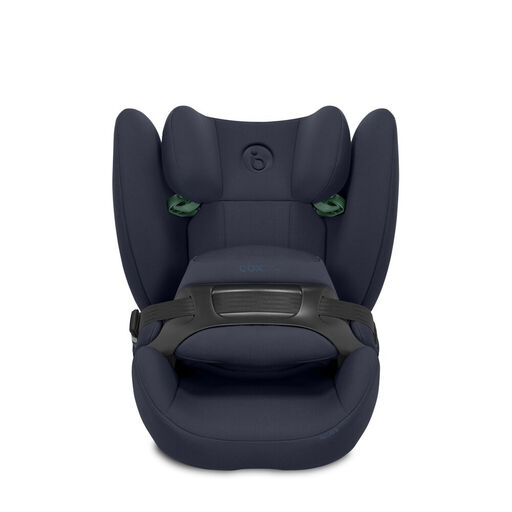
Why this product fits the profile: According to the product information, this 2-in-1 model is designed for 76–150 cm or approximately 15 months to 12 years, and is aimed at families with a long-term usage perspective.
The usage phases and the changeover from the protective system to the vehicle seatbelt are described. This reduces the risk of buying a "growing" promise without clear transition points.
UN R129/04, ISOFIX and Top Tether, 12-way adjustable headrest, adjustable backrest and washable cover.
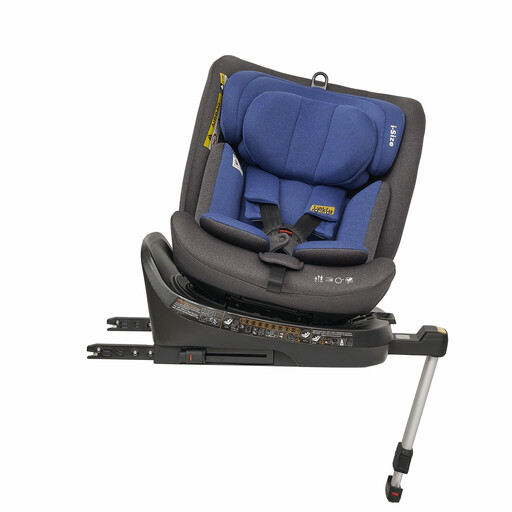
Why this product fits the profile: The swivel function and multiple recline positions are ideal for families who frequently get children in and out of the car or who plan longer journeys with different seating positions.
The seat specifies a concrete range of 40–150 cm as well as ISOFIX and a support leg. Before buying, you should still check whether your vehicle and the desired seating direction are compatible.
360-degree swivel function, multiple recline positions, 12-stage headrest, ISOFIX and removable cover.
We have put together a complete, regularly updated list of products that fully meet these strict selection criteria and the safety regulations in force in the EU.
That depends on the approved model. Many seats for toddlers and older children start at 76 cm, while pure booster seats are often only intended from 125 cm upwards. The approval label and the manufacturer's instructions are always what count.
Not necessarily for every model. A booster seat can be used with the vehicle's three-point seatbelt. ISOFIX additionally stabilises the booster seat in the vehicle, but it does not normally replace the seatbelt for the child. The specific type of attachment must match the seat's approval.
The length of use depends on the child's height, the seat type and its condition. A model for 76–150 cm can be used for several years as long as the child remains within the approved range and all components are undamaged. If there is visible wear, missing parts or after an accident, the seat should be replaced.