
Lieferung heute & morgen

Qualitätsgarantie

Willkommens-Angebote freischalten: KOSTENLOSE Lieferung | Bis zu 80 % RABATT | Kostenlose 30-Tage-JoyPlus-Testphase
App herunterladen
Choosing a car seat is one of the most critical decisions for your child's safety. However, the market is flooded with a vast array of models, standards, and marketing claims that can make it difficult to navigate. When searching for an i-Size car seat in particular, parents often face challenges that can lead to poor purchasing decisions. As your Joybuy Product Recommendation Officer, I'm here to help you separate essential facts from superfluous advertising hype.
You should be aware of two common pitfalls:
To make an informed decision, focus on objective, safety-related parameters. Three aspects are non-negotiable.
The UN Regulation R129, known as i-Size, is the current safety standard for car seats in Europe and has largely replaced the older ECE R44 standard. The key advantages for your child's safety are:
A correct installation is fundamental to a car seat's protective performance. A car seat with ISOFIX offers clear advantages here.
The choice between a multi-stage car seat and a sequence of specialised seats (e.g., an infant carrier, followed by a toddler/child seat) depends on your priorities.
Instead of presenting an overwhelming list, we have selected models that match specific parental profiles.

Why this model is a great fit: Ideal for parents seeking a seat with superior ease of use and advanced safety features from the first few months (from 61 cm, or from 40 cm with the newborn inlay). The 360° rotation makes daily life significantly easier.
This seat specialises in the age range of approx. 3 months to 4 years, thus avoiding the compromises of a 0-12 year seat. Safety (i-Size, L.S.P. System) is the priority, with the rotation feature being a thoughtful extra.
Integrated Linear Side-impact Protection (L.S.P. System); 360° rotation mechanism for easy entry and exit; multiple recline positions in both forward and rear-facing directions.
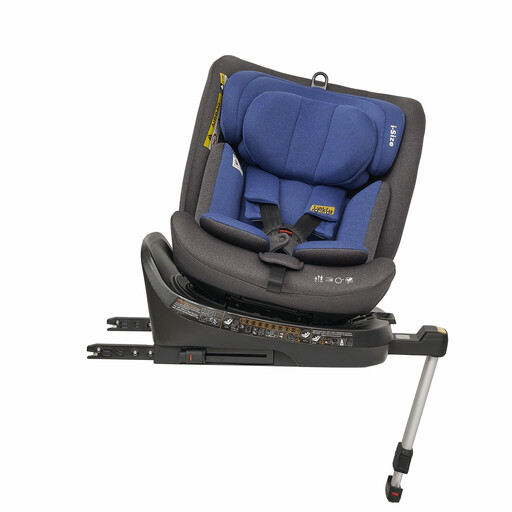
Why this model is a great fit: For families who want to make a single, economical investment to cover the entire period of use, from birth until a car seat is no longer required (approx. 12 years).
This seat addresses the "one-size-fits-all" trap with thoughtful adjustments: a removable newborn inlay and a 12-position adjustable headrest ensure an adequate fit during different growth stages.
Extremely long period of use from 40 cm to 150 cm; meets the i-Size standard (ECE R129); 360° rotation function and ISOFIX installation with a support leg for easy handling and safety.
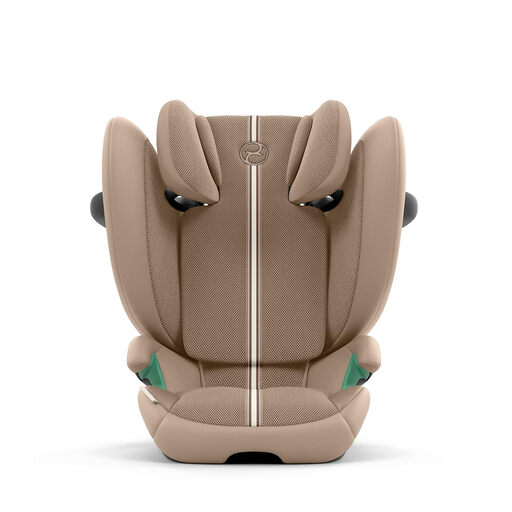
Why this model is a great fit: For children from approx. 3 to 12 years old (100-150 cm) who have outgrown their toddler seat. This seat focuses on safety and comfort for the final stage of car seat use.
As a specialised next-stage seat, it ensures optimal belt routing and fit for older children, which can be a weak point for all-in-one seats at this age. It is the successor to a model that received a positive rating from ADAC.
Patented, reclining headrest for more comfort while sleeping; optimised air circulation; L.S.P. System Plus for enhanced side-impact protection; ISOFIX installation for added stability.
We have compiled a complete, up-to-date list of products that fully meet these strict selection criteria and European safety regulations.
According to the UN R129 (i-Size) standard, rear-facing transport is legally required until at least 15 months of age and a height of 76 cm. However, safety organisations like the ADAC recommend keeping children in a rear-facing car seat for as long as possible, ideally up to the age of four. This position offers significantly better protection for the delicate head and neck area in a frontal collision.
Buying a second-hand car seat is generally not recommended. The reason is that the seat's history can never be fully verified. Even after a minor accident, invisible hairline cracks in the plastic can weaken the structure and drastically reduce its protective performance in an emergency. Material fatigue from ageing and sun exposure can also compromise safety.
Although i-Size aims for universal compatibility in vehicles with i-Size-marked seating positions, this is not guaranteed in every car or on every seat. Therefore, it is essential to check the car seat manufacturer's vehicle compatibility list before purchasing. You can usually find this on the brand's website. Consulting your vehicle's manual will also provide information on which seats are approved for child car seats.