
Lieferung heute & morgen

Qualitätsgarantie

Willkommens-Angebote freischalten: KOSTENLOSE Lieferung | Bis zu 80 % RABATT | Kostenlose 30-Tage-JoyPlus-Testphase
App herunterladen
Choosing a car seat is one of the most critical decisions for your child's safety in a vehicle. However, the market is flooded with models, regulations, and marketing promises that make the choice difficult. As your Joybuy Product Recommendation Officer, I'm here to help you separate fact from fiction and understand the crucial criteria, so you can make an informed decision.
Many well-intentioned purchases turn out to be impractical in daily use or even a compromise on safety. Watch out for these typical problems:
To avoid the pitfalls mentioned above, you should focus on the following non-negotiable parameters.
The i-Size regulation (UN R129) is the current European safety standard for car seats and offers significant advantages over the old ECE R44 regulation:
An ISOFIX car seat connects directly to the vehicle's chassis. This creates a rigid and stable connection. Pay attention to the following points:
The decision between a specialised seat and an all-in-one car seat depends on your priorities.
Here are some models that represent a considered choice based on objective criteria for different needs and life stages.

Why This Fits Their Persona: Ideal for safety-conscious parents seeking a comfortable and easy-to-use solution from birth. The 360° rotation makes getting the child in and out significantly easier and saves parents' backs.
This seat is a specialist for the 0 to approx. 4-year-old age group (40-105 cm), thus avoiding the compromises of a 12-year seat during the sensitive early stages. The newborn inlay ensures a correct, ergonomic posture.
The 360° rotating function combined with a solid ISOFIX base offers superior comfort without compromising on safety. The integrated L.S.P. System (Linear Side-impact Protection) enhances protection in a side collision.
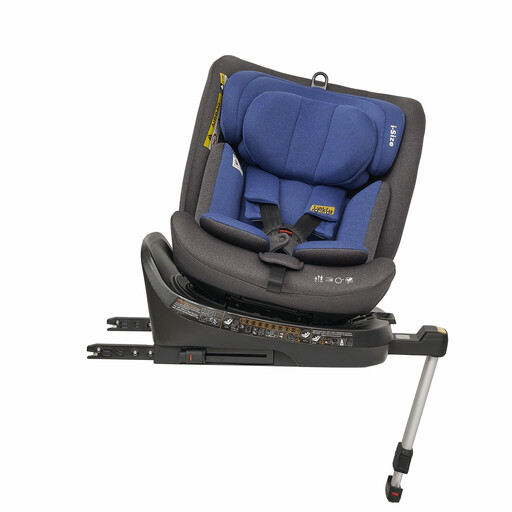
Why This Fits Their Persona: Suitable for families looking for a single, long-term investment. This seat covers the entire period from birth until a car seat is no longer required, combining practical features with the i-Size standard.
This model avoids the "all-in-one" compromise through a thoughtful, modular design. Removable newborn inlays and a 12-position adjustable headrest ensure it adapts properly to each growth stage.
The combination of i-Size certification across the full range (40-150 cm), a 360° rotating function, and installation with ISOFIX and a load leg offers a comprehensive package that blends flexibility and safety for many years.
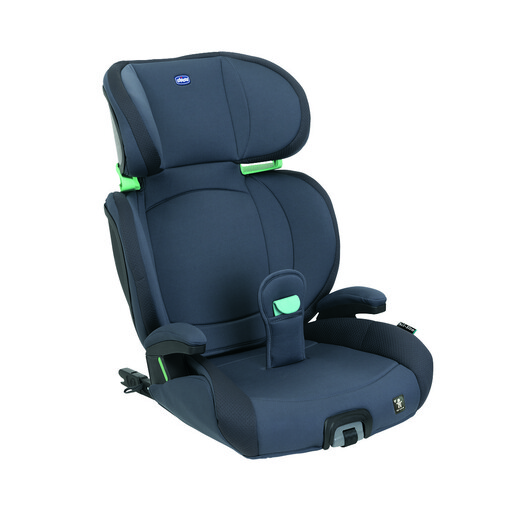
Why This Fits Their Persona: A pragmatic choice for parents and grandparents whose children have outgrown their toddler seat (approx. 3 to 12 years). The seat focuses on the core requirements for this age group: safety and ease of use.
This seat doesn't try to accommodate newborns. As a specialised high-back booster seat for children from 100 to 150 cm, it ensures correct routing of the vehicle's seat belt and provides necessary side-impact protection with its backrest and headrest.
It meets the current i-Size regulation (ECE R129/03) and offers additional stability with optional ISOFIX connectors. The adjustable headrest and belt guide ensure a correct fit for the growing child.
We have compiled a complete, up-to-date list of products that fully meet these strict selection criteria and German safety regulations.
According to the i-Size regulation (UN R129), rear-facing transport is legally required for children up to the age of at least 15 months and a height of 76 cm. However, safety experts recommend keeping children rear-facing for as long as possible, ideally up to the age of four, as this offers significantly greater protection for the head and neck in a frontal collision.
Not necessarily. Although i-Size aims for universal compatibility, there are differences in vehicle interiors (e.g., the angle of the back seat, position of the anchor points). It is essential to check the car seat manufacturer's vehicle compatibility list before purchasing. You can find this on the manufacturer's website. This ensures that the seat not only fits but can also be installed safely.
This is generally not recommended. The history of a used seat is often unknown. Even if there is no visible external damage, hairline cracks may have formed in the material after an accident (even a low-speed one), compromising its protective function. Furthermore, materials degrade over time (e.g., due to UV radiation), and older models may no longer meet current safety standards. Your child's safety should be the top priority.