
Lieferung heute & morgen

Qualitätsgarantie

Willkommens-Angebote freischalten: KOSTENLOSE Lieferung | Bis zu 80 % RABATT | Kostenlose 30-Tage-JoyPlus-Testphase
App herunterladen
An i-Size car seat shouldn't be chosen based solely on colour, price or a catchy marketing feature. What really matters is your child's height, the type of installation and whether the seat is actually compatible with your vehicle. A seat that claims to be suitable from birth up to the age of twelve might still be impractical in a small car, if you frequently switch vehicles, or if your child grows quickly.
A growing car seat that covers 40–150 cm certainly spans a wide height range. However, the requirements change significantly: a newborn needs a very different seating position and support compared to a school-age child. So check whether the seat offers the right padding, harness height and direction of travel for each stage of development.
An ISOFIX car seat can usually be fitted more consistently than a model that relies solely on the vehicle's three-point seat belt. Nevertheless, the ISOFIX points, support leg, Top Tether and vehicle approval all need to work together. For example, a support leg must not rest on an unsuitable storage compartment. That's why you should check both your vehicle's manual and the car seat's instructions before buying.
A 360° car seat can make it easier to get your child in and out. However, the rotation feature says nothing about the usable height range, the direction of travel or the amount of space required. With swivel models, you should also check the distance to the front seat and whether the door can open fully.
The current regulation UN R129 is based on the child's height and includes requirements for side-impact protection. Depending on the model, you may see markings such as ECE R129/03 or UN R129/04. What matters is the label on the seat itself and the accompanying instructions. The term i-Size does not replace the need to check whether your specific vehicle and the intended seating position are approved.
Age guidelines are only a rough indication. Always look at the approved height range:
The harness straps must not be twisted and should lie snugly against the body. Thick winter coats can affect the fit.
Check the following before you buy:
A booster seat with a backrest offers better guidance for the shoulder belt and head area compared to a backless booster. A backless booster can be easier to transport for older children and occasional trips, but it must match the exact height range.
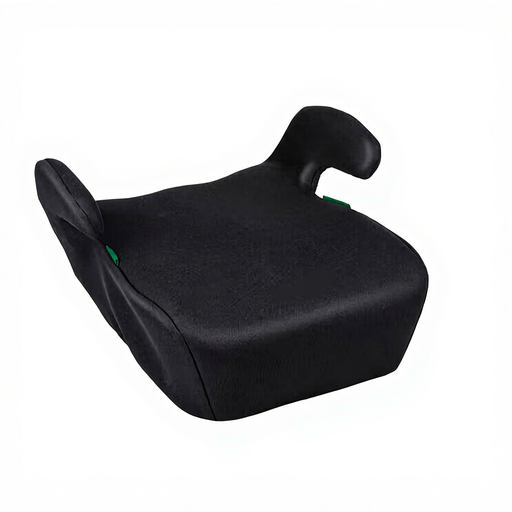
Why this product fits the profile: This compact booster seat is designed for older children from 125–150 cm and is used with the vehicle's three-point seat belt.
The clearly defined height range prevents the booster from being used too early. There is no backrest, so the belt guide must be checked particularly carefully.
Approximately 1 kg in weight, removable cover and armrests; secured with the 3-point seat belt.
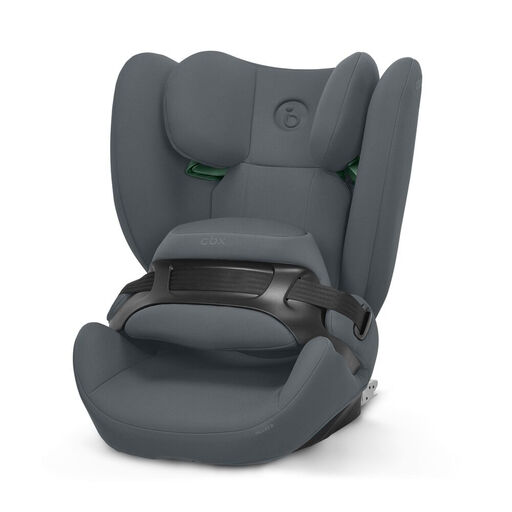
Why this product fits the profile: The 2-in-1 concept covers 76–150 cm according to the product information, combining an early use phase with later belt positioning.
The changeover is based on height and weight: the impact shield is intended for use up to 105 cm or 21 kg; after that, the vehicle seat belt is used.
UN R129/04, ISOFIX and Top Tether, 12-way adjustable headrest and adjustable backrest.
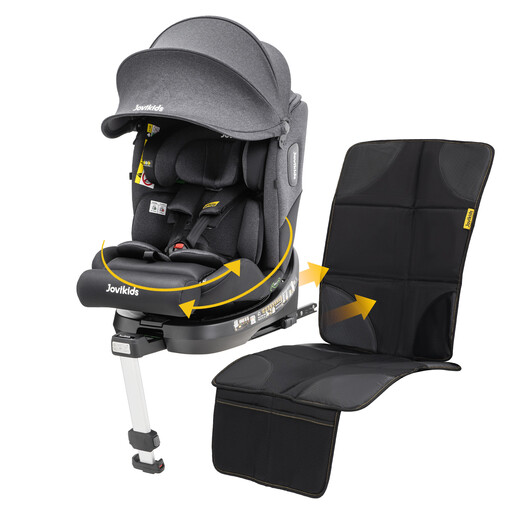
Why this product fits the profile: For families looking for a swivel model from birth that they'll use daily, the 40–150 cm height range offers a long-term solution.
The information clearly states use from 40 cm, ISOFIX and an adjustable support leg. However, you should still check vehicle compatibility before buying.
360° rotation function, rearward- and forward-facing use, 12 headrest positions and removable cover.
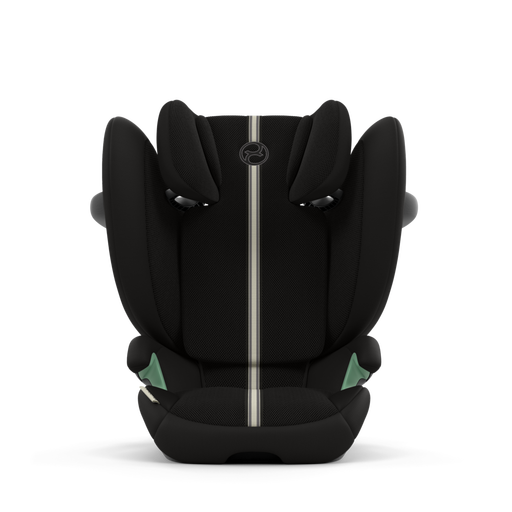
Why this product fits the profile: This foldable model is designed for children from around 3 to 12 years old and is ideal for families who need to move the seat between vehicles.
This seat is not intended for babies or toddlers. The stated range of 100–150 cm prevents you from buying it too early for a smaller child.
5.8 kg weight, foldable design, ISOFIX, adjustable headrest and washable cover.
We've put together a full, regularly updated list of products that fully meet these strict selection criteria and the safety regulations in force across the EU.
The length of use depends not just on age, but on the approved height and weight range as well as the condition of the seat. A model covering 40–150 cm can span several developmental stages, but it must be correctly adjusted at each changeover. After an accident, follow the manufacturer's guidance; if there is significant damage, the seat must be replaced.
No. The vehicle must have suitable ISOFIX anchor points. For seats with a Top Tether or support leg, additional requirements apply. Check your car's owner's manual and the car seat's vehicle compatibility list. Some models can alternatively be secured with the three-point seat belt, provided this is explicitly permitted.
A backless booster should only be considered once your child meets the specified height range and the three-point belt sits correctly over the shoulder and pelvis. For younger children or for better side support, a booster seat with a backrest may be the more suitable option. What matters most is the approval, your child's height and how well it fits in your specific vehicle.