
Lieferung heute & morgen

Qualitätsgarantie

Willkommens-Angebote freischalten: KOSTENLOSE Lieferung | Bis zu 80 % RABATT | Kostenlose 30-Tage-JoyPlus-Testphase
App herunterladen
An i-Size car seat needs to be safe, suit your child’s height and be straightforward to use every day. Yet product names and marketing claims often lead to the wrong purchase. Not every ISOFIX child car seat is automatically suitable for every vehicle, and a model with a long usage period isn’t necessarily right from birth.
As Joybuy’s Product Recommendation Officer, I filter the key information using clear, understandable criteria. What really matters is your child’s height, the installation method, the approval standard and how the seat will actually be used in your car.
“From birth to 12 years” sounds practical, but on its own it tells you little about the fit. With i-Size models, your child’s height is the central selection criterion. A car seat for 40–150 cm covers a wider range than a model for 76–150 cm. The inserts, belt routing and seating position still need to be correctly adjusted at every stage of development.
A growing car seat can reduce the number of purchases you need to make. However, it isn’t automatically equally suitable for every child at every stage.
An ISOFIX child car seat cannot be installed in every vehicle without checking first. Depending on the model, you may also need a Top Tether, a support leg or the three-point seat belt. Before buying, parents should check the manufacturer’s vehicle list and the instruction manual.
The position in the car is also important: a seat with a support leg needs a suitable, flat vehicle floor. A rear-facing seat must not normally be used on a seat with an active front airbag.
Claims like “up to 20%” or “up to 40%” refer to manufacturer comparisons and specific test scenarios. They are not a guarantee of what will happen in an accident. With CYBEX models, such statements should therefore be marked as According to the manufacturer and not equated with a general safety promise.
What matters more for your buying decision are the approval, correct installation and proper adjustment of the belt, headrest and seating position.
The UN R129/04 standard, or the corresponding i-Size approval, takes into account your child’s height and requirements for side-impact protection, among other things. Older or different approval details should not be assumed to be the same as UN R129/04 without checking.
However, different versions such as UN R129/03 and UN R129/04 can appear in the product data. What matters is the specific marking on the seat and in the manual. When buying, you should also check whether the installation method is suitable for your vehicle.
For children under 15 months, rear-facing use must be observed if the approval and manual require it. The manufacturer’s instructions always remain the deciding factor.
A car seat with side-impact protection shouldn’t just have a side component. Correct headrest height, stable side guides and enough space between the seat and the car door are also important.
Practical points to check before buying:
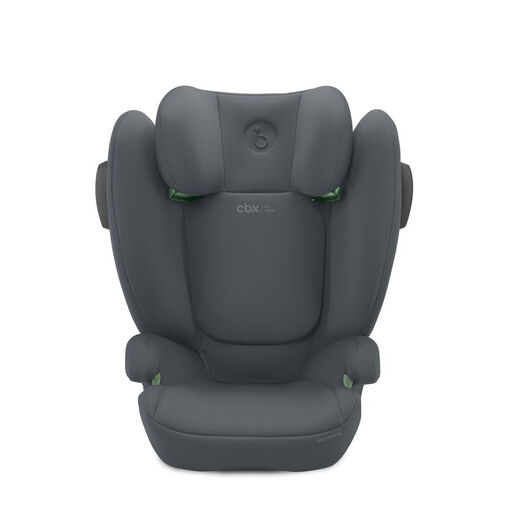
Why this product fits the profile: For children from 100 to 150 cm, this model offers clear features with ISOFIX, an adjustable backrest and a 12-way adjustable headrest.
The defined height range prevents the assumption that the seat is suitable for babies. The attachment is supported via ISOFIX.
UN R129/04, 12 headrest positions and, according to the product details, a lightweight design for switching between vehicles.

Why this product fits the profile: The 2-in-1 seat is designed for 76 to 150 cm and combines an impact shield for smaller children with later use via the vehicle seat belt.
The manufacturer specifies clear changeover points: the impact shield is intended for use up to 105 cm or 21 kg; after that, the three-point belt is used.
UN R129/04, ISOFIX and Top Tether, plus a 12-way adjustable headrest and adjustable backrest.
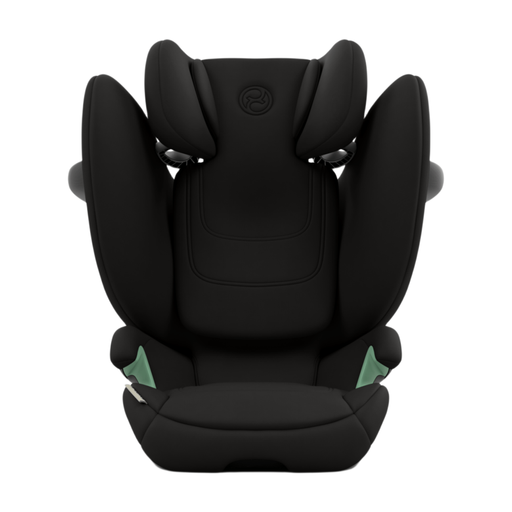
Why this product fits the profile: The foldable model with a carry handle is ideal for families who regularly switch between several vehicles, taxis or public transport.
The compact folding function addresses the common disadvantage of bulky seats. The height range remains clearly limited to 100–150 cm.
UN R129/04, ISOFIX, 5.8 kg weight and removable L.S.P. elements when there is limited space on the side.

Why this product fits the profile: The seat is designed for 40–105 cm and offers 360° rotation as well as rear-facing and forward-facing use according to the manufacturer’s instructions.
The clearly defined range prevents a seat for older children from being mistakenly planned as a long-term model up to 150 cm.
ECE R129/04, ISOFIX with support leg, 360° rotation mechanism and six recline positions according to the product data.
We have put together a complete, regularly updated list of products that fully meet these strict selection criteria and the safety regulations in force in the EU.
That depends on the approved height range. A model for 40–105 cm is usually intended for the baby and toddler phase. A seat for 76–150 cm or 100–150 cm can last until around 12 years. What matters are the details on the seat and in the manual, not just the age recommendation.
ISOFIX can simplify installation and create a stable connection with the vehicle. However, it does not replace correct operation. Some seats also need a Top Tether or support leg, while others are used later in belt mode. The prescribed attachment method must be observed for each usage phase.
A swivel car seat can make getting in and out easier, especially with babies and in tight parking spaces. It often takes up more space and can be heavier than a non-swivel model. Before buying, you should therefore check the vehicle width, seat spacing, support leg and permitted directions of travel.