
Lieferung heute & morgen

Qualitätsgarantie

Willkommens-Angebote freischalten: KOSTENLOSE Lieferung | Bis zu 80 % RABATT | Kostenlose 30-Tage-JoyPlus-Testphase
App herunterladen
Choosing the first infant car seat is a decision based on safety standards, functionality, and compatibility. The European approval standard, i-Size (UN R129), serves as the current benchmark. It classifies child seats by the child's height rather than weight and sets higher standards for side-impact protection. This article analyses the technical criteria for selecting an i-Size infant car seat and presents two models with different priorities.
The choice of a model should be based on an analysis of objective features. The following criteria are crucial for safety and practical usability.
The i-Size standard (UN R129) is the successor to the ECE R44/04 standard. Its key features include:
The safest and simplest installation method is the ISOFIX system. This system connects the infant car seat (often via a base) securely to the ISOFIX anchorage points in the vehicle's chassis. This minimises the risk of incorrect installation, which is more common when using the vehicle's seat belt. Indicators on the base usually confirm whether the installation has been completed correctly.
For newborns, a lie-flat position is ergonomically beneficial as it supports breathing and relieves pressure on the spine. An infant car seat with a lie-flat function is therefore a key feature. Some models only allow a flat position outside the vehicle, while more advanced systems permit it even during travel.
A well-designed ventilation system with air channels in the shell and breathable fabrics prevents heat build-up and ensures a comfortable climate, especially on longer journeys. An infant car seat for newborns should also include a removable insert that provides optimal support for the baby's body during the first few weeks.
Practical usability is determined by several factors:
Based on the technical criteria above, we present two models that cater to different user profiles.
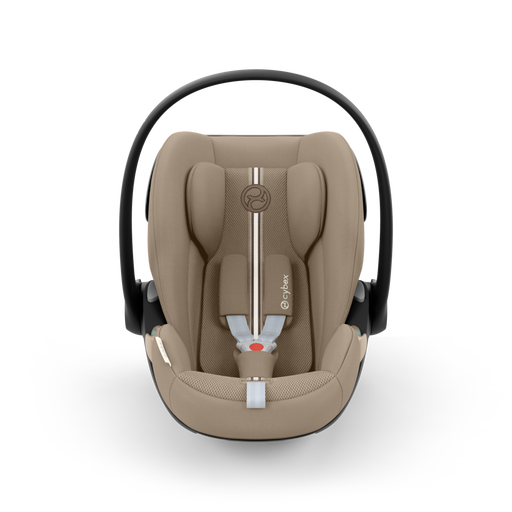
Why we recommend this product: The cybex CLOUD G I-SIZE PLUS combines an ergonomic lie-flat function, usable both in and out of the car, with a 180° rotation feature on the optional Base G. This synergy of comfort and handling addresses the core needs of parents in their daily routine. The modular concept, where the Base G is later compatible with the Sirona G i-Size next-stage seat, offers a long-term usage perspective.
Pros:
Who it's for: This model is suitable for parents who place a high value on maximum flexibility, comfort, and ease of use. It is ideal for families planning to use a modular system for the future and who are frequently on the go, including by air.
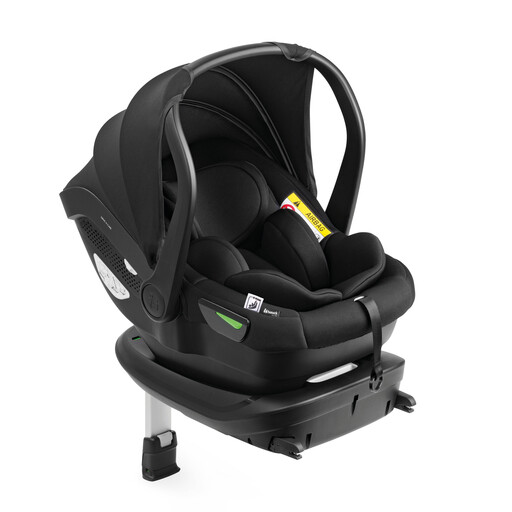
Why we recommend this product: The hauck Infant Car Seat Drive focuses on the core requirements of safety and practicality. Weighing just 4.4 kg, it is an exceptionally lightweight car seat, making it easy to carry. It offers the flexibility of being installed with either an ISOFIX base or the vehicle's 3-point belt, qualifying it for use in various cars, including those not equipped with ISOFIX.
Pros:
Who it's for: This set is a great choice for parents looking for a lightweight, safe, and straightforward infant car seat from birth. Its flexible installation options make it particularly appealing for families who plan to use the seat in multiple vehicles, not all of which may have ISOFIX.
If the models presented here don't perfectly match your requirements, or if you'd like to compare other configurations, you can find a wider selection of products in our Infant Car Seats category. There, you can filter by specific features such as weight, brand, or compatibility.
1. How long can a baby stay in an infant car seat? The general recommendation is not to transport newborns in an infant car seat for more than two hours at a time. The semi-upright position can impair breathing and put strain on the spine. For models with a flat lie-flat function, this period can be extended as the ergonomic strain is lower. Taking breaks during longer journeys is still advisable.
2. What is the difference between i-Size and the older ECE R44/04 standard? The main difference lies in the safety requirements and classification. i-Size (UN R129) classifies by height, mandates an improved side-impact test, and makes rear-facing transport compulsory up to at least 15 months. ECE R44/04 classifies by weight (e.g., Group 0+ car seat) and did not include standardised side-impact tests.
3. Can I use an i-Size infant car seat in any car? Not necessarily. An infant car seat with an ISOFIX base requires corresponding anchorage points in the vehicle. Almost all newer car models are equipped with them. For older vehicles without ISOFIX, you must choose a model that can alternatively be secured with the car's 3-point belt. Always check the manufacturer's compatibility list for your specific vehicle model.