
Lieferung heute & morgen

Qualitätsgarantie

Willkommens-Angebote freischalten: KOSTENLOSE Lieferung | Bis zu 80 % RABATT | Kostenlose 30-Tage-JoyPlus-Testphase
App herunterladen
An i-Size car seat needs to suit your child, your vehicle and your family’s daily routine. In practice, though, three common buying mistakes lead to unnecessary expense: a long age range is mistaken for actual usable life, a swivel function is chosen without checking installation limits, and a safety standard is assumed to guarantee compatibility with every car.
That’s why the Joybuy Product Recommendation Officer selection focuses on verifiable details such as height, fixing method, approval standard and adjustment ranges. This way, you can narrow down a suitable child car seat objectively, without relying solely on marketing claims.
An i-Size car seat 40–150 cm theoretically covers a long period. However, the seat shape, insert, harness routing and comfort vary significantly depending on your child’s developmental stage. So check whether the seat is actually approved from 40 cm for newborns, or whether it can only be used from 61 cm or 76 cm.
For example, a model like the CYBEX Pallas B i-Size starts at 76 cm and around 15 months according to the product details. This means such a grow-with-me car seat is not intended for babies.
A 360-degree swivel car seat makes it easier to get your child in and out, and can simplify switching between rearward-facing and forward-facing positions. However, the swivel function needs enough space between the seat, the car door and the front seat. You also need to consider the support leg, ISOFIX anchors and any restrictions from the vehicle manufacturer.
Not every swivel child car seat is suitable for every row of seats. Before buying, you should check the manufacturer’s vehicle list against your own car model.
UN R129, also known as i-Size, governs classification by height and requirements for side-impact protection. But approval doesn’t replace installation according to the instruction manual. For ISOFIX models, the seat position, Top Tether or support leg, and approval for your specific vehicle are all crucial.
Height is a key selection value for a child seat UN R129. For toddlers, a rear-facing car seat is often used, where the child sits facing the opposite direction of travel. The specific minimum and maximum height, as well as when you can switch to forward-facing use, are always stated in the product manual.
Typical ranges for the models featured:
A car seat up to 12 years should therefore be chosen not just by age, but primarily by centimetres.
With an ISOFIX car seat, locking arms create a defined connection to the vehicle’s ISOFIX points. Depending on the model, a Top Tether or support leg is also used. After every installation, the indicators must show correct locking.
In the later seat mode, some models can use the vehicle’s seat belt. With the CYBEX Pallas B i-Size, according to the product details, the front impact shield is removed from 105 cm or 21 kg, and then the vehicle’s three-point belt is used. This changeover must be carried out exactly according to the instructions.
A car seat with side-impact protection should have clearly described protective components. Terms like L.S.P. or SPS refer to design elements; specific percentage figures should only be understood as manufacturer claims. According to the manufacturer, the L.S.P. System Plus on the CYBEX Pallas B3 i-Size can reduce side-impact forces by over 15 percent. This is not a general promise for every accident situation.
Also practically relevant are:
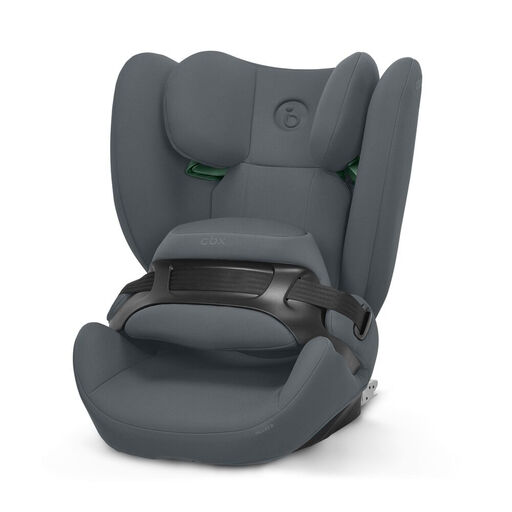
Why this product fits the profile: This 2-in-1 seat is designed for children from 76 to 150 cm, so it can cover several developmental stages.
The clear minimum height of 76 cm prevents the seat from being accidentally planned for a baby.
UN R129/04, ISOFIX, Top Tether, 12-way adjustable headrest and washable cover.

Why this product fits the profile: Suitable for 61–105 cm and features a 360-degree swivel function, five recline positions and an integrated base.
The limited height range makes it transparent that a further seat may be needed later.
UN R129/03, ISOFIX with support leg, 12-way adjustable headrest and side protection components.
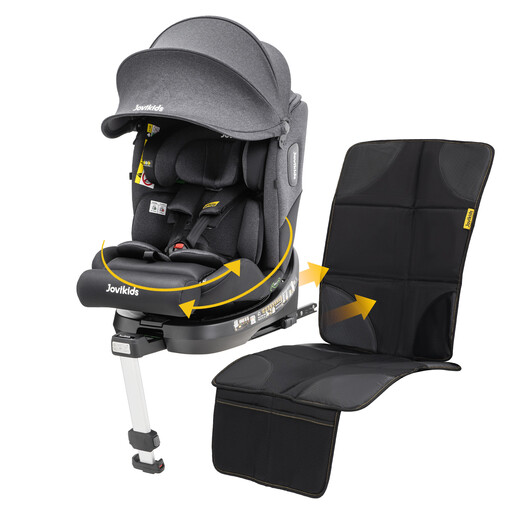
Why this product fits the profile: The range of 40–150 cm, the swivel function and the removable sun canopy are designed for families who travel frequently.
The details for 40–150 cm and the ISOFIX support leg installation show which phases and installation situations the seat is intended for.
ECE R129, 360-degree rotation, 12-way adjustable headrest, recline positions and washable cover.
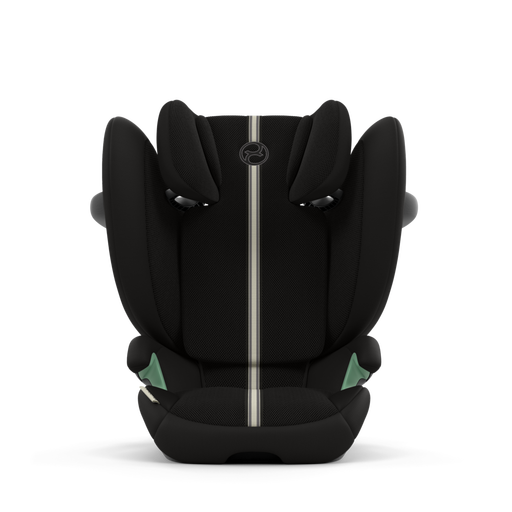
Why this product fits the profile: The seat is designed for 100–150 cm, weighs 5.8 kg according to the product details and can be folded flat.
The usage class is clearly defined and prevents the wrong expectation of buying a seat for toddlers or babies.
UN R129/04, ISOFIX or vehicle seat belt, foldable design, adjustable headrest and side-impact protection.
We have put together a complete, regularly updated list of products that fully meet these strict selection criteria and the safety regulations in force in the EU.
That depends on the specific model and its approval. Many rear-facing models are initially intended for rearward-facing use. Read the details on height, travel direction and minimum age in the manual. For a seat with a front impact shield, the specified limits for height and weight also apply.
The usable life depends on the approved height range and the condition of the seat. Models with 40–150 cm can cover several developmental phases, while seats with 76–150 cm only start from toddler age. After an accident or if there is visible damage, the seat should be replaced according to the manufacturer’s instructions.
No. An ISOFIX car seat makes a secure connection easier with compatible vehicles, but some seats can also be installed using the three-point belt, or exclusively that way. What matters are the installation requirements of the seat and its approval for your specific vehicle. An active front airbag at the relevant seating position must be taken into account according to the instructions.