
Lieferung heute & morgen

Qualitätsgarantie

Willkommens-Angebote freischalten: KOSTENLOSE Lieferung | Bis zu 80 % RABATT | Kostenlose 30-Tage-JoyPlus-Testphase
App herunterladen
An i-Size child car seat should combine safety, ease of use and the longest possible service life. The choice ranges from rear-facing baby seats and rear-facing child car seats to child seats for 100–150 cm. This variety is exactly what makes buying one so challenging: not every model is suitable for every vehicle, height or daily routine.
A child car seat approved under ECE R129 or UN R129 is classified according to the child’s height. This makes choosing one easier than with the older weight classifications. Even so, the fixing system must be compatible with the vehicle. ISOFIX points, support leg, Top Tether and the shape of the rear seat can limit where the seat can be used.
Before buying, parents should therefore check the vehicle approval information in the car’s handbook and in the manufacturer’s seat list. A child car seat with ISOFIX is not automatically suitable for every seating position.
A growing child car seat covering 40–150 cm can accommodate several stages of development. However, a newborn has different requirements from a seven-year-old child. Important factors include:
The description “up to around 12 years” indicates a possible height range, but it does not replace regular adjustment.
A 360° swivel function, cup holder or sun canopy can make everyday use easier. On their own, however, they say nothing about whether the seat is suitable. More important are approval, clear installation instructions, correct belt routing and a secure fit for the child.
Parents should also put claims such as “up to 20 per cent more protection” into context. Such figures refer to specific comparison scenarios. According to the manufacturer, systems such as L.S.P. Plus can, for example, reduce the forces exerted during a side impact. This does not provide a general protection value for every type of accident.
For an i-Size child car seat, the child’s height is the key selection criterion. Typical ranges include:
Age and weight are only intended as a guide. If the shoulder belt does not pass over the middle of the shoulder or the lap belt does not sit low across the pelvis, the adjustment should be checked.
A seat can be secured using ISOFIX, the three-point seat belt or a combination of ISOFIX and Top Tether. ISOFIX makes it easier to create a secure connection with the vehicle, and many models use colour indicators to show whether the connectors have engaged correctly. For many child seats designed for older children, the vehicle’s seat belt nevertheless remains the actual restraint system.
If the seat has a support leg, the vehicle floor must be approved for this use. A Top Tether requires a suitable anchorage point. The child car seat’s installation instructions and the vehicle handbook are therefore authoritative.
UN R129/03 or UN R129/04 is often referred to in everyday use as ECE R129 or i-Size. The standard takes the child’s height into account and includes requirements for side-impact protection. Parents should look for the approval label on the seat and check that the stated height range really suits their child.
Integrated side-impact protection may consist of reinforced side wings, energy-absorbing material or a fold-out protection system. Additional components must only be used as specified by the manufacturer.
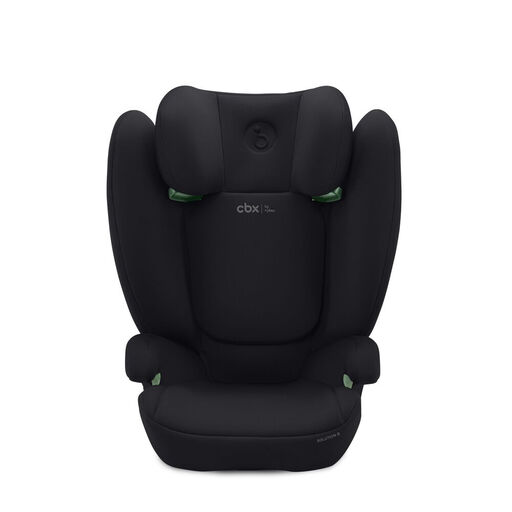
Why this product suits this profile: For children measuring around 100 to 150 cm, this child car seat offers a straightforward specification with ISOFIX, an adjustable headrest and an adaptable backrest.
The height range is clearly limited to 100–150 cm. This helps prevent choosing a seat for a child who is too small.
UN R129/04, 12-position adjustable headrest and ISOFIX attachment.
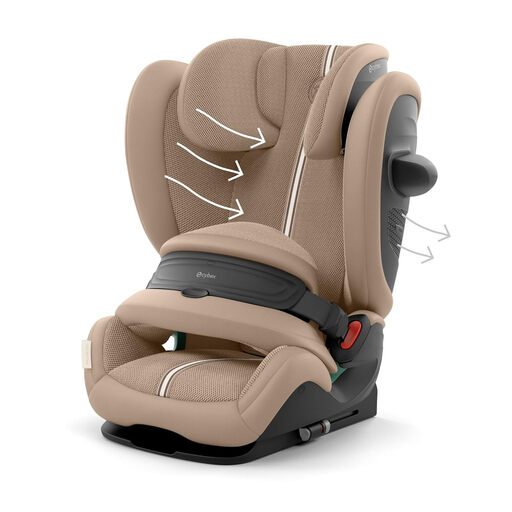
Why this product suits this profile: The 2-in-1 concept is designed for families who want to use one seat from around 15 months up to a height of 150 cm.
The switch from the impact shield to use with a three-point seat belt is described as a separate developmental step and should be carried out according to the instructions.
UN R129/04, ISOFIX and Top Tether, plus 12 headrest positions.
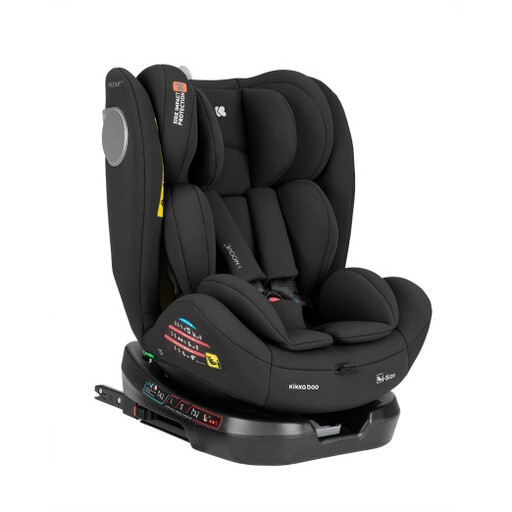
Why this product suits this profile: The combination of rear-facing use up to 105 cm, a 360° swivel function and a long height range is ideal for families who get children in and out of the car frequently.
The stated usage range specifies the respective directions: rear-facing from 40–105 cm and forward-facing from 76–150 cm. The switch is not based on age alone.
UN R129/04, ISOFIX plus Top Tether, 24-position adjustable headrest and several recline positions.

Why this product suits this profile: According to the product details, this seat is designed for children measuring 40–105 cm and combines an integrated ISOFIX base with a 360° swivel function for everyday use.
The height range is limited to the early usage phase. This prevents mistaking a supposed long-term seat for a baby seat.
UN R129/03, 360° swivel mechanism, 12-position adjustable headrest and newborn insert for 40–60 cm.
We have put together a complete, regularly updated list of products that fully meet these strict selection criteria and the safety regulations applicable in the EU.
A 100–150 cm child car seat is approved for children within this height range. The minimum age is often around three years, but height remains the deciding factor. The three-point seat belt must pass through the designated guides and sit snugly against the child’s body.
There is no general service life that applies in every case. The approval range, condition, manufacturer’s instructions and accident history are the decisive factors. A seat must be replaced if it is damaged, parts are missing or it has been involved in a significant accident. The fit should also be checked regularly with a growing child car seat.
No. The swivel function makes it easier to place the child in the seat and take them out, but it does not replace checking the vehicle. Parents should also consider the height range, permitted direction of travel, ISOFIX compatibility, support leg or Top Tether, and the correct harness adjustment.