
Lieferung heute & morgen

Qualitätsgarantie

Willkommens-Angebote freischalten: KOSTENLOSE Lieferung | Bis zu 80 % RABATT | Kostenlose 30-Tage-JoyPlus-Testphase
App herunterladen
An i-Size child car seat should suit your child, your vehicle and your family’s everyday routine. However, eye-catching features and blanket marketing claims do not automatically lead to the right purchasing decision. What matters is the approved height range, installation in your own car and correct adjustment as your child grows.
As a Joybuy Product Recommendation Officer, I therefore filter the key information according to its practical relevance: which features are mandatory, which make everyday use easier and where do common purchasing mistakes arise?
A 40–150 cm child car seat can offer a long period of use. However, this does not mean that the seat will fit equally well at every stage of growth. With a car seat suitable from birth, the newborn insert, headrest and harness system must be adjusted correctly for small babies. Later on, padding can be removed and the headrest adjusted.
So do not just check the age recommendation. Pay particular attention to:
A 360-degree rotating child car seat makes it easier to put your child in and take them out. However, the rotation function is only useful if the ISOFIX connectors, support leg or Top Tether are installed according to the instructions. A seat may rotate and still be unsuitable for your particular vehicle.
Before buying, compare the manufacturer’s vehicle list with your car’s owner’s manual. Also check whether the support leg rests on the vehicle floor and whether there is a storage compartment in front of the seat. Some vehicles have specific requirements in this regard.
A recline function, sun canopy or washable covers can make everyday life easier. However, they do not replace correct harness routing or a suitable height range. An inclining child car seat should remain stable in every position, without the harness resting against your child’s neck or their shoulders extending beyond the intended harness slots.
A child car seat approved to ECE R129 is approved under UN Regulation R129. Unlike older classifications based on fixed weight groups, i-Size focuses primarily on the child’s height. Depending on the model, approval may cover ranges such as 40–105 cm, 76–150 cm or 40–150 cm.
However, the i-Size designation alone does not mean that every seat will fit every car. Check:
Under R129, children must be transported rear-facing until at least 15 months of age and a height of 76 cm. The specific instructions for the individual seat remain decisive.
An ISOFIX child car seat is attached using the vehicle’s ISOFIX anchor points. Visible colour indicators can help you identify a locked connection. Depending on the design, a Top Tether or support leg may also be required.
ISOFIX does not prevent every installation error. Before every journey, check the locking indicators, belt routing and that the shell is securely in place.
Depending on the model, a child car seat with side-impact protection may feature reinforced side sections or additional protection systems. These components should not be removed or modified with accessories from other manufacturers. Any meaningful percentage figures relating to protection should be understood as manufacturer claims and cannot be directly compared between different models.
For everyday use, an adjustable headrest, an easily accessible adjustment mechanism and removable covers are also important. With seats designed for longer periods of use, the padding and harness should grow with your child, rather than simply displaying a broad age range on the packaging.

Why this product suits this profile: The set is designed for babies from 40 to 87 cm and up to 13 kg. It offers ISOFIX installation as well as an alternative three-point seat-belt attachment, and weighs 4.4 kg according to the product information.
The clearly limited use up to 87 cm helps prevent the infant car seat from mistakenly being planned as a solution through to school age.
Lightweight design, washable cover and two approved attachment methods.

Why this product suits this profile: The seat is designed for children from 40 to 105 cm and up to 20 kg. An integrated ISOFIX base, support leg, 360-degree rotation and 12 headrest positions are ideal for families who travel frequently every day.
The clearly defined range up to 105 cm makes it clear that another seat may be needed later on.
Rear-facing use, 360-degree access and adjustable recline positions.
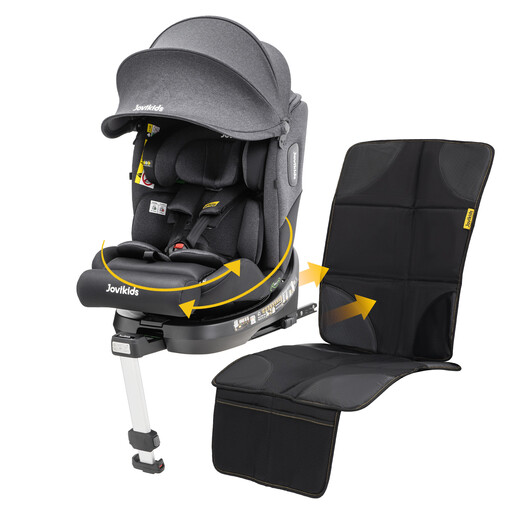
Why this product suits this profile: According to the product information, this rear-facing child car seat covers 40 to 150 cm and combines ISOFIX, a support leg, a rotation function, several recline positions and a 12-position adjustable headrest.
The wide height range is complemented by removable inserts and an adjustable headrest; the fit must nevertheless be checked regularly.
Washable cover, memory foam insert and sun canopy with UPF50+, according to the product information.
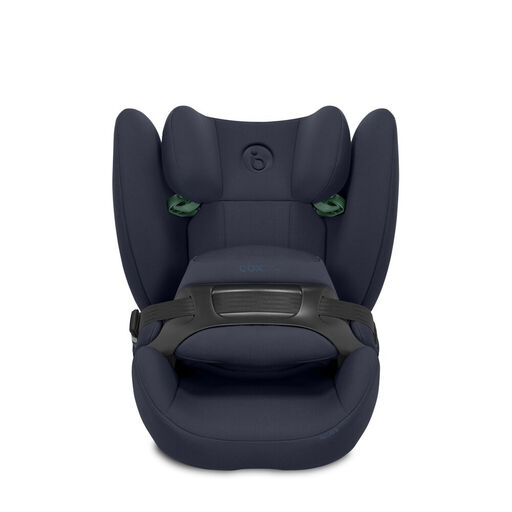
Why this product suits this profile: The seat is designed for 76 to 150 cm, or approximately 15 months to 12 years. It uses ISOFIX and Top Tether; from 105 cm or 21 kg, the vehicle seat belt is used.
The minimum age of around 15 months prevents unsuitable use for newborns; the switch to the three-point seat belt is clearly defined.
12-position adjustable headrest, adjustable backrest and removable impact shield, according to the product information.
We have put together a complete, regularly updated list of products that fully meet these strict selection criteria and the safety regulations applicable in the EU.
Before ordering an i-Size child car seat, tick off the following points:
This depends on the approved height range and the condition of the seat. Models covering 40–150 cm can accommodate several stages of growth, while infant carriers often end at 87 or 105 cm. After a significant accident, the seat should be replaced regardless of any visible damage.
No. Many i-Size seats use ISOFIX, while some models also allow or alternatively use the three-point seat belt. The decisive factors are the seat’s approval, the vehicle manual and the manufacturer’s installation instructions.
A rear-facing seat is installed facing the rear of the vehicle and is particularly intended for babies and toddlers. With a model that offers an extended rear-facing range, check the approved height, the available legroom and compatibility with your vehicle.