
Lieferung heute & morgen

Qualitätsgarantie

Willkommens-Angebote freischalten: KOSTENLOSE Lieferung | Bis zu 80 % RABATT | Kostenlose 30-Tage-JoyPlus-Testphase
App herunterladen
An i-Size child car seat needs to suit your child, your vehicle and your family’s day-to-day needs. Yet product names and marketing claims can often lead to the wrong purchase. For example, a seat that swivels through 360 degrees is not automatically suitable for every age group. And even a model with a long usable life may prove impractical if it cannot be fitted in your car.
This buying guide explains what to check before buying a child car seat and which models may suit different family needs.
A growing child car seat covering 40–150 cm can theoretically suit several stages of a child’s development. In practice, however, the inserts, headrest, harness system and seat direction all need to be adjusted as your child grows. A seat for 76–150 cm, on the other hand, is not suitable for newborns, even if it can be used until a child is about 12 years old.
So, look at your child’s height, not just the age guidance. Age is only a guide.
An ISOFIX child car seat can usually be connected securely to your vehicle’s ISOFIX anchor points. Depending on the model, it may also use a Top Tether or support leg. The key is to check that your vehicle has the required anchor points and that the fitting position is approved in your vehicle handbook.
Green and red installation indicators can make it easier to check the fit, but they are no substitute for reading the instructions carefully.
A 360-degree swivel child car seat makes it easier to get your child in and out. With some models, the seat will only swivel at a particular recline angle or when the support leg is correctly adjusted. Also check that there is enough room around the door, front seat and centre console.
The ECE R129 label, also known as UN R129, classifies child car seats according to the child’s height and includes tests such as side-impact testing. Depending on the product, the label may say UN R129/03 or UN R129/04. The approval shown on the seat and in the instructions is what matters.
The standard is no substitute for correct installation. An approved child car seat must be used in accordance with the instructions.
Common ranges include:
For children under 15 months, rear-facing use is particularly relevant under the European regulation. Always check the specific approval for the seat you are considering.
Integrated side-impact protection may be designed to help distribute forces in a side-on collision. Claims such as “up to” come from the product’s own marketing and cannot be applied generally to every accident scenario.
A height-adjustable headrest should be easy to adjust as your child grows. With a 5-point harness, the straps must fit snugly against your child’s body. Bulky winter clothing can affect the fit. For seats with a safety cushion, check the height or weight limit for using it.

Why it suits this family profile: According to the product details, this set is designed for 40–87 cm and up to 13 kg. It can be fitted using ISOFIX or a 3-point seat belt and weighs 4.4 kg.
The clearly defined height range helps prevent an infant carrier being mistakenly planned as a long-term solution. The alternative seat-belt fitting is useful for cars without ISOFIX.
UN ECE R129-03, rear-facing use, height-adjustable headrest and removable newborn insert.

Why it suits this family profile: According to the manufacturer, this seat is designed for 61–105 cm and has an integrated ISOFIX base with a support leg, as well as a 360-degree swivel function.
The stated height range makes clear that a suitable insert is needed for use from birth. This helps avoid mistakes when planning your first set-up.
360-degree swivel function, five recline positions, 12-position adjustable headrest and integrated side-impact protection, according to the product description.
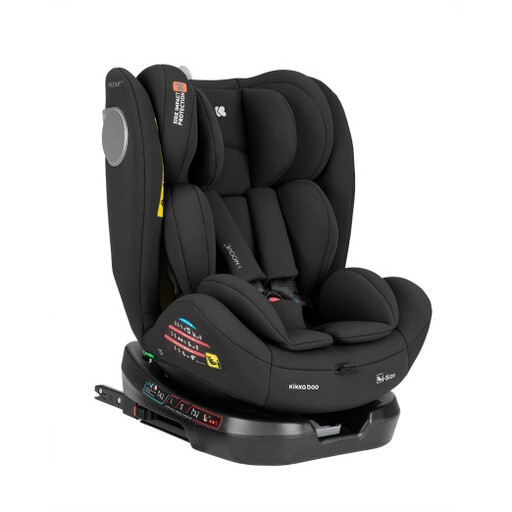
Why it suits this family profile: According to the manufacturer, this seat covers 40–150 cm, with rear-facing use up to 105 cm and forward-facing use from 76 cm.
The separate guidance for rear- and forward-facing use shows that the seat is not used in the same way at every height. This makes it easier to plan when to switch between stages.
360-degree swivel, ISOFIX plus Top Tether, 24 headrest positions and several recline positions.
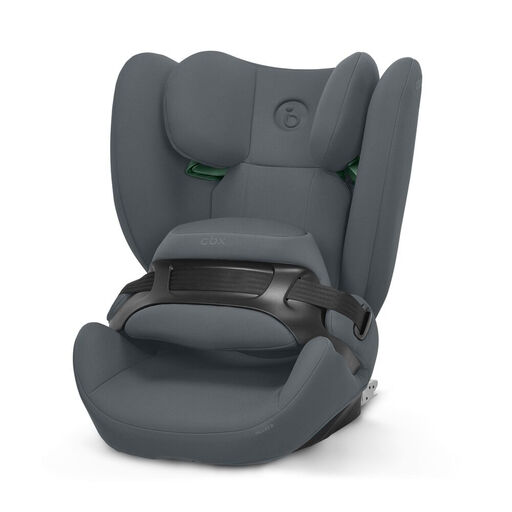
Why it suits this family profile: According to the product details, this 2-in-1 model is designed for 76–150 cm and for children from around 15 months to 12 years.
This seat is clearly not described as a model suitable from birth. Be sure to check the limit for using the safety cushion and when to switch to the vehicle seat belt.
12-position adjustable headrest, ISOFIX and Top Tether, plus a removable safety cushion according to the product details.
We’ve put together a complete, regularly updated list of products that meet these strict selection criteria and fully comply with the safety regulations in force in the EU.
How long you can use it depends on its approval, height range and condition. A model for 40–150 cm may cover several stages of a child’s development, but it must be adjusted correctly for each one. The seat must be replaced after an accident or if any components are damaged.
ISOFIX can make installation easier and reduce the risk of fitting errors. However, it is not necessarily suitable for every vehicle or seat position. What matters is vehicle approval, correct installation and making sure your child is fully secured.
A rear-facing car seat is used facing towards the rear of the vehicle and is approved for different height ranges depending on the model. This seat direction is particularly relevant for babies and toddlers. Before you buy, check the minimum height, the intended use range and the space available in your vehicle.