
Lieferung heute & morgen

Qualitätsgarantie

Willkommens-Angebote freischalten: KOSTENLOSE Lieferung | Bis zu 80 % RABATT | Kostenlose 30-Tage-JoyPlus-Testphase
App herunterladen
An i-Size child car seat needs to suit more than just your child’s age. Height, installation method, direction of travel, vehicle compatibility and how long the seat can actually be used are all crucial factors. However, many product descriptions heavily emphasise individual features. This can lead to common purchasing mistakes: a supposedly child car seat from birth will not suit every newborn, a 360-degree rotation function does not replace correct installation, and a child seat that grows with your child is not automatically suitable for every stage of development.
An i-Size child car seat 40–150 cm covers a wide height range according to the product description. Even so, inserts, the headrest, harness system and seating direction are adjusted as the seat is used over time. You should therefore check:
A model for 40–150 cm can be practical if a family only wants to buy one seat. However, a separately designed rear-facing child seat or baby carrier may fit a very small baby’s body better.
A child car seat with ISOFIX is attached to the vehicle’s anchorage points. Depending on the model, a top tether, support leg or the three-point seat belt may also be used. The installation method must suit both the vehicle and the relevant height range.
Before buying, compare your car’s instruction manual with the seat’s compatibility list. Also look out for:
A 360-degree rotation function, a recline function or a large sun canopy can make everyday use easier. On their own, however, they say nothing about whether the seat is suitable for your child. Likewise, an advertised child car seat with side-impact protection should be assessed based on its specific approval and the manufacturer’s information.
When you see claims such as “reduces injuries by … per cent”, the source is important. Such claims should only be described as According to the manufacturer or according to a clinical study by [brand] if a corresponding study has actually been named. A general advertising claim is not an independent comparison.
A child car seat approved under UN R129 is primarily classified according to the child’s height. The approval may, for example, be UN R129/03 or UN R129/04. R129 also includes side-impact requirements and requires rear-facing use for certain stages of development.
The i-Size designation does not mean that every seat will fit every vehicle. It describes an approval category. You should therefore always check the vehicle approval and the height ranges specified by the manufacturer.
The age given in product descriptions is intended as a guide. The stated height in centimetres is the decisive factor when choosing a seat. For example, a child car seat for 76–150 cm is not suitable for a 60 cm baby, even if the product description promises a long service life.
Typical ranges include:
When changing between seat stages, parents must follow the instructions carefully. With a 2-in-1 child car seat, for example, a impact shield or integrated harness system may be used initially. It is then removed later, and the vehicle’s seat belt is fed through the marked belt guides.
One example is the CYBEX Pallas B i-Size: according to the product information, it is designed for 76–150 cm. The impact shield is intended for children up to 105 cm or 21 kg; after that, the vehicle’s three-point seat belt is used. These limits must not be replaced by the child’s age.

Why this product suits this profile: According to the product information, the baby carrier is suitable from birth for 40–87 cm and up to 13 kg. It is ideal for families looking for a compact solution for the first stage and wanting to choose between ISOFIX and a three-point seat belt.
The clearly defined height range prevents the assumption that a baby carrier can be used until school age. The installation indicators help you check that it has been fitted correctly.
UN ECE R129-03, rear-facing use, a weight of 4.4 kg and washable cover according to the product description.

Why this product suits this profile: According to the product data, this seat is designed for 40–105 cm and combines an integrated ISOFIX base with a support leg, 360-degree rotation and rear-facing use for the early stages of development.
The limited use up to 105 cm makes it clear that another seat may be needed later. This prevents the “from birth” claim from being confused with use up to 12 years of age.
40–105 cm, a 12-position adjustable headrest, 360-degree rotation mechanism and six-times denser mesh inserts according to the product description.
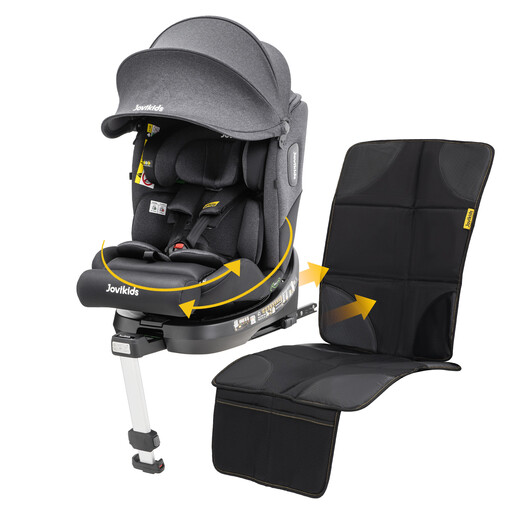
Why this product suits this profile: For families who are frequently getting children in and out of the car, the model offers 360-degree rotation, ISOFIX, a support leg and several recline positions according to the description. The height range extends from 40–150 cm.
The description specifies the height ranges, installation components and adjustment options. Nevertheless, check before buying that the support leg and rotation range are suitable for your vehicle.
UN ECE R129, a 12-position headrest, removable cover and sun canopy according to the product information.
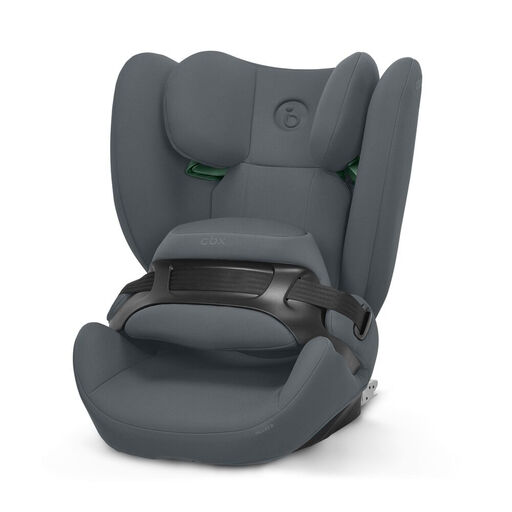
Why this product suits this profile: According to the product data, this 2-in-1 child car seat is suitable for 76–150 cm and approximately 15 months to 12 years. It is aimed at parents looking for one seat for both the toddler and child stages.
The precise starting point of 76 cm prevents use with newborns. For children over 105 cm or 21 kg, the vehicle’s seat belt is specified for use according to the instructions.
UN R129/04, a 12-position adjustable headrest, ISOFIX and top tether, plus a machine-washable cover according to the product description.
We have put together a complete, regularly updated list of products that fully meet these strict selection criteria and the safety regulations applicable in the EU.
No. i-Size approval describes the safety standard, not unrestricted compatibility with every vehicle. The ISOFIX position, support leg, top tether and available space must suit the particular vehicle seat.
This depends on the approved height range and the condition of the seat. Some models cover 40–150 cm, while others only cover 40–105 cm or 100–150 cm. The manufacturer’s information is decisive, not simply the description “grows with your child”.
A rotation function can make fastening the harness and placing your child in the seat easier. It is particularly practical with rear-facing seats. Before buying, however, parents should check whether the mechanism can be used fully in their own vehicle configuration and whether the required direction of travel is observed.