
Lieferung heute & morgen

Qualitätsgarantie

Willkommens-Angebote freischalten: KOSTENLOSE Lieferung | Bis zu 80 % RABATT | Kostenlose 30-Tage-JoyPlus-Testphase
App herunterladen
An i-Size child car seat with ISOFIX is designed to simplify installation in your car and grow with your child over many years. In practice, however, not every model fits every vehicle, every child’s height, or every family’s daily routine. What really matters are not flashy marketing terms, but the approval standard, size range, installation method, and correct usage.
A child car seat from birth with a range of 40 to 150 cm may sound economical at first. However, the needs of a newborn are very different from those of an older child. So check the following:
A wide size range is only practical if each developmental stage can be set correctly and clearly.
An ISOFIX child seat is attached to the standardised anchorage points in your car. Depending on the model, a support leg or a top tether strap is also used. Your vehicle must be suitable for this type of installation. Before buying, check your car’s owner’s manual and the manufacturer’s list of approved vehicles.
The shape of the seat is also important: a support leg must not, for example, rest on an unsuitable floor hatch. For a top tether, you must use the designated anchorage point. Colour indicators on the seat help with checking, but they don’t replace the instruction manual.
A swivel car seat or 360-degree rotating seat makes it easier to get your child in and out. The rotation function can be particularly handy with taller vehicles or when you frequently switch between rear-facing and forward-facing positions. However, it says nothing on its own about fit, approval, or correct installation.
Pay attention to which positions the rotation is possible in and whether the seat locks securely during travel. The permitted travel direction and height range must always match the product instructions.
An ECE R129 child seat is approved under the European regulation UN ECE R129. This regulation places greater emphasis on the child’s height than older systems based on fixed weight groups. Depending on the version, the approval includes requirements for side-impact protection and rear-facing use for younger children.
The term i-Size alone does not mean that every model can be used from birth up to 150 cm. Always check the specific height range, for example:
Compare whether the car seat is installed using ISOFIX, a top tether, a support leg, or the vehicle’s seatbelt. Some models require different fixings depending on the usage phase. For example, when switching from a toddler seat to a seat for an older child, the vehicle’s own three-point seatbelt may be used.
Also check the adjustment of the headrest, shoulder straps, and backrest. A seat with many adjustment positions isn’t automatically a good fit; the settings must match your child’s height and the instructions.
A child seat with side-impact protection features reinforced side areas, energy-absorbing materials, or additional protection systems, depending on the model. The exact design should be listed in the manufacturer’s technical data. Other features you can objectively compare include:

Why this product fits the profile: This baby carrier is designed for children from 40 to 87 cm and up to 13 kg. It is therefore ideal for families who initially want a compact solution from birth.
The clearly defined height range prevents you from mistakenly planning a baby carrier as a long-term seat up to 150 cm. ISOFIX indicators and the alternative three-point seatbelt installation support flexible use.
UN ECE R129-03, 4.4 kg weight, height-adjustable headrest and straps, plus a washable cover.

Why this product fits the profile: This seat is aimed at families who want to combine an integrated base, 360-degree rotation, and use from 61 to 105 cm.
The limited usage range makes it clear that a suitable insert is needed for a newborn and that a different seat may be required later on.
UN R129/03, integrated ISOFIX base with support leg, 360-degree rotation, five recline positions, and twelve headrest positions.
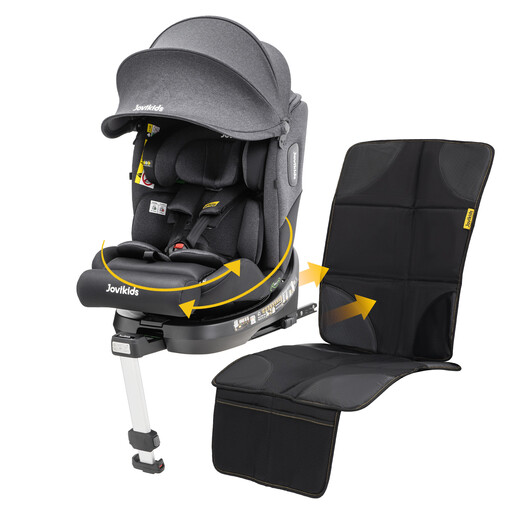
Why this product fits the profile: This child car seat for 40-150 cm is designed for long-term use and offers 360-degree rotation to make daily getting in and out easier for families.
The height range is complemented by specific adjustment options: twelve headrest positions, removable inserts, and both rear-facing and forward-facing use.
ECE-R129 approval, ISOFIX with adjustable support leg, 360-degree rotation, multiple recline positions, and a removable cover.
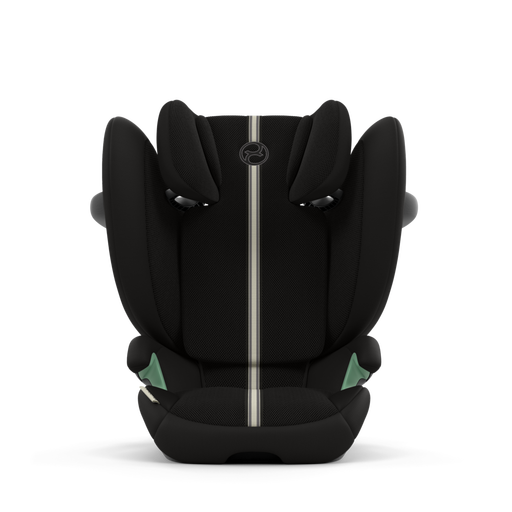
Why this product fits the profile: This seat is designed for children from 100 to 150 cm, or roughly three to twelve years old, and folds compactly for easy transport between vehicles.
The clear suitability from 100 cm prevents incorrect use for smaller children. ISOFIX can stabilise the position, while the vehicle’s seatbelt secures the child according to the instructions.
UN R129/04, 5.8 kg weight, foldable design, twelve headrest positions, and an integrated side-impact protection system.
We have put together a complete, regularly updated list of products that fully meet these strict selection criteria and the safety regulations in force in the EU.
That depends on the specific model. Baby carriers often start at 40 cm, while many swivel seats are approved from 40 or 61 cm. A seat with a starting height of 76 cm is not suitable for newborns, even if it can be used up to 150 cm.
The duration of use depends on height, weight, approval, and condition. Models covering 40–150 cm or 76–150 cm can span several developmental stages. The seat should be replaced after an accident, if the straps are damaged, or if the manufacturer’s approval has expired.
No. The rotation function makes daily life easier, but it must be compatible with your vehicle and the approved height range. What really matters is correct installation, the right restraint adjustment, and following the manufacturer’s instructions.