
Lieferung heute & morgen

Qualitätsgarantie

Willkommens-Angebote freischalten: KOSTENLOSE Lieferung | Bis zu 80 % RABATT | Kostenlose 30-Tage-JoyPlus-Testphase
App herunterladen
An i-Size child car seat should be right for your child, your car and how long you plan to use it. In practice, however, buying the wrong seat isn’t always down to choosing the wrong size. Even features that seem convenient can be unsuitable if they don’t work with your car or your child’s height.
Age guidance is only a rough indication. With an ECE R129 child car seat, your child’s height is what matters. For example, a model for 76–150 cm may be suitable from around 15 months, but that doesn’t mean it will automatically fit every child in that age group. Always check the approved minimum height, maximum weight and specified fitting method.
An ISOFIX child car seat isn’t suitable for every car. Depending on the model, you may also need a Top Tether, a support leg or a three-point seat belt. Before buying, compare your car’s handbook with the child car seat’s fitting instructions. The position of any active front airbags is also important.
A child car seat that grows with your child, from toddler to school age, can reduce the need to change seats. However, it won’t necessarily fit equally well at every stage of your child’s growth. The headrest, belt guides, seat recline and side supports all need regular adjustment. A seat that’s too wide for the back seat or too heavy to move between cars can be impractical for everyday use.
The UN R129 standard focuses primarily on your child’s height and includes requirements for side-impact protection. Depending on the model, other specifications may also apply, such as weight, direction of travel and the intended period of use. An i-Size label is no substitute for checking the instruction manual.
When choosing a car child seat, compare the following:
ISOFIX can make fitting easier, but it doesn’t prevent mistakes. Before every journey, check the indicator displays, make sure the anchorage points are locked in place and confirm that any additional straps are secured correctly. With an ISOFIX booster seat, your child will still use the car’s three-point seat belt, depending on the model.
A simple booster seat without ISOFIX must sit flat against the car seat. The three-point belt must not lie across your child’s neck and should sit across their shoulder and pelvis.
A child car seat with side-impact protection may have reinforced sides, energy-absorbing materials or an integrated protection system. The design varies from model to model. Any percentage reduction quoted should be treated as a manufacturer’s claim, not a general guarantee for every type of accident.
Other useful features include an adjustable headrest, a suitable seat recline and a removable cover for easy cleaning. For many families, a cover that can be machine-washed at 30 °C is a helpful feature.
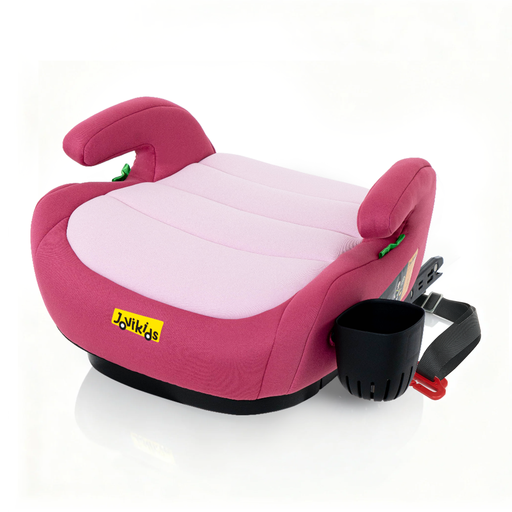
Why this product suits this profile: This booster seat is designed for children measuring 125–150 cm and can be fitted using ISOFIX. Its compact design is useful for families who occasionally move a child car seat between cars.
The approved height range of 125–150 cm clearly defines when to use it, helping to prevent the booster seat being used too soon.
ISOFIX fittings, a removable washable cover, padded seat and a stated weight of around 3 kg.
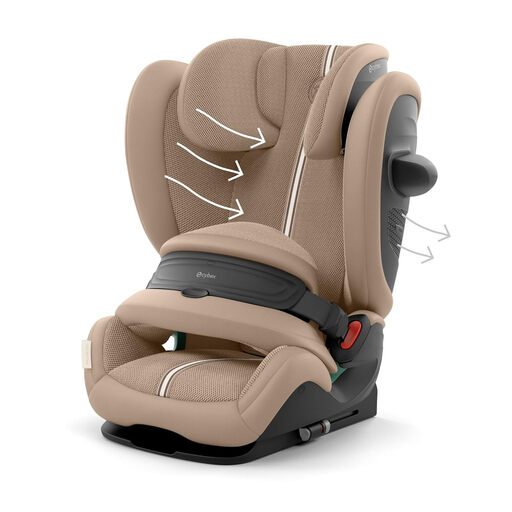
Why this product suits this profile: According to the product details, this 2-in-1 system is designed for children measuring 76–150 cm. It features an adjustable headrest and seat recline, with ISOFIX and the car seat belt used at different stages.
The switch from the impact shield to the three-point seat belt is based on your child’s height. This makes the changeover clear and allows the seat to be adjusted as your child grows.
UN R129/i-Size approval, a 12-position adjustable headrest, L.S.P. System Plus according to the manufacturer and washable covers.

Why this product suits this profile: For families with a baby or toddler, the 360-degree rotation makes getting your child in and out easier. This model is designed for children measuring 61–105 cm and has an integrated base.
Its clearly defined height range helps prevent the seat being treated as a supposedly universal car seat and used beyond its intended stage.
360-degree rotation, five recline positions, a 12-position adjustable headrest and integrated L.S.P. side-impact protection, according to the product details.
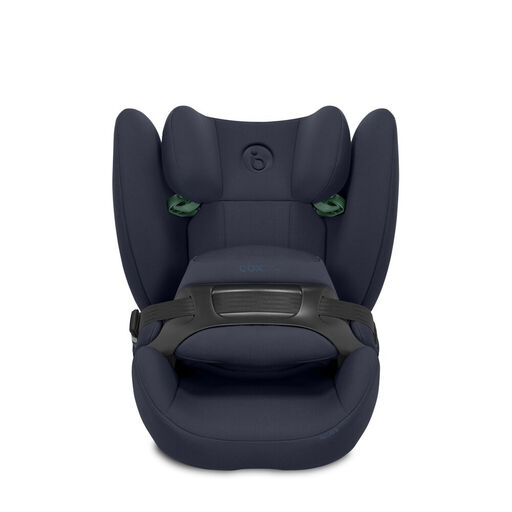
Why this product suits this profile: According to the product details, this seat is designed for children measuring 76–150 cm, or from around 15 months to 12 years, and is suited to families who prefer a 2-in-1 design.
The manufacturer specifies clear transition points: the impact protection system is used up to 105 cm or 21 kg, after which your child uses the car’s three-point seat belt.
A 12-position adjustable headrest, ISOFIX and Top Tether, plus a removable cover that can be washed at 30 °C.
We’ve put together a complete, regularly updated list of products that meet these strict selection criteria and the safety regulations in force across the EU.
Before your first journey, take your time to fit the seat according to the instructions. Check that all indicators confirm it’s fitted correctly, that the Top Tether or support leg is positioned properly and that the belt is not twisted. Your child should wear suitable clothing when strapped in, so the belt can sit close to their body.
Removable covers make cleaning easier. Use only the cleaning products recommended by the manufacturer on plastic and metal parts. After an accident, or if any components are damaged, the seat should not be used again. A second-hand child car seat is only a sensible option if you know its history, that it has not been in an accident, that it is complete and that its approval status is clear.
It depends on the model. Some seats are designed for children measuring around 40–105 cm, 61–105 cm or 76–150 cm. Always follow the information on the seat and in the instructions; your child’s age alone is not enough.
Depending on how quickly your child grows, a model for 76–150 cm may cover several stages of their development. However, you’ll need to stop using it once your child reaches the approved maximum height or weight, or if the seat is damaged.
Many newer cars have ISOFIX anchor points, but not every seating position is suitable. A Top Tether or support leg may also be required. Before buying, check the manufacturer’s vehicle list and your car’s handbook.