
Lieferung heute & morgen

Qualitätsgarantie

Willkommens-Angebote freischalten: KOSTENLOSE Lieferung | Bis zu 80 % RABATT | Kostenlose 30-Tage-JoyPlus-Testphase
App herunterladen
An i-Size child car seat should not only suit your child’s age, but above all their height, your vehicle and the realities of everyday use. However, there are important differences between marketing claims such as ‘grows with your child’, ‘360° rotation’ and ‘up to 12 years’. Anyone who focuses solely on the maximum service life or a striking extra feature may end up buying a child car seat that is difficult to install in their vehicle or does not suit their child’s current height.
A child car seat that grows with your child, covering 40–150 cm, can offer a long service life. However, your child needs a correctly adjusted headrest, properly positioned harness and sufficient space at every stage. For very small babies, the newborn insert, seat angle and side support are particularly important. For older children, a dedicated seat for 100–150 cm may be more practical.
That is why height is the decisive factor, rather than just the age stated on the packaging. A child car seat suitable up to 12 years may only be used within the specified height and weight range.
A 360° rotating child car seat makes it easier to place your child in the seat and lift them out again. However, the rotation is only useful when ISOFIX, the support leg or Top Tether has been correctly secured. After installation, colour indicators should confirm that the connection is correct. You must also check that there is sufficient clearance between the seat and the front seatback and door.
The description child car seat with side-impact protection can refer to different components depending on the model. Look for specific information about the approval, integrated protection system and construction of the seat shell. Individual percentages used in brand communications are only meaningful in the context of the comparison stated and should not be interpreted as a general safety guarantee.
The UN R129 standard, also known as ECE R129, classifies child car seats primarily according to height. The approval designation, such as UN R129/03 or UN R129/04, should be clearly identifiable on the seat and in the instruction manual. i-Size also covers requirements for side-impact protection and use in compatible vehicle seating positions.
Approval of the seat does not mean that every seating position is suitable for every car. You should therefore check the manufacturer’s vehicle list and your car’s owner’s manual.
A reboarder is installed facing away from the direction of travel. Many i-Size models are designed for rear-facing use with smaller children. For children under 15 months or under 76 cm, special requirements may apply depending on the approval; the information for the specific seat and the applicable regulations always take precedence.
With a child car seat from birth, the suitable insert should only be used for as long as specified in the instructions. Removable padding must not be replaced or modified without authorisation.
An ISOFIX child car seat is secured using the vehicle anchor points provided for this purpose. Depending on the model, a support leg or Top Tether may also be used. These systems are not interchangeable at will.
Before every journey, you should check:
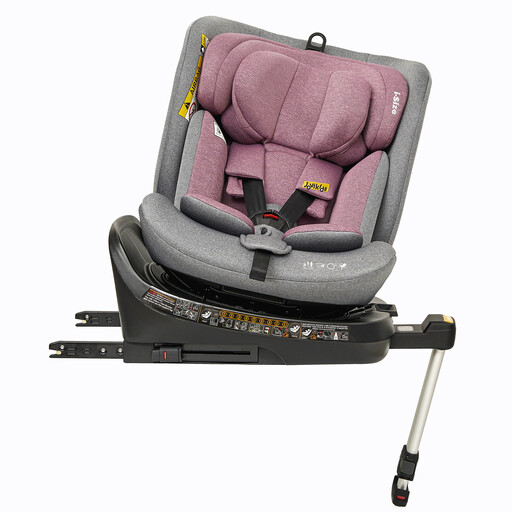
Why this product suits this profile: According to the product information, the seat covers the 40–150 cm height range and combines ISOFIX with a 360° rotation function. This may appeal to families looking for one seat suitable for several stages of growth.
The height range is clearly stated. Before buying, you must still check vehicle compatibility, the support leg and the permitted direction of travel.
40–150 cm, 360° rotation, adjustable headrest and removable, washable cover according to the product description.

Why this product suits this profile: The seat is designed for children measuring 40–105 cm and up to around 4 years old. Its integrated ISOFIX base, support leg and 360° rotation are aimed at families looking for a clearly defined baby and toddler solution.
The clearly defined use up to 105 cm helps prevent a long service life from being mistaken for a universally suitable solution.
UN R129/03, 360° rotation, five recline positions and integrated Linear Side Impact Protection according to the product data.
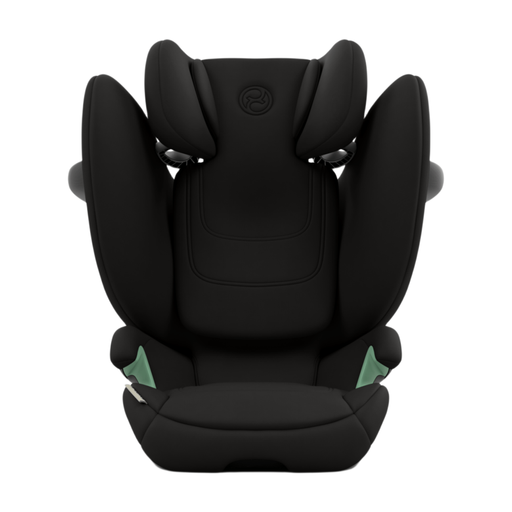
Why this product suits this profile: Designed for children measuring 100–150 cm, this forward-facing seat is intended for the later stage of use. Its low weight and folding function can be practical when it is moved between vehicles frequently.
The narrow height range makes it clear that this child car seat is not intended for babies or toddlers.
UN R129/04, 5.8 kg weight, folding construction and ISOFIX or vehicle seat belt according to the product information.
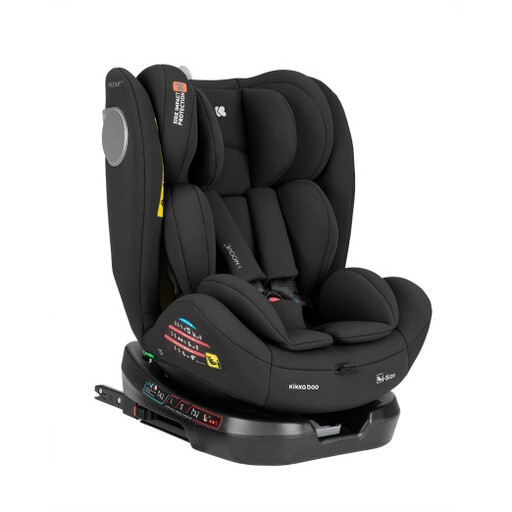
Why this product suits this profile: According to the product information, the seat is suitable for 40–150 cm and can be used rear-facing up to 105 cm. This makes it an interesting option for families looking for a rotating seat with several adjustment stages.
The stated limits for rear- and forward-facing use help ensure that the seat is not selected based solely on age.
UN R129/04, 360° rotation, 24 headrest positions, plus ISOFIX and Top Tether according to the product description.
We have put together a complete, regularly updated list of products that fully meet these strict selection criteria and the safety regulations applicable in the EU.
That depends on the model. Some seats start at 40 cm and are therefore intended for use from birth according to the manufacturer. Other models only start at 76 cm or 100 cm. Always check the height range, direction of travel and use of the newborn insert in the relevant instruction manual.
The service life depends on the approved height range. A 40–150 cm child car seat can cover several stages of development, while a 40–105 cm seat is generally intended for babies and toddlers. Following an accident, the seat should be replaced regardless of visible damage if the manufacturer requires this or a significant impact has occurred.
Not for every model. Some seats require ISOFIX in addition to a Top Tether or support leg, while others can also be secured with the three-point seat belt in certain height ranges. The manufacturer’s instructions, vehicle approval and correct belt routing are the deciding factors.