
Lieferung heute & morgen

Qualitätsgarantie

Willkommens-Angebote freischalten: KOSTENLOSE Lieferung | Bis zu 80 % RABATT | Kostenlose 30-Tage-JoyPlus-Testphase
App herunterladen
An i-Size child car seat should not only be suitable for your child’s height, but also be securely installed in the vehicle. Many products promise long periods of use, 360-degree rotation or particularly comprehensive side-impact protection. However, these features are only relevant if they suit your child’s age and height as well as your vehicle.
A child car seat marked 40–150 cm may initially sound like a solution for many years. In practice, the features and installation method differ considerably depending on your child’s stage of development. A seat for newborns, for example, needs a suitable insert, a secure reclining position and rear-facing use. A later-stage seat for 100–150 cm is generally designed as a high-back booster seat.
Before buying, check:
An ISOFIX child car seat is often easier to position. However, ISOFIX alone does not mean that every installation situation in the vehicle is suitable. Depending on the model, a top tether, support leg or three-point seat belt may also be required.
The information in the vehicle handbook and the seat’s instruction manual must match. After installation, indicator displays should confirm that the connection is correct. Even an unused seat should be secured so that it does not become a loose object during heavy braking.
A rotating child car seat can make it easier to secure your child. However, the rotation function does not replace the correct adjustment of the headrest, harnesses and seat recline. Similarly, advertised side-impact protection is no reason to overlook vehicle compatibility or the appropriate height range.
A child car seat approved under UN R129 is classified according to the child’s height rather than solely by weight. Depending on its approval, a model may, for example, be suitable for 40–105 cm, 76–150 cm or 100–150 cm. The R129 requirements also include side-impact testing. You will find the specific approval and version number, such as UN R129/03 or UN R129/04, on the product and in the instructions.
Children under 15 months must be transported rear-facing. The relevant requirements of the seat apply to older children. The description child car seat from 15 months therefore does not automatically mean that every model in the 76–150 cm range is suitable.
Age indications are for guidance only. The approved height range and correct harness positioning are what matter. A 76–150 cm child car seat may be suitable for a child from 15 months if the minimum height has been reached. A booster seat for 125–150 cm, on the other hand, is not suitable for smaller children, even if the age appears to be right.
Look for:
Adjustability is particularly important for a seat intended for long-term use up to 150 cm. A 12-position adjustable headrest can make fitting easier, but its position must still be checked regularly.
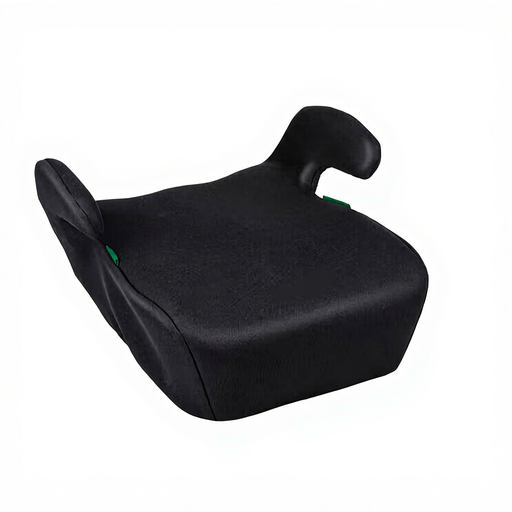
Why this product suits this profile: This booster seat is designed for children from 125–150 cm and is suitable for families looking for a lightweight seat that can be moved between vehicles.
The clearly defined height range prevents the booster from being used too early. It has no integral harness and is used exclusively with the vehicle’s three-point seat belt.
ECE R129 approval, weighing around 1 kg, integrated armrests and a removable cover.

Why this product suits this profile: According to the product information, this 2-in-1 child car seat is suitable for children from 76 to 150 cm and can be installed using ISOFIX and a top tether.
The switch from the safety shield to the vehicle seat belt is subject to specific limits: according to the instructions, the safety shield is used up to 105 cm or 21 kg.
UN R129/03, 12-position adjustable headrest, adjustable backrest and integrated side-impact protection according to the manufacturer’s information.
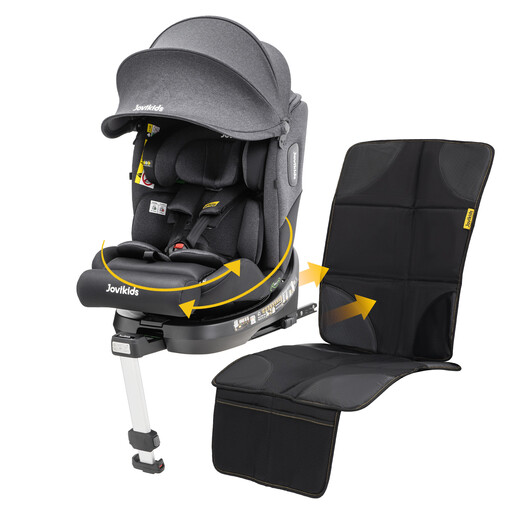
Why this product suits this profile: According to the product information, this rotating child car seat covers 40–150 cm and is aimed at families looking for one model for several stages of growth.
Use is divided according to height. The rear-facing and forward-facing positions, along with the required use of ISOFIX and the support leg, should be checked with your vehicle before purchase.
360-degree rotation, ISOFIX, support leg, several recline positions and a 12-position adjustable headrest.

Why this product suits this profile: This seat is designed for 40–105 cm and is suitable for parents who want one dedicated model to cover the early transition between rear-facing and forward-facing use.
The limited 40–105 cm range makes it clear that another child car seat may be needed later. This prevents the seat from being used as a booster too early.
ECE R129/04, 360-degree rotation, ISOFIX with support leg, 6 recline positions and 5-point harness system.
We have put together a complete, regularly updated list of products that fully meet these strict selection criteria and the safety regulations applicable in the EU.
Under UN R129, children under 15 months must be transported rear-facing. Many seats allow rear-facing use for longer. The specifications for the particular model and the child’s height remain decisive.
No. Some models are secured using ISOFIX and a top tether, while others use ISOFIX and a support leg. With certain booster seats, ISOFIX only stabilises the seat, while the child is secured with the vehicle’s three-point seat belt. The relevant instruction manual is binding.
Some 2-in-1 or growing-with-your-child models are approved for 76–150 cm or 40–150 cm. The actual period of use depends on the child’s height, fit, condition and approval. After an accident, if parts are damaged or the manufacturer’s approval has expired, the seat must no longer be used.