
Lieferung heute & morgen

Qualitätsgarantie

Willkommens-Angebote freischalten: KOSTENLOSE Lieferung | Bis zu 80 % RABATT | Kostenlose 30-Tage-JoyPlus-Testphase
App herunterladen
A child car seat needs to suit your child, your vehicle and the period for which you plan to use it. Long age ranges, 360-degree rotation and plenty of adjustment options can look convincing on product pages. In practice, however, buyers often make the wrong choice because of three common pitfalls:
The current UN ECE R129 regulation, often referred to as i-Size, is based primarily on a child’s height. Many models also state a maximum approved weight. Before buying, check:
An infant carrier is normally used rear-facing and is suitable for smaller babies. A rear-facing car seat also allows children to travel rear-facing for longer. With a seat that grows with your child, such as a car seat for children from 40 to 150 cm, you’ll need to adjust the insert, harness routing and direction of travel as set out in the instructions.
Children under 15 months must travel rear-facing in the R129 models mentioned here. Always follow the approval details for the specific seat and the manufacturer’s instructions.
An ISOFIX car seat connects to the vehicle’s ISOFIX points using rigid attachment points. Visual indicators can make it easier to check the installation. Depending on the seat, it may also have a support leg or a Top Tether.
Before buying, check your vehicle handbook and the manufacturer’s vehicle list to see:
If you regularly move a seat between several cars, look for clear installation indicators and easy-to-reach adjustments. With a model secured using only the vehicle’s three-point seat belt, it’s especially important to route the belt correctly.
A car seat with side-impact protection may have protective areas built into the seat shell or fold-out side elements. The design varies by model. Also look for:
A booster seat is more compact, but depending on the design, it may not have its own backrest or headrest. Models with a backrest can suit a different everyday need for children from around 100 cm than backless booster seats designed for children from 125 cm. Always check the details for the specific product.

Why this product suits this need: This seat is designed for children from 76 to 150 cm, so it can be used from toddlerhood through to school age. The removable impact shield allows you to switch to the vehicle seat belt as your child grows.
The clearly stated height range makes it clear that this is not a true car seat from birth. Before buying, check that your child has reached 76 cm.
UN R129/04, ISOFIX, Top Tether, a 12-position adjustable headrest and washable cover, according to the product details.

Why this product suits this need: This model covers heights from 40 to 125 cm and offers 360-degree rotation, several rest positions and rear-facing travel up to 105 cm, according to the product description.
Use from birth is limited to the height range starting at 40 cm and requires the supplied newborn insert. You’ll still need to check that it fits your vehicle before buying.
ECE R129/03, ISOFIX with support leg, integrated side-impact protection and washable cover, according to the manufacturer’s details.
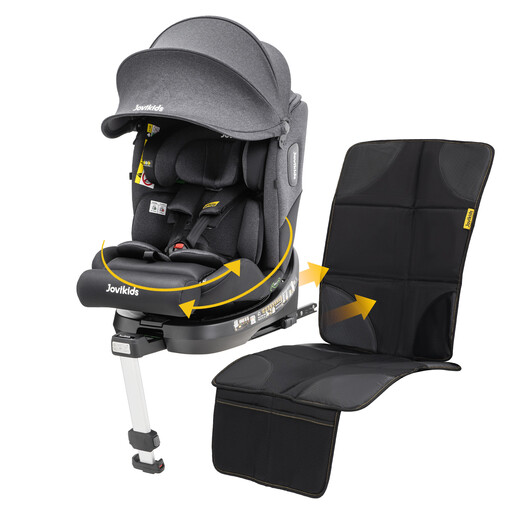
Why this product suits this need: Designed for children from 40 to 150 cm, this model combines 360-degree rotation, ISOFIX, a support leg and several rest positions for families who use a car seat frequently every day.
The height ranges and insert changes are clearly specified, so you can adapt how the seat is used to your child’s height rather than relying on age alone.
ECE R129, a 12-position adjustable headrest, removable cover and sun canopy, according to the product details.
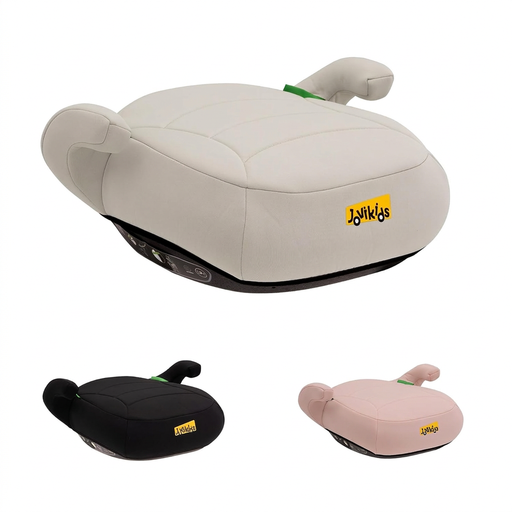
Why this product suits this need: This compact booster seat is specified for children from 125 to 150 cm and weighing 22 to 36 kg. At 1,2 kg, it’s handy for car sharing, hire cars and frequent changes of vehicle.
The narrow height range helps prevent the booster seat from being used too soon. The vehicle’s three-point seat belt is still required to secure your child.
UN R129, 1,2 kg weight and removable, washable cover, according to the product description.
We’ve put together a complete, regularly updated list of products that meet these strict selection criteria and the safety regulations in force across the EU.
ISOFIX can make installation easier and provide a visual check that the connection is secure. The seat must still be approved for use in your vehicle. If the model has a support leg or Top Tether, these must also be installed correctly.
That depends on its approval, your child’s height and weight, and the condition of the seat. A model for children from 40 to 150 cm can cover several stages of development, while an infant carrier is usually outgrown sooner. Don’t continue using a seat after an accident or if any parts are damaged. Also follow the manufacturer’s guidance on the product’s lifespan and care.
No. The rotation feature needs enough clearance from the door and front seat. The ISOFIX points, floor area for the support leg and vehicle approval must also be suitable. It’s a good idea to try fitting the seat in your own car before buying.