
Lieferung heute & morgen

Qualitätsgarantie

Willkommens-Angebote freischalten: KOSTENLOSE Lieferung | Bis zu 80 % RABATT | Kostenlose 30-Tage-JoyPlus-Testphase
App herunterladen
By Joybuy Product Recommendation Officer, July 05, 2026
Choosing a child car seat is one of the most important decisions for parents and grandparents. A model that offers safety and comfort for many years is not only easy on your budget but also saves you the hassle of repeated searches. An i-Size multi-stage car seat combines the longevity of a multi-group seat with the latest European safety standard, UN R129.
The challenge is finding a model that flexibly adapts to your growing child, is easy to install in your vehicle, and meets all legal requirements. This article serves as a guide. It outlines objective criteria for your selection and presents a range of models that stand out for their specific features and compliance with the i-Size standard.
Before you make a decision, you should be familiar with some fundamental features and functions. These criteria will help you assess a seat's suitability for your individual needs.
The UN R129 car seat standard, better known as i-Size, has replaced the older ECE R44/04 standard. It introduces significant safety improvements:
A seat that will be in use for over a decade must be practical. Look for the following features:
Multi-stage seats cover a wide age and size range that previously required multiple seats from the Group 1/2/3 car seat category. Different restraint systems are used along the way:
Here you will find a selection of models that meet different requirements for functionality and lifespan. All products presented comply with the i-Size standard UN R129.

Why it stands out: The Cybex Pallas B3 i-Size is a 2-in-1 seat designed for forward-facing use, employing an adjustable impact shield for children from 76 cm to 105 cm (max. 21 kg). It then converts into a high-back booster seat for children up to 150 cm.
Benefits:
Who is this model for? For parents looking for a durable, forward-facing solution from the toddler stage onwards, who value the safety concept of an impact shield, which, according to the manufacturer, can reduce neck strain in a frontal collision.
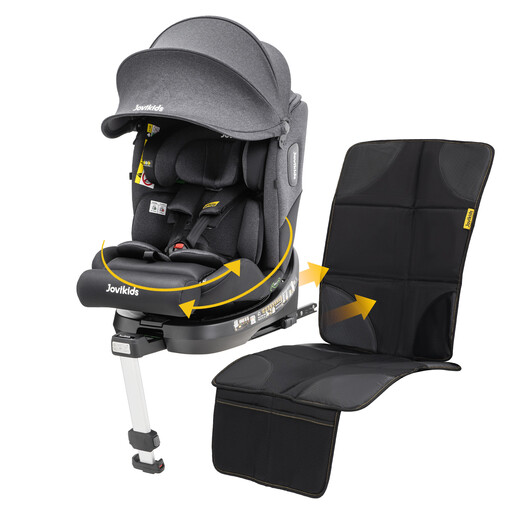
Why it stands out: This model covers the entire period of use, from birth until the end of the car seat requirement. Its most outstanding feature is the 360-degree rotation feature, which significantly simplifies daily use.
Benefits:
Who is this model for? For families seeking a single car seat solution for the entire childhood, who appreciate maximum comfort and ease of use provided by the rotation feature. Ideal for parents who travel frequently by car.
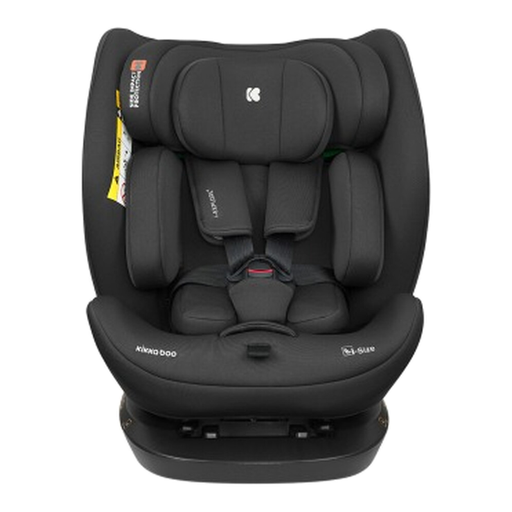
Why it stands out: The Kikka boo i-Explore 2 is a versatile all-rounder that also covers the complete 40 to 150 cm range. It is distinguished by a particularly finely adjustable headrest and multiple recline positions in both directions of travel.
Benefits:
Who is this model for? For parents seeking a flexible and durable solution from birth, who place special value on finely adjustable comfort settings, such as the high number of headrest positions and the various recline angles.
A car seat is just one part of the safety equipment. Practical accessories like seat protectors, sun shades, or special harness clips can further enhance comfort and safety.
? Explore our range of car seat accessories here
1. What exactly does "i-Size multi-stage car seat" mean? An "i-Size multi-stage car seat" is a car seat that complies with the European safety standard UN R129 (i-Size) and is designed for a wide height range of the child (e.g., from 40 cm to 150 cm). It adapts to the child's growth through adjustable elements like the headrest, harness system, and removable inserts, allowing it to be used for many years.
2. How long does my child have to sit in a rear-facing car seat? According to the i-Size regulation (UN R129), transporting children rear-facing is legally required up to at least 15 months of age and a height of 76 cm. However, safety experts and automobile clubs recommend keeping children in a rear-facing seat for as long as possible, ideally up to the age of four, as this provides the best possible protection for the sensitive head and neck area in a frontal impact.
3. Is a car seat with an impact shield safer than one with a 5-point harness? Both systems aim to protect the child in the event of an accident but function differently. A 5-point harness secures the body at the shoulders and hips. A car seat with an impact shield acts like a pre-positioned airbag; in a frontal collision, the child's upper body rolls over the impact shield. This can reduce the forces acting on the neck compared to a harness system. Which system is considered more advantageous depends on the accident scenario, the child, and correct usage. Both systems, when correctly installed and approved under UN R129, offer a high standard of safety.