
Lieferung heute & morgen

Qualitätsgarantie

Willkommens-Angebote freischalten: KOSTENLOSE Lieferung | Bis zu 80 % RABATT | Kostenlose 30-Tage-JoyPlus-Testphase
App herunterladen
Choosing a car seat is one of the most important decisions you'll make for your child's safety in the car. However, the market is overwhelming: different standards, countless features, and marketing promises make it difficult to keep track. As your Joybuy Product Recommendation Officer, I'm here to help you separate fact from advertising and make an informed decision.
Many parents invest in a seat that later turns out to be impractical, uncomfortable, or less safe than expected. To prevent this, we'll shed light on the most common pitfalls and the crucial criteria you should consider before making a purchase.
The right choice protects not only your child but also your budget. Watch out for these typical marketing traps:
To avoid a bad purchase, you should understand three core technical aspects. These form the basis for safety and longevity.
An i-Size car seat is approved according to the current European safety regulation UN R129. This standard offers significant advantages:
Correct installation is crucial for a car seat's protective performance. Here, the ISOFIX system is generally superior to using the vehicle's seat belt.
For children who have outgrown their infant carrier (approx. 76 cm to 105 cm), there are two primary systems:
Both systems have their merits. The choice depends on parental preference and the child's comfort.
Based on the criteria mentioned, we have compiled a selection of seats suitable for different needs and budgets.
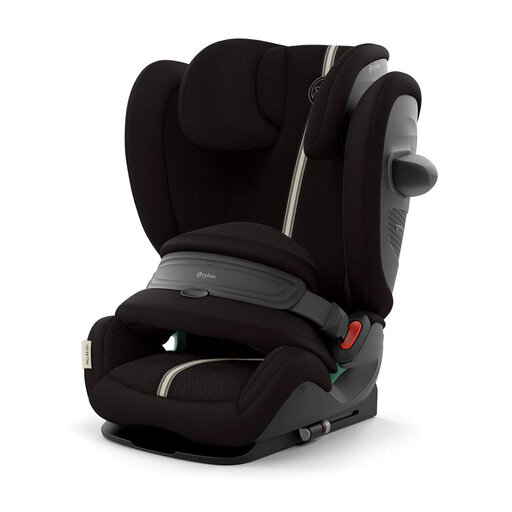
Why This Fits Their Persona: Ideal for parents seeking a durable 2-in-1 solution. This convertible car seat covers the phase from toddler (from 76 cm) to the end of the seat requirement (150 cm), making it an investment for over 10 years.
It bypasses the "all-in-one" trap by specialising in the period after the infant carrier. The impact shield is optimised for toddlers and is later removed to transform the seat into a full-fledged i-Size high-back booster.
Adjustable impact shield that, according to Cybex, reduces the risk of neck injuries. Easy installation with ISOFIX and Top Tether. The Plus version offers improved air circulation.
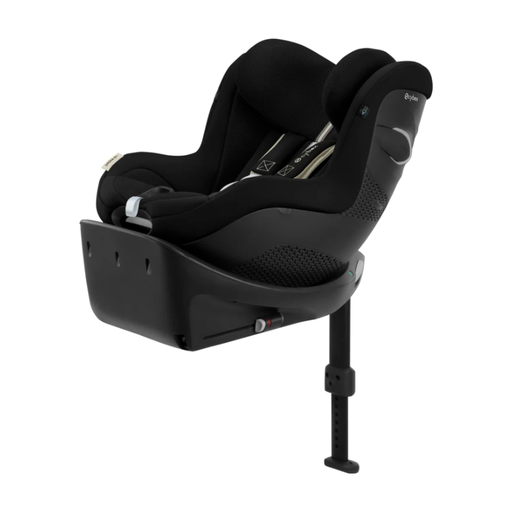
Why This Fits Their Persona: Perfect for parents of newborns (with insert) and toddlers up to approx. 4 years who want maximum everyday comfort and high safety standards for the first years of life.
This seat refutes the "feature fallacy" by combining the practical 360-degree rotation feature with uncompromising safety: it is a rear-facing seat for extended rear-facing travel and features integrated Linear Side-impact Protection (L.S.P. System).
Easy entry and exit thanks to the rotation mechanism. Five recline positions in both directions ensure high comfort. The Plus version with mesh fabric offers six times more breathability, according to the manufacturer.
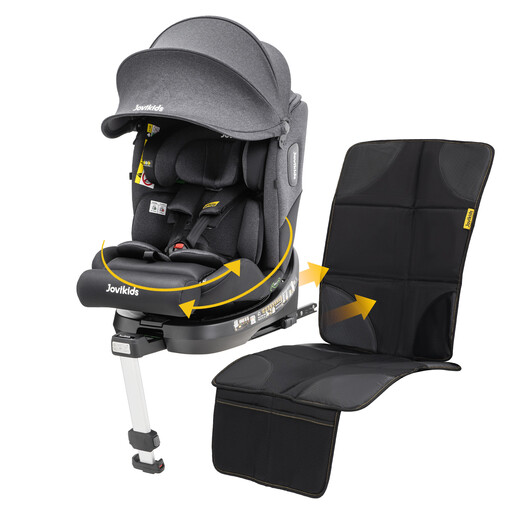
Why This Fits Their Persona: An excellent choice for families looking for a single, cost-effective seat for the entire duration of use, from birth to 12 years, without sacrificing modern safety and comfort features.
This model shows that an "all-in-one" approach can work when built on a solid foundation. It is certified to the strict i-Size standard and offers clear adjustment mechanisms for every stage of growth.
Extremely long usability (car seat from birth up to 150 cm). Offers a comprehensive feature set including a 360° rotation feature, ISOFIX installation with a support leg, and a multi-adjustable headrest at a very accessible price point.
We have compiled a complete, up-to-date list of products that fully meet these strict selection criteria and German safety regulations.
1. How long must my child travel in a rear-facing car seat? According to the i-Size standard (UN R129), rear-facing travel is legally required until 15 months of age and a height of 76 cm. However, safety experts and automotive clubs like the ADAC recommend keeping children in a rear-facing seat for as long as possible, ideally up to the age of four. A toddler's neck muscles are not yet fully developed, and the rear-facing position provides the most effective support for the head in a frontal collision.
2. Does every i-Size car seat fit in any car with ISOFIX? Not necessarily. While "i-Size" defines a universal standard for seating positions in vehicles, not all car seats are designated as i-Size positions. An i-Size car seat is guaranteed to fit on any vehicle seat marked as "i-Size". For vehicles with conventional ISOFIX anchorages but without i-Size approval, you must check the car seat manufacturer's compatibility list (vehicle type list). This can be found on the brand's website or in the manual.
3. When does it make sense to switch from a car seat to a booster seat? The switch to a backless i-Size booster seat should be made as late as possible. A high-back booster seat offers significantly better protection, especially in a side impact, and ensures correct positioning of the shoulder belt. The law requires a child restraint system until a height of 150 cm or the age of 12. A convertible car seat for the 76-150 cm or 100-150 cm group is therefore often the safer choice for the final phase.