
Lieferung heute & morgen

Qualitätsgarantie

Willkommens-Angebote freischalten: KOSTENLOSE Lieferung | Bis zu 80 % RABATT | Kostenlose 30-Tage-JoyPlus-Testphase
App herunterladen
Investing in an ice cream maker with a compressor promises on-demand indulgence: creamy ice cream, fruity sorbet, or fresh frozen yogurt whenever you want. Unlike models with a freezer bowl, a self-freezing ice cream maker doesn't require hours of pre-chilling in the freezer. However, the market is filled with models whose performance claims don't always match reality. Before you make a decision, it's crucial to understand the typical pitfalls that often only become apparent after the purchase.
This guide will show you what to look for to find a machine that works reliably and brings you long-term joy, instead of just gathering dust in a cupboard.
Many machines look promising at first glance, but the details often hide flaws that can quickly sour the fun of making your own ice cream.
To avoid these problems, you should carefully check three technical features before buying. These largely determine the quality of the ice cream and the user-friendliness of the machine.
The compressor's power, measured in watts (W), is a key indicator of the machine's efficiency. For a 1L ice cream maker, the power should be at least 100W to ensure rapid and even cooling. For larger models of 1.5 litres or more, 150W to 180W is recommended. Powerful cooling is essential for making creamy ice cream, a fine sorbet machine, or a frozen yogurt machine, as it prevents the formation of large ice crystals. The advantage of an ice cream maker without pre-freezing lies precisely in this spontaneous readiness, which only a powerful compressor can guarantee.
Pay attention to the usable capacity, not just the total volume of the container. A good rule of thumb is to fill the container only about two-thirds full. If you plan to regularly make ice cream for a family of four or for guests, a machine with a container volume of at least 1.5 litres is a sensible choice. For couples or smaller households, a 1-litre model is often sufficient.
The ice cream bowl should ideally be made of a material with good thermal conductivity, such as aluminium. This ensures efficient cold transfer from the compressor to the ice cream base. It is also crucial that the bowl is removable for easy cleaning and scooping. The paddle should be robustly designed to handle the thickening ice cream mixture without difficulty. A motor that is too weak can stall during the process, interrupting the preparation.
Based on the objective criteria mentioned above, we have identified several models that represent a smart choice for different user profiles.
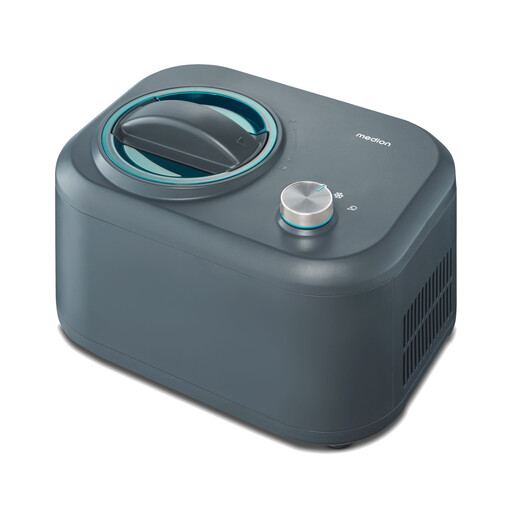
Why This Fits Their Persona: Ideal for those who want to try making ice cream or for households of one to two people. Its compact size and simple operation make it easy to get started without compromising on core functionality.
The 100W compressor power is perfectly matched to the 1-litre capacity, avoiding the problem of an underpowered motor. The removable aluminium bowl makes cleaning significantly easier.
Good power-to-capacity ratio for beginners. Suitable for ice cream, frozen yogurt, and sorbet.
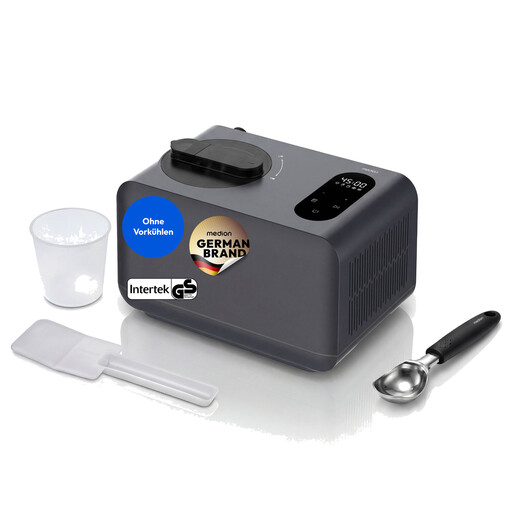
Why This Fits Their Persona: Perfect for families or anyone who loves to entertain guests. The larger volume allows you to prepare enough for everyone in a single batch, so no one has to wait for their dessert.
With 150W of power for the 1.5-litre bowl, the compressor is strong enough to cool even larger quantities quickly and evenly. This bypasses the trap of a weak motor for a larger volume.
Large capacity for family-sized portions. More powerful compressor for efficient cooling.
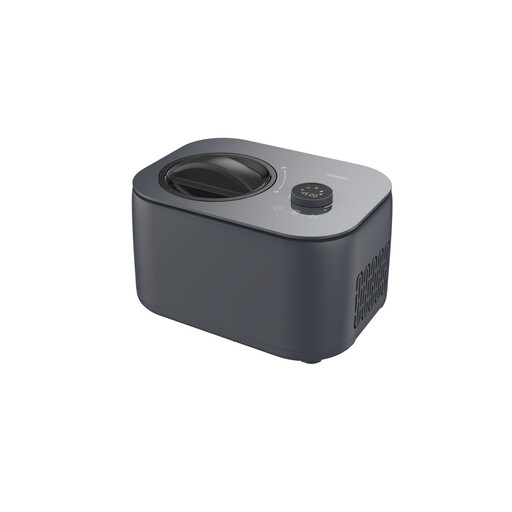
Why This Fits Their Persona: For users who value appealing aesthetics as much as reliable functionality. The modern, grey design fits seamlessly into contemporary kitchens, combining style with practical utility.
This model also offers a solid 100W of power for its 1-litre capacity. The removable bowl and simple controls prevent the typical frustrations with cleaning and handling.
Modern design in grey. Reliable performance for various frozen desserts like ice cream, yogurt, and slush.
We've compiled a complete, up-to-date list of products that fully meet these strict selection criteria and safety regulations.
1. How long does it take to make ice cream in a machine with a compressor? The preparation time depends on the recipe, the quantity, and the initial temperature of the ingredients. Typically, the freezing process takes between 40 and 60 minutes. After this time, the ice cream has a creamy, soft-serve consistency and can be served immediately. For a firmer texture, it can be placed in the freezer for a short time.
2. Do I need to let a compressor ice cream maker rest after transport? Yes, this is highly recommended. Similar to a refrigerator, the coolant in the compressor system needs to settle after being moved. Place the machine upright in its final location for at least 12 to 24 hours before its first use. You can find specific instructions in the manufacturer's user manual.
3. What kind of sugar should I use for homemade ice cream? Standard granulated sugar (sucrose) works very well for most recipes. The sugar content affects not only the sweetness but also the freezing point and texture of the ice cream. Reducing the sugar too much can result in the ice cream becoming very hard and crystalline. Experiment with small adjustments to find the consistency that's right for you.